"An investigation of the squatters' movement in Amsterdam, which emerged in the late 1970s as a reaction to the housing shortage of the 1960s, peaked in the early 1980s, and then fell into a period of
The medieval world does not end in Western Europe, and within the last twenty or so years some of the most stimulating art-historical discoveries have been made in the Near East. Moving beyond the con
This catalogue focuses on works on paper by contemporary artist Jane Hammond, who garnered a reputation in the art world as a painter in New York in the 1990s. Through the interplay of text and recycl
Nikita Khrushchev's proclamation from the floor of the United Nations that "we will bury you" is one of the most chilling and memorable moments in the history of the Cold War, but from the Cuban Missi
Saint Anne, the mother of Mary, is not a biblical figure. She first appears in a second-century apocryphal infancy gospel as part of the story of the savior’s birth and maternal ancestry. Over the ens
With the exception of early Egypt and Minoan Crete, no early culture had such a vigorous stone vase-making industry as the Cyclades. Stone Vessels of the Cyclades in the Early Bronze Age is the first
""This is must reading for real and would-be naval strategists at all levels."" -Proceedings - U.S. Naval Institute The Navy in the Post-Cold War World is the first book to invite the reader to think
The National Pastime has made big news and big money since its Silver Age (1900-1920), but what old-timer would have dreamed of TV networks bidding tens of millions for camera time, of baseballers get
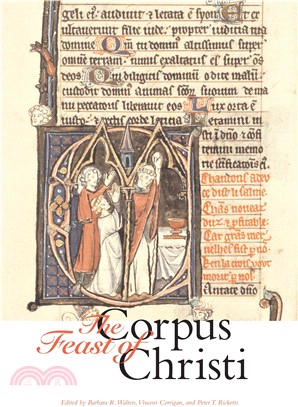
The feast of Corpus Christi, one of the most solemn feasts of the Latin Church, can be traced to the Fourth Lateran Council in 1215 and its resolution of disputes over the nature of the Eucharist. The
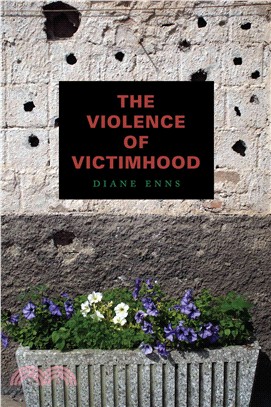
We know that violence breeds violence. We need look no further than the wars in the western Balkans, the genocide in Rwanda, or the ongoing crisis in Israel and Palestine. But we don’t know how to dea
The Essays on the Active Powers of Man (1788) was Thomas Reid's last major work. It was conceived as part of one large work, intended as a final synoptic statement of his philosophy. The first and la
Georges Seurat is best known as the painter of "A Sunday on the Grande Jatte" - 1884, one of the most recognizable and reproduced works of art in the world. In recent years, the painting has been the
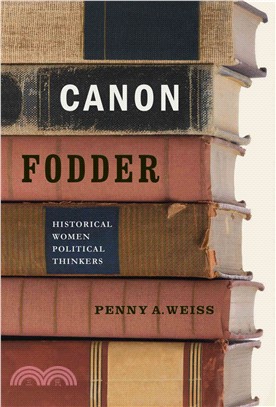
This book is an exercise in the recovery of historical memory about a set of thinkers who have been forgotten or purposely ignored and, as a result, never made it into the canon of Western political p
The feast of Corpus Christi, one of the most solemn feasts of the Latin Church, can be traced to the Fourth Lateran Council in 1215 and its resolution of disputes over the nature of the Eucharist. The
When Antoine Dutot opened the Kittatinny Hotel-the first tourist hotel in the Poconos-in 1829, little did he know that he was a pioneer in what would become one of the largest and most diverse tourist
What does it mean to know a place? What might we learn about the world by returning to the same place year after year? What would a long-term record of such visits tell us about change and permanence
In this magnificently illustrated book, conservationist and celebrated outdoors photographer Tim Palmer launches us on a revealing journey among the hemlock and beech trees that have for millennia tow
The twenty-first century is characterized by the global circulation of cultures, norms, representations, discourses, and human rights claims; the arising conflicts require innovative understandings of
In this study of the relationship between men and their horses in seventeenth- and eighteenth-century England, Monica Mattfeld explores the experience of horsemanship and how it defined one’s gendered
The 1932 election of Franklin Delano Roosevelt seemed to hold the promise of Democratic domination for years to come. However, leading up to the 1936 election, persistent economic problems, a controve
In this study of the relationship between men and their horses in seventeenth- and eighteenth-century England, Monica Mattfeld explores the experience of horsemanship and how it defined one’s ge
This important new study reevaluates British art writing and the rise of formalism in the visual arts from 1900 to 1939. Taking Roger Fry as his starting point, Sam Rose rethinks how ideas about form