"Why should I read?" Can your students answer that question? Do they have trouble seeing the importance that reading may have in their lives? Are they lacking motivation, both in academic and recreati
What do we know about literature circles now that we didn't understand eight or ten years ago? What new resources and procedures can help teachers organize their classroom book clubs better? What are
When we open the gates to nonfiction inquiry, we open our thinking and expect the unexpected, making reading discoveries, research discoveries, and writing discoveries on our way. Nonfiction Matters o
Learning is inherently social, built on the daily interactions in the classroom. What if feedback -- from teacher to student, between students, from student to teacher -- could be seen as essential, n
Spark! Quick Writes to Kindle Hearts and Minds in Elementary Classrooms The act of writing doesn’t just convey our thinking; it shapes our thinking. Literacy expert Paula Bourq
In this practical, engaging book, former elementary school teacher and university professor Brian Kissel asks teachers to go back to the roots of writing workshop. What happens when students, not plan
In We Can Do This! writing expert and Stella Writes author Janiel Wagstaff pairs examples of student writing with writing lessons. Student writing samples are extremely powerful tools for boosting the
Neebe and Roberts aim to guide teachers working in a 1:1, technology-rich classroom, in which every desk has a computer/laptop/tablet. The 1:1 classroom requires teachers to learn new classroom manage
When it comes to increasing student motivation and success in writing, classroom talk is a powerful tool. More than simply providing assessment data for predetermined standards, talking with our stude
In order to teach writing effectively, teachers must be writers themselves. They must experience the same uncertainty of starting a new draft and then struggling to revise. As they learn to move past
In this volume, the authors demonstrate how to use mentor texts to teach grammar to students in kindergarten through sixth grade and embed grammar instruction into units in the writing workshop classr
Barnhouse, a literacy consultant in elementary and secondary schools, argues that classrooms need to be student-centered and that teachers need to listen to students to help them engage with complex t
It is a troubling statistic that a quarter of the students in any grade are reading below grade level. The good news is that it's not too late, even in middle school, to provide the extra instruction
Spelling is not a low-level rote memory activity but a high-level cognitive skill.When Spelling Matters argues that children learn to spell by investigating how words work and recognizing the unique s
Where would we be without conversation? Throughout history, conversations have allowed us to see different perspectives, build ideas, and solve problems. Conversations, particularly those referred t
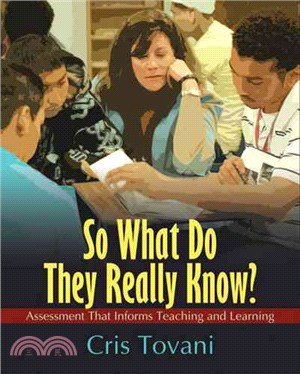
Building on the experiences gained in her own language arts classroom as well as those of colleagues in different disciplines, Cris Tovani, author of I Read It, but I Don't Get It, takes on the chall
Ask successful writers and they’ll tell you, the key to writing well is revision. Ask elementary school teachers and they’ll tell you, the real challenge of writing instruction is teaching kids how to
“What are we teaching our students about writing, if it isn’t what actual writers do?” This provocative question begins the journey Vicki Meigs-Kahlenberg takes us on in The Author’s Apprentice. With
For the vast majority of students, the skills and work habits that are crucial for successful learning are not in place when they arrive at the school door. These skills must be explicitly taught by t
Buckley, an elementary teacher, explains how to incorporate social and emotional learning into elementary classrooms and integrate these skills into literacy lessons. She uses a program called a frien
The ANIE (Assessment of Numeracy for Education) is a teacher-developed assessment tool that uses numeracy and common core performance standards to assess student understanding of math concepts. Thi
In So What Do They Really Know? Cris Tovani explores the complex issue of monitoring, assessing, and grading students' thinking and performance with fairness and fidelity. Like all teachers, Cris stru
In A Place for Wonder, Georgia Heard and Jennifer McDonough discuss how to create “a landscape of wonder,” a primary classroom where curiosity, creativity, and exploration are encouraged. For it is th
In the first edition of Beyond Leveled Books, Franki Sibberson and Karen Szymusiak, offered a much-needed perspective on moving transitional readers from the basic supports of leveling to independent
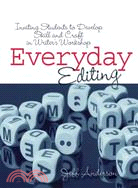
Editing is often seen as one item on a list of steps in the writing process?usually put somewhere near the end, and often completely crowded out of writer's workshop. Too many times daily editing les
This 32-page flipchart provides a wealth of practical tips and suggestions for using the power of novels to explore the fascinating world of language. Through simple steps, this handy guide helps stud
Do you spend your days working with students who struggle to comprehend reading in literacy and content classes? Are you looking for a way to establish comprehensive literacy instruction in your schoo
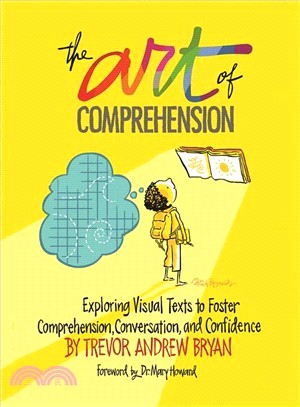
The Art of Comprehension [creates] an invisible thread that stretches across varied professional contexts to connect art, literacy, and all content areas.—From the forward by Dr. Mary Howar
Students do not experience math in a vacuum. The curriculum, the students’ social and emotional well-being, and the teacher’s expertise as a facilitator must all be attended to, and each i
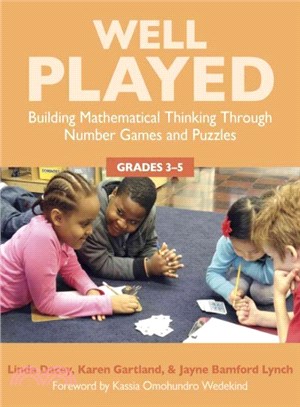
Students love math games and puzzles, but how much are they really learning from the experience? Too often, math games are thought of as just a fun activity or enrichment opportunity.Well Played shows
Well Played: Building Mathematical Thinking Through Number Games and Puzzles, Grades 3–5“This is a book full of thoughtful and well-chosen games and puzzles, but it is also a book that offers a lens i
Making Number Talks Matter is about the myriad decisions facing teachers as they make this fifteen-minute daily routine a vibrant and vital part of their mathematics instruction. Throughout the book,
Classroom routines are the well-oiled machines that can make a classroom function. But routines can also provide the groundwork for a learning environment that nourishes student-driven learning. From
Read-i-cide n: The systematic killing of the love of reading, often exacerbated by the inane, mind-numbing practices found in schools. Reading is dying in our schools. Educators are familiar with man
Comic books and graphic novels, known collectively as "graphica," have long been popular with teenagers and adults. Recently graphica has grown in popularity with younger readers as well, motivating a
Brad Buhrow and Anne Garcia are primary teachers in a diverse school in Boulder, Colorado. In Ladybugs, Tornadoes, and Swirling Galaxies, you will see how they blend comprehension instruction and ELL
Writing is all about making meaning. The prospect of teaching writing to a classroom full of studentssome who speak English and some who don't, can be overwhelming. When students learning English are
Being able to read and write in a variety of genres is a common requirement for today's students.Thinking Through Genre supports English teachers who seek to engage their students in genre studies in