Conferring with students about reading allows for clearer access to one-on-one, in-the-moment teaching and learning, yet it can feel intimidating or overwhelming. Kari Yates and Christina Nosek want t
Teachers know that their students love to explore and learn. But, how do we make this possible with thirty students, with different needs, learning styles, and backgrounds, all in one small room with
Faced with a vast list of roles and responsibilities and answering to a broad array of stakeholders, school administrators can feel like they must constantly play the role of invincible superhero. Rar
What would a classroom look like if understanding and respecting differences in race, culture, beliefs, and opinions were at its heart? Welcome to Mary Cowhey's Peace Class in Northampton, MA, where
The school library has changed dramatically. Today, it is a portal to a world of learning that includes traditional books, digital resources, and online environments. As the importance of information
Matt Copeland has created a coaching guide for both the teacher new to Socratic seminars and the experienced teacher seeking to optimize the benefits of this powerful strategy. Socratic Circles also
Spark! Quick Writes to Kindle Hearts and Minds in Elementary Classrooms The act of writing doesn’t just convey our thinking; it shapes our thinking. Literacy expert Paula Bourq
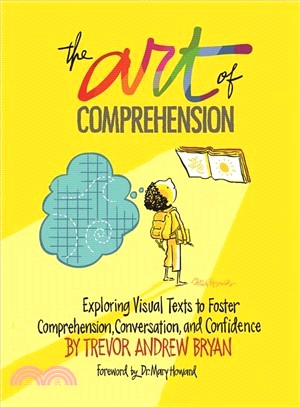
The Art of Comprehension [creates] an invisible thread that stretches across varied professional contexts to connect art, literacy, and all content areas.—From the forward by Dr. Mary Howar
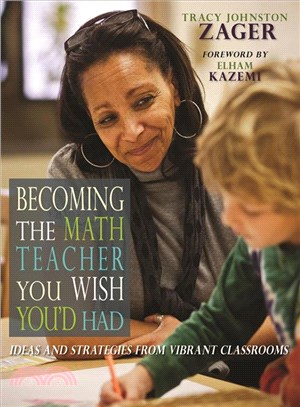
Students do not experience math in a vacuum. The curriculum, the students’ social and emotional well-being, and the teacher’s expertise as a facilitator must all be attended to, and each i
Cathy Fraser believes that school research projects should be less of a chore and more like police investigations. In Love the Questions she describes ways to engage middle and secondary students from
Discover what happens when your students step out of their daily routines and activate their engagement. Author Katherine Mills Hernandez argues that movement, talk, and the physical environment of th
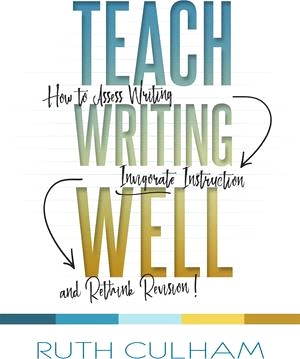
Ask successful writers and they’ll tell you, the key to writing well is revision. Ask elementary school teachers and they’ll tell you, the real challenge of writing instruction is teaching kids how to
How do we ensure that all students are engaged each day in meaningful, challenging, and joyful work and have equal opportunity to learn? That is the central question Regie Routman addresses in
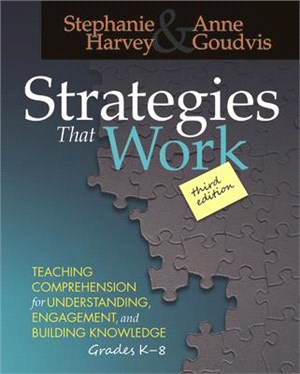
In this new edition of their groundbreaking book Strategies That Work, Stephanie Harvey and Anne Goudvis share the work and thinking they’ve done since the second edition came out a decade ago and off
Relax and enjoy an afternoon’s reflection on how to break out of rigid prescriptions and orthodoxies that limit writing instruction . . . . —Tom Newkirk, from the Foreword When was the las
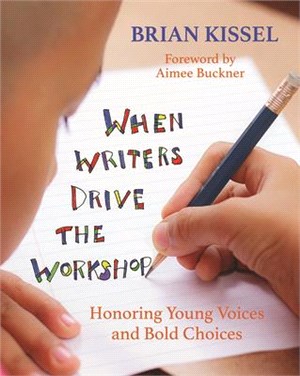
In this practical, engaging book, former elementary school teacher and university professor Brian Kissel asks teachers to go back to the roots of writing workshop. What happens when students, not plan
In We Can Do This! writing expert and Stella Writes author Janiel Wagstaff pairs examples of student writing with writing lessons. Student writing samples are extremely powerful tools for boosting the
Readers, be warned: you are about to fall in love. Tracy writes, “Good math teaching begins with us.” With those six words, she invites you on a journey through this most magnificent book of stories
The first edition of Becoming a Literacy Leader chronicled Jennifer’s work as she moved to a new school and a new job as a literacy specialist and found herself tackling everything from teacher study
“What are we teaching our students about writing, if it isn’t what actual writers do?” This provocative question begins the journey Vicki Meigs-Kahlenberg takes us on in The Author’s Apprentice. With
A large part of our everyday communication involves argumentation and reasoning—for example, when we want to persuade others, make good purchasing decisions, or analyze the messages we receive from ad
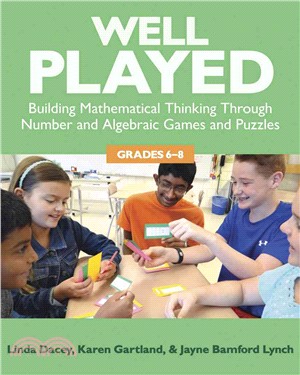
Students love math games and puzzles, but how much are they really learning from the experience? Too often, math games are thought of as just a fun activity or enrichment opportunity.Well Played shows
Students love math games and puzzles, but how much are they really learning from the experience? Too often, math games are thought of as just a fun activity or enrichment opportunity.Well Played shows
Learning is inherently social, built on the daily interactions in the classroom. What if feedback -- from teacher to student, between students, from student to teacher -- could be seen as essential, n
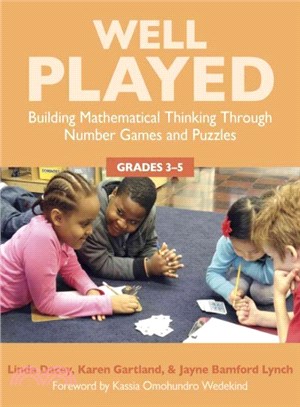
Well Played: Building Mathematical Thinking Through Number Games and Puzzles, Grades 3–5“This is a book full of thoughtful and well-chosen games and puzzles, but it is also a book that offers a lens i
Instructional scaffolding is an essential part of teaching literacy. But what is scaffolding exactly? What does it look like in a classroom, and how can we improve the ways we use it? Despite its prom
Neebe and Roberts aim to guide teachers working in a 1:1, technology-rich classroom, in which every desk has a computer/laptop/tablet. The 1:1 classroom requires teachers to learn new classroom manage
Making Number Talks Matter is about the myriad decisions facing teachers as they make this fifteen-minute daily routine a vibrant and vital part of their mathematics instruction. Throughout the book,
Classroom routines are the well-oiled machines that can make a classroom function. But routines can also provide the groundwork for a learning environment that nourishes student-driven learning. From
For the vast majority of students, the skills and work habits that are crucial for successful learning are not in place when they arrive at the school door. These skills must be explicitly taught by t
When it comes to increasing student motivation and success in writing, classroom talk is a powerful tool. More than simply providing assessment data for predetermined standards, talking with our stude
No matter where students’ lives lead after graduation, one of the most essential tools we can teach them is how to comprehend, analyze, and respond to arguments. Students need to know how writers’ and
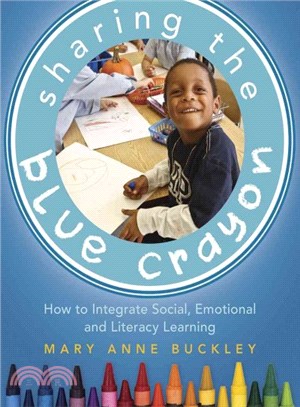
Buckley, an elementary teacher, explains how to incorporate social and emotional learning into elementary classrooms and integrate these skills into literacy lessons. She uses a program called a frien
In order to teach writing effectively, teachers must be writers themselves. They must experience the same uncertainty of starting a new draft and then struggling to revise. As they learn to move past
The authors offer tips, advice, and concrete lesson plans for elementary and mid level teachers on how to teach the revision process. The text is divided into two main parts. The first part includes t
Designed to show teachers how to develop a questioning culture in the classroom, a step-by-step approach offers more than eighty proven classroom activities that will take students beyond memorization
When faced with a blank page in their readers’ notebooks, students often fall back on what is familiar: summarizing. Despite our best efforts to model through comprehension strategies what good reader
Burkins and Yaris, literacy consultants and former teachers, argue that students should move towards reading wellness in their literacy work, to include all aspects of reading from fluency, meaning, a