Fifty years after Antony Eden’s fateful decision to take on the Egyptian President, Gamal Abdel Nasser, veteran Guardian journalist Martin Woollacott brings to life the arguments, personalities and ev
At a critical point in the development of photography, this book offers an engaging, detailed and far-reaching examination of the key issues that are defining contemporary photographic culture. Photog
How should failed states in Africa be understood? Catherine Scott here critically engages with the concept of state failure and provides an historical reinterpretation. She shows that, although the co
Oriental dancers, ballerinas, actresses and opera singers—the figure of the female performer is ubiquitous in the cinema of pre-Revolutionary Russia. From the first feature film, Romashkov's Stenka Ra
G.F. Watts (1817-1904) is one of the Victorian era’s greatest painters. Yet his drawings which offer unequalled insight into his techniques and compositional decisions when developing his most celebra
The philosophical traditions of China have arguably influenced more human beings than any other. China has been the home not only of its indigenous philosophical traditions of Confucianism and Daoism,
Georgia emerged from the fall of the Soviet empire in 1991 with the promise of swift economic and democratic reform. But that promise remains unfulfilled. Economic collapse, secessionist challenges, c
The measurement of the significance and 'impact' of research is absolutely paramount in today's academic world – as evidenced by the recent introductions of research assessment exercises in the UK, Au
Volume 2How does religious fundamentalism operate in modern global society? This two-volume work analyses they dynamics of fundamentalism and its relationship to the modern state, the public sphere an
In these brand new interviews, twenty of the most important women artists practicing internationally but based in Britain discuss their work, their influences and their relationship with the art histo
The founder of modern Turkey, Mustafa Kemal Ataturk, came to power in 1923 with a radical and wide-ranging programme of reforms, known collectively as Kemalism. This philosophy – which included adopti
Arab messengers played a vital role in the medieval Islamic world and its diplomatic relations with foreign powers. An innovative treatise from the 10th Century ("Rusul al-Muluk", "Messengers of Kings
Since the collapse of the Soviet Union, nation building and identity construction in the post-socialist region have been the subject of extensive academic research. The majority of these studies have
The history of the Russian fascist movement in Harbin, Manchuria during the 1930s has become increasingly relevant to our understanding of modern Russia. As a railway junction and an important centre
Bangladesh is a country of paradoxes. The eighth most populous country of the world, it has attracted considerable attention from the international media and western policy-makers in recent years, oft
The Rulers of India series was conceived to make available the key features of Indian history through biographies of the successive princes, generals and administrators of the country. This first set
In this book, Jill Hedges analyses the modern history of Argentina from the adoption of the 1853 constitution until the present day, exploring political, economic and social aspects of Argentina’s rec
This is the third book in the innovative TRACEY series on contemporary drawing. Drawing Ambiguity builds upon its predecessors, Drawing Now: Between the Lines of Contemporary Art, 200 7 and Hyperdrawi
Arab messengers played a vital role in the medieval Islamic world and its diplomatic relations with foreign powers. An innovative treatise from the tenth century (Rusul al-Mulik, Messengers of Kings)
The Bedouin, or "desert dwellers," have a rich cultural heritage often expressed through music and poetry. Here Moneera Al-Ghadeer provides us with the first comparative reading of women’s oral poetry
How has the position of Afrikaners changed since the end of the Apartheid regime in South Africa? While the links between Afrikaner nationalist identity and the apartheid regime have been irrevocably
This book examines the Islamic categories of Christians under Islamic law and compares them with the status of Christians within Lebanon. David Grafton reviews the opinions of four Lebanese Muslim sch
What role does taste play in contemporary youth culture? How do young people reproduce, or alternatively, reject gender norms? Using new research and the work of renowned theorists such as Judith Butl
For nearly a century members of the Dildilian family practiced the art of photography in Ottoman Turkey, Greece and the United States. This book contains over 200 photographs, primarily from the Ottom
Maurice Thorez (1900-1964) was a major figure in the history of twentieth-century France and European Communism. During more than three decades as Secretary-General of the French Communist Party, the
As deputy prime minister of Britain's coalition government during World War II, Clement Attlee became one of the most powerful figures in British politics and subsequently played a crucial role in the
Hailed in his lifetime and in every generation thereafter as the supreme Roman poet, Publius Vergilius Maro (70-19 BCE), otherwise known as Virgil, wrote three books of hexameter verse that defined th
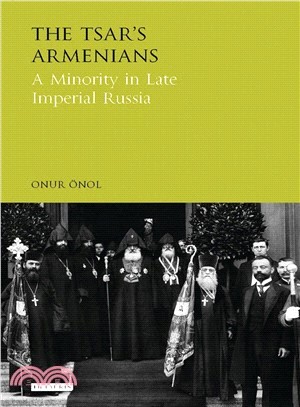
In 1903 Tsar Nicholas II issued a decree allowing the confiscation of Armenian Church property, marking the low point in relations between imperial Russia and its Armenian subjects. Yet just over a de
The Berber identity movement in North Africa was pioneered by the Kabyles of Algeria. But a preoccupation with identity and language has obscured the fact that Kabyle dissidence has been rooted in dem
Sufism is all too often associated just with 'mysticism' in the West. The author of this new textbook, a former pupil of Annemarie Schimmel, suggests that conflating Sufism and mysticism is only parti
Josep Broz Tito's reshaped Yugoslav state became an influential pivot between East and West during the Cold War. Here, Vladimir Unkovski-Korica re-assesses the key episodes of Tito's rule—from the joi
From the bestselling author of BREXIT comes a personal and passionate plea for voting 'Remain' on 23rd June. Denis MacShane, former Minister for Europe, is alarmed that the referendum debate so far ha
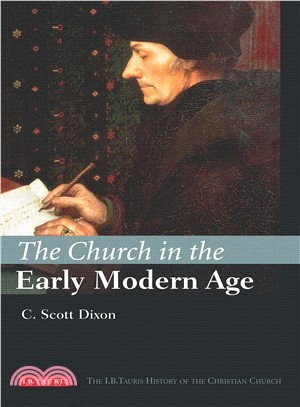
The years 1450-1650 were a momentous period for the development of Christianity. They witnessed the age of Reformation and Counter-Reformation: perhaps the most important era for the shaping of the fa
The history of Morocco cannot effectively be told without the history of its Jewish inhabitants. Their presence in Northwest Africa pre-dates the rise of Islam and continues to the present day, combin
Sir John Kaye’s three volumes remain the first substantive account of the war in Afghanistan. Eschewing the generality of other writers of the time, such as Mill and Elphinstone, Kaye instead makes us
During the tenth century England began to emerge as a distinct country with an identity that was both part of yet separate from ‘Christendom’. The reigns of Athelstan, Edgar and Ethelred witnessed the
The new model of intervention that emerged from Bosnia and Kosovo signalled a revolution in International Affairs. The crises in the Balkans revealed a new division of labor among Western states: US f
Hollywood's History Films is an innovative and detailed analysis of the film industry's use of history in the 1950s, when 'classical' Hollywood's interest in the past was at its peak. Using original s
As New Labour's first period of government picks up steam, we find Bernard Donoughue working as a minister at the Ministry of Agriculture, Fishing and Food. In this, the second volume of Donoughue's H
If science fiction stages the battle between humans and non-humans, whether alien or machine, who is elected to fight for us? In the classics of science fiction cinema, humanity is nearly always repre