Fabled for more than 3,000 years as fierce warrior-nomads and cameleers dominating the western Trans-Saharan caravan trade, today the Sahrawi are admired as soldier-statesmen and refugee-diplomats. Th
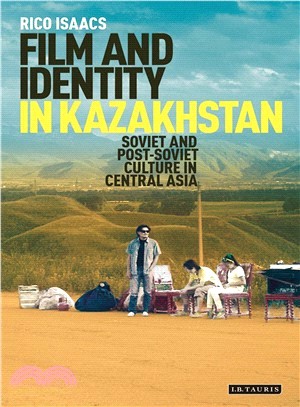
Cinema and nationalism are two fundamentally modern phenomena, but how have films shaped our understanding of the creation -the 'imagining' - of Central-Asian nations? Here, Rico Isaacs uses cinema as
Fashion reveals not only who we are, but whom we aspire to be. From 1775 to 1925, artists in Europe were especially attuned to the gaps between appearance and reality, participating in and often criti
Olusegun Obasanjo has played an extraordinary role in Nigeria's modernisation-from army dictator to prisoner to democratically elected head of state. Steve Itugbu, for many years a foreign policy aide
Lebanon is a country whose domestic politics have, even more than others in the region, been at the mercy of changes on the international stage. Having been under Ottoman and French rule in the ninete
While the unstoppable growth of the internet has shrunk print magazine circulations, the number of online bloggers has exploded, leading to dramatic yet contradictory statements such as 'everyone's a
In August 1969 an outbreak of violence saw Northern Ireland's devolved Stormont government appeal to Westminster for assistance, marking the beginning of a conflict that would last nearly three decade
While the history of the Civil Rights Movement, from Rosa Parks to Martin Luther King, is one of the great American stories of the twentieth century, the related Black Power movement has left a more c
The states created after the dissolution of Yugoslavia in 1992 all appointed official national anthems—the purpose of which was to forge new national identities out of the bloody and difficult history
When the Ottoman Empire collapsed following the First World War, the feudal system which had survived untouched in much of Anatolia began to change. Kemal Ataturk's task of building a nation 'from the
Winston Churchill began his career as a colonial policeman in the North-West borderlands of India, and this experience was the beginning of his long relationship with the Islamic world. Overturning th
Literary fiction has always provided an outlet for social and political critique. In writing by key North African women authors, the dissection of Maghrebi society is at the very heart of the narrativ
The "war on terror" tends to circumscribe crucial developments in the Islamic world within a narrow definition of "Islamic terrorism." This partial and incomplete perspective fails to comprehend the l
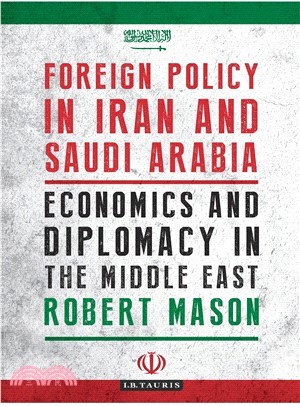
Saudi Arabia, with its US alliance and abundance of oil dollars, has a very different economic story to that of Iran, which despite enormous natural gas reserves, has been hit hard by economic, trade,
French rule over Syria and Lebanon was premised on a vision of a special French protectorate established through centuries of cultural activity: archaeological, educational and charitable. Initial Fre
India's endemic gender-based violence has received increased international scrutiny and provoked waves of domestic protest and activism. In recent years, related studies on India and South Asia have p
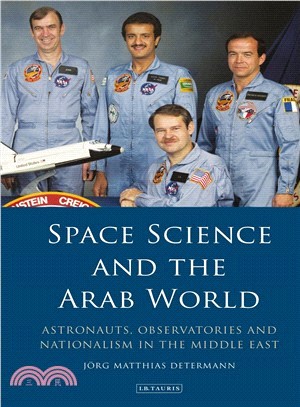
When Sultan bin Salman flew on the shuttle Discovery in 1985, he was the first Arab, Muslim, and member of a royal family in space. Twenty-five years later, the discovery of a planet 500 light-years a
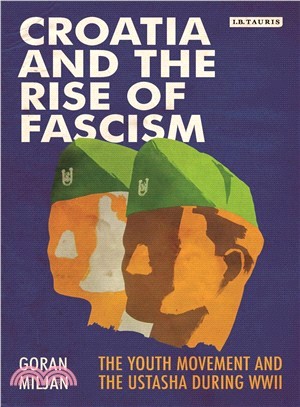
During World War II, Croatia became a fascist state under the control of the Ustasha Movement - allied with Nazi Germany and Fascist Italy. Here, Goran Miljan examines and analyzes for the first time
When the Enlightenment thinker Gotthold Ephraim Lessing wrote his treatise Laocoön: An Essay on the Limits of Painting and Poetry in 1766, he outlined the strengths and weaknesses of each art. Paintin
Following the proclamation of the Truman Doctrine in 1947, which provided economic and military aid to Greece and Turkey to prevent them from falling to communism, the US became deeply involved in Gre
Who analyses children's screen content and media use in Arab countries, and with what results? Children, defined internationally as under-18s, account for some 40 per cent of Arab populations and the
In an era of unprecedented global mobility, artists face unique challenges. How does cultural context affect the interpretation of art? What makes artists’ work transnational or national in character,
Despite, or even because of their tumultuous history, Palestinians are renowned for being prolific cultural producers, creating many of the Arab world's most iconic works of literature. In particular,
The Vietnam War lasted twenty years, and was the USA's greatest military failure. An attempt to stem the spread of Soviet and Chinese influence, the conflict in practice created a chaotic state torn a
The US in the 1950s and 1960s wanted to prevent a new communist regime in the Western hemisphere at any cost. Under President Eisenhower the US pursued a policy of support for dictators, the economic
During the Arab uprisings of early 2011, which saw the overthrow of Zine el-Abadine Ben Ali in Tunisia and Hosni Mubarak in Egypt, the role of digital media and social networking tools was widely repo
Created after World War I, 'Yugoslavia' was a combination of ethnically, religiously, and linguistically diverse but connected South Slav peoples - Slovenes, Croats and Serbs but also Bosnian Muslims,
Faith-based development organizations have become a central part of the lives of the women of rural Rajasthan, and have come to represent important providers of social development. And yet, religious
Security perceptions in Europe have changed drastically in the last decade due to the effects of globalization. As a result, the EU’s relations with Turkey and the security policies of the EU and Turk
Princely India in the 1930s and 40s enjoyed a golden age which already seems immeasurably distant from the thriving, modern nation of today. These were halcyon days of bejewelled and eccentric Maharaj
The Polar North is known to be home to large gas and oil reserves and its position holds significant trading and military advantages, yet the territorial boundaries of the region remain ill-defined. I
Why is the term shari'a—the mention of which conjures up images of a politicised religion in many parts of the world—understood in the ways that it is today? For Muslims and non-Muslims alike, much is
The concept of the cyborg, or cybernetic organism, has led to notably creative explorations of the ambiguous relationship between human beings and technology. In particular, Donna Haraway argued in he
The seven emirates that make up the United Arab Emirates were little known until the spectacular success of Dubai. William Gueraiche's work is the first scholarly study of the UAE's campaign to establ
Until recently—with the likes of Tina Fey and Amy Poehler achieving dazzling success with 30 Rock and Parks and Recreation—popular entertainment has rarely featured women comedians in leading roles. C
From the First Gulf War to the present upheaval in Syria, the Kurdish question has been a crucial issue within the Middle East region and in international politics. Spread across several countries, th
In the depths of the Cold War and in the wake of Britain's announcement of its intention to withdraw 'East of Suez' by the end of 1971, Britain was faced with the stark reality of a Marxist rebellion
People in Western societies have long been interested in their dreams and what they mean. However, few non-Muslims in the West are likely to seek interpretation of those dreams to help them make life-
Hero and Leander are the protagonists in a classical tale of epic but tragic love. Hero lives secluded in a tower on the European shore of the Hellespont, and Leander on the opposite side of the passa
The traumas of conflict and war in postcolonial Africa have been widely documented, but less well-known are their artistic representations. A number of recent films, novels and other art forms have so