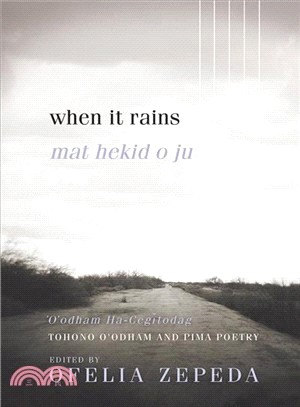
When it was first released in 1982, When It Rains was one of the earliest published literary works in the O’odham language. Speakers from across generations shared poems that showcased the aesth
Textuality is the condition in which a text is created, edited, archived, published, disseminated, and consumed. “Texts,” therefore, encompass a broad variety of artifacts: traditional pri
There are two basic rules for writing nonfiction, says historian and award-winning author Stephen J. Pyne. Rule 1: You can’t make stuff up. Rule 2: You can’t leave out known stuff tha
In the heart of the Pacific Ocean, Hawai‘i exists at a global crosscurrent of indigeneity and race, homeland and diaspora, nation and globalization, sovereignty and imperialism. In order to bett
Although possessing a common physical heritage, the Sonoran Desert has taken on highly contrasting forms in its American and Mexican portions. This work does not, therefore, attempt a regional study i
The Sonoran Desert is a distinctive biotic region that fascinates scientist, students, and nature lovers. This book offers an accessible introduction to Sonoran Desert ecology. Eight original essays b
Mangroves and rice, six-row brittle barley and einkorn wheat. Ancient crops for prehistoric people. What do they have in common? All tell us about the lives and cultures of long ago, as humans cultiva
As her family traveled the Oregon Trail in 1852, Mary Ellen Todd taught herself to crack the ox whip. Though gender roles often blurred on the trail, families quickly tried to re-establish separate ro
In the heart of the Pacific Ocean, Hawai‘i exists at a global crosscurrent of indigeneity and race, homeland and diaspora, nation and globalization, sovereignty and imperialism. In order to better und
In Cherokee Asegi udanto refers to people who either fall outside of men’s and women’s roles or who mix men’s and women’s roles.Asegi, which translates as “strange,” is also used by some Cherokees as
Despite a half century of attempts by social scientists to compare frontiers around the world, the study of these regions is still closely associated with the nineteenth-century American West and the
When Mexico won its independence from Spain in 1821, citizens and missionaries in the northwestern reaches of the new nation were without the protection of Spanish military forces for the first time.
As contemporary Native Americans assert the legacy of their ancestors, there is increasing debate among archaeologists over the methods and theories used to reconstruct prehistoric identity and the mo
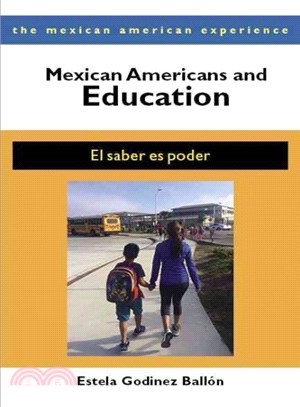
As the Mexican American student population in U.S. public schools climbs to over 8 million, the establishment of policies that promote equity and respect have never been more crucial.In Mexican Americ
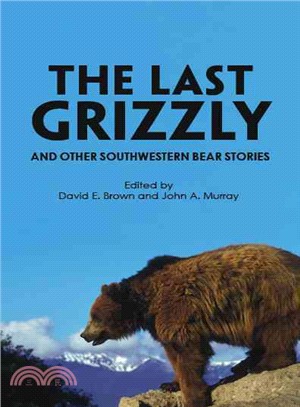
A collection of true stories about grizzly and black bears in the Greater Southwest—Arizona, New Mexico, Colorado, Utah, southern California, Chihuahua, and Sonora—from the 1820s to the present.
Mangroves and rice, six-row brittle barley and einkorn wheat. Ancient crops for prehistoric people. What do they have in common? All tell us about the lives and cultures of long ago, as humans cultiva
Do we really know what we see through a telescope? How does the ocular system construct planetary images, and how does the brain interpret them? Drawing on both astronomical and psychological data, Wi