Proceeding from the bold and provocative claim that there never has been a comprehensive and systematic theory of race, Mustafa Emirbayer and Matthew Desmond set out to reformulate how we think about
“How do we think?” N. Katherine Hayles poses this question at the beginning of this bracing exploration of the idea that we think through, with, and alongside media. As the age of print passes and new
When Moral Politics was first published two decades ago, it redefined how Americans think and talk about politics through the lens of cognitive political psychology. Today, George Lakoff’s classic tex
Over the past half-century, think tanks have become fixtures of American politics, supplying advice to presidents and policy makers, expert testimony on Capitol Hill, and convenient facts and figures
Over the past half-century, think tanks have become fixtures of American politics, supplying advice to presidents and policymakers, expert testimony on Capitol Hill, and convenient facts and figures
When we think about history, we often think about people, events, ideas, and revolutions, but what about the numbers? What do the data tell us about what was, what is, and how things changed over time
Martin Luther King Jr. Malcolm X. Muhammad Ali. When you think of African American history, you think of its heroes—individuals endowed with courage and strength who are celebrated for their bold expl
When people think of a scientist, they often think of someone who has his or her head in the clouds, motivated by an entirely untainted desire for the pursuit of knowledge and truth. In Science 3.0, F
We don’t usually think of haute cuisine when we think of the Middle Ages. But while the poor did eat a lot of vegetables, porridge, and bread, the medieval palate was far more diverse than commonly as
People call it everything from “walking your dog” to “scratching your bean.” Women usually do it at home. Men, it sometimes seems, do it everywhere. Some people think it’s healthy; others think it is
When you think of the founding fathers, you think of men like George Washington, Thomas Jefferson, and Benjamin Franklin—exceptional minds and matchless statesmen who led the colonies to a seem
When Americans think of investment and finance, they think of Wall Street—though this was not always the case. During the dawn of the Republic, Philadelphia was the center of American finance.
When you think of modern architecture, you think of Chicago, the birthplace of the skyscraper, the cradle of twentieth-century American design, and the home of enduring works by such iconic figures as
When we think of giving gifts, we think of exchanging objects that carry with them economic or symbolic value. But is every valuable thing a potentially exchangeable item, whose value can be transfer
Tricks of the Trade will help students think about research projects. Assisted by Becker's sound advice, students will be able to make better sense of their research and simultaneously generate fresh
For all the love and attention we give dogs, much of what they do remains mysterious. Just think about different behaviors you see at a dog park: We have a good understanding of what it means when dog
We tend to think of war as being fought in specific, bounded places--war zones. But since the end of World War II, warfare has taken different forms, with the wars themselves often undeclared and thei
Today's science tells us that our bodies are filled with molecular machinery that orchestrates all sorts of life processes. When we think, microscopic "channels" open and close in o
At its most basic, philosophy is about learning how to think about the world around us. It should come as no surprise, then, that children make excellent philosophers! Naturally inquisitive, pint-size
When we catastrophize, we think the worst. We make too much of too little, or something of nothing. Yet what looks simply like a bad habit, Gerard Passannante argues, was also a spur to some
It is common to think of the Arctic as remote, perched at the farthest reaches of the world—a simple and harmonious isolated utopia. But the reality, as Janne Flora shows us, is anything but. In
It is common to think of the Arctic as remote, perched at the farthest reaches of the world—a simple and harmonious, isolated utopia. But the reality, as Janne Flora shows us, is anything but. I
It’s tempting to think that we live in an unprecedentedly fertile age for conspiracy theories, with seemingly each churn of the news cycle bringing fresh manifestations of large-scale paranoia.
Think of a time when you’ve feigned courage to make a friend, feigned forgiveness to keep one, or feigned indifference to simply stay out of it. What does it mean for our intimacies to fail us w
For all the love and attention we give dogs, much of what they do remains mysterious. Just think about different behaviors you see at a dog park: We have a good understanding of what it means wh
“Every day is an anxiety in my ways of getting to the water. . . . I’ve become so attuned to it, so scared of it, so in love with it that sometimes I can only think by the sea. It is the o
“Every day is an anxiety in my ways of getting to the water. . . . I’ve become so attuned to it, so scared of it, so in love with it that sometimes I can only think by the sea. It is the o
In the West, we tend to think of Islamic law as an arcane and rigid legal system, bound by formulaic texts yet suffused by unfettered discretion. While judges may indeed refer to passages in the class
In the West, we tend to think of Islamic law as an arcane and rigid legal system, bound by formulaic texts yet suffused by unfettered discretion. While judges may indeed refer to passages in the class
René Descartes is best known as the man who coined the phrase “I think, therefore I am.” But though he is remembered most as a thinker, Descartes, the man, was no disembodied
You would as well look for blood in a corpse as for the least shred of decency in a man . . . Without help from their wives, men are just like unlit lamps . . . Just think of them as an
We often think of sleep as mere stasis, a pause button we press at the end of each day. Yet sleep is full of untold mysteries—eluding us when we seek it too fervently, throwing us into surreal d
All too often, we think of our minds and bodies separately. The reality couldn’t be more different: the fundamental fact about our mind is that it is embodied. We have a deep visceral, emotional
All too often, we think of our minds and bodies separately. The reality couldn’t be more different: the fundamental fact about our mind is that it is embodied. We have a deep visceral, emotional
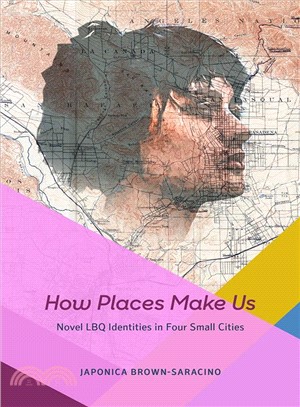
We like to think of ourselves as possessing an essential self, a core identity that is who we really are, regardless of where we live, work, or play. But places actually make us much more than we migh
We like to think of ourselves as possessing an essential self, a core identity that is who we really are, regardless of where we live, work, or play. But places actually make us much more than we migh
You might think that any reader is a good reader (publishers certainly do). Merve Emre’s tongue-in-cheek subtitle calls out ?bad” readers?the kind whose approach to literature is naive, superficial, t
You might think that any reader is a good reader (publishers certainly do). Merve Emre’s tongue-in-cheek subtitle calls out ?bad” readers?the kind whose approach to literature is naive, superficial, t
Is it in our nature to be altruistic, or evil, to make art, use tools, or create language? Is it in our nature to think in any particular way? For Daniel L. Everett, the answer is a resounding no: it
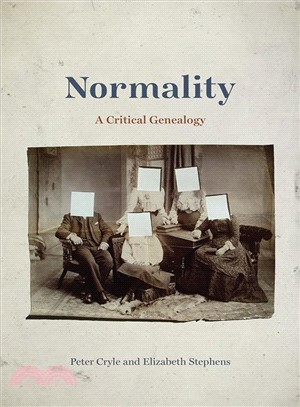
Most of us think we know what is meant when we hear the term ?normal,” but Cryle and Stephens upend taken-for-granted attitudes about the term. They offer a history of the intellectual and cultural i