From 1918’s Tickless Time through Waiting for Lefty, Death of a Salesman,A Streetcar Named Desire, A Raisin in the Sun, and The Prisoner of Second Avenueto 2005’s The Clean House, domestic labor has f
"In Under the Sign of Empty, Wendy Harding adopts a transdisciplinary perspective that draws on the theories of geographers, historians, sociologists, and philosophers to understand the reasons for th
American Unexceptionalism examines a constellation of post-9/11 novels that revolve around white middle-class male suburbanites, thus following a tradition established by writers such as John Updike a
How could novels like Uncle Tom’s Cabin change the hearts and minds of thousands of mid-nineteenth-century readers, yet make so many modern readers cringe at their over-the-top, tear-filled scenes? Se
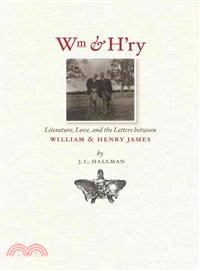
Readers generally know only one of the two famous James brothers. Literary types know Henry James; psychologists, philosophers, and religion scholars know William James. In reality, the brothers’ mind
Conceptions and practices of poetry change not only from time to time and from place to place but also from poet to poet. This has never been more the case than in recent years. Gerald Bruns’s magiste
Beginning with a deceptively simple question—What do we mean when we designate behaviors, values, or forms of expression as “black”?—Evie Shockley’s Renegade Poetics separates what we think we know ab
?In 2005 literary and film critic Edward Turk immersed himself in New York City’s ACT FRENCH festival, a bold effort to enhance American contact with the contemporary French stage. This dizzying crash
The topic of the origins of theatre is one of the most controversial in theatre studies, with a long history of heated discussions and strongly held positions. In The Roots of Theatre, Eli Rozik enter
Autocratic male impresarios increasingly dominated the American stage between 1865 and 1914. Many rose from poor immigrant roots and built their own careers by making huge stars out of “undiscovered,”
As Teresa Longo’s groundbreaking examination reveals, North America’s dissident literature has its roots in the Latin American literary tradition. From Pablo Neruda’s Canto General t
In 2016, a female videogame programmer and a female journalist were harassed viciously by anonymous male online users in what became known as GamerGate. Male gamers threatened to rape and kill both wo
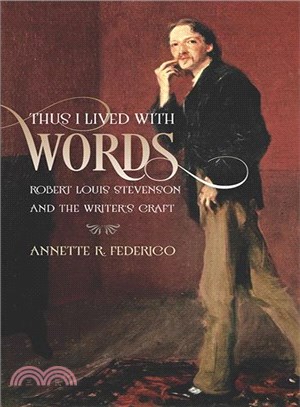
Robert Louis Stevenson (1850–1894) loved more than anything to talk about the craft of writing and the pleasure of reading good books. His dedication to the creative impulse manifests itself in the ex
When it comes to local food, it takes more than “knowing your farmer.” Brandi Janssen takes on some of the myths about how the local food system works and what it needs to thrive. Advocates claim that
Today’s celebrity charity work has deep historical roots. In the 1880s and 1890s, the stars of fin-de-siecle London’s fashionable stage culture—particularly the women—transformed theatre’s connection
Most people in the United States live in urban areas; still, there are nearly fifty million people living in small towns of just a few thousand people or less. Some towns are within a short drive of a
This is the story of the Mad Men fan phenomenon: how the show and its fans distinguished themselves in a market where it’s hard to make an impression, not unlike the driven ad execs at the center of t
Foregrounding critical questions about the tension between the study of drama as literature versus the study of performance, Melinda Powers investigates the methodological problems that arise in some
Who won the first Daytona 500? Fans still debate whether it was midwestern champion Johnny Beauchamp, declared the victor at the finish line, or longtime NASCAR driver Lee Petty, declared the official
The first work to combine literary criticism with other forms of death penalty–abolitionist writing, Demands of the Dead demonstrates the active importance of literature and literary criticism to the
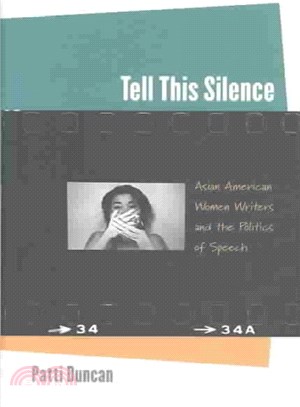
Tell This Silence by Patti Duncan explores multiple meanings of speech and silence in Asian American women's writings in order to explore relationships among race, gender, sexuality, and national iden
As an archetype for an entire class of places, Main Street has become one of America's most popular and idealized images. In Main Street Revisited, the first book to place the design of small downtow
Native orchids are increasingly threatened by pressure from population growth and development but, nonetheless, still present a welcome surprise to observant hikers in every state and province. Compil
When most of us hear the title Gentlemen Prefer Blondes, we think of Marilyn Monroe and Jane Russell’s iconic film performance. Few, however, are aware that the movie was based on Anita Loos’s 1925 co
Many Americans are hungry, while others struggle to find healthy foods. What are communities doing to address this problem, and what should they be doing? Good Food, Strong Communities shares ideas an
Women have always been skilled at feeding their families, and historians have often studied the work of rural women on farms and in their homes. However, the stories of women who worked as agricultura
What does it mean to perform whiteness in the postcolonial era? To answer this question—crucial for understanding the changing meanings of race in the twenty-first century—Megan Lewis examines the way
During and just after World War II, an influential group of American writers and intellectuals projected a vision for literature that would save the free world. Novels, stories, plays, and poems, they
Campaign Inc. is the story of how leadership and organization propelled Barack Obama to the White House. As the chief operating officer of Obama’s 2008 presidential campaign, Henry F. De Sio, Jr., was
The time is right for a critical reassessment of Cold War culture both because its full cultural impact remains unprocessed and because some of the chief paradigms for understanding that culture confu
?What is patriarchal poetry? How can it be both attractive and tempting and yet be so hegemonic that it is invisible? How does it combine various mixes of masculinity, femininity, effeminacy, and erot
Kindred Hands, a collection of previously unpublished letters by such prominent writers as Harriet Beecher Stowe, Rebecca Harding Davis, and Frances E. W. Harper, explores the act and art of writing f
Historians of midwestern railroading during the early part of the twentieth century have generally focused on the production of railroad company histories while ignoring the regional view. Fortunate