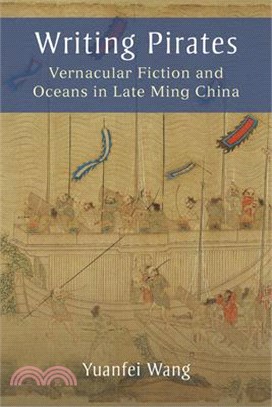
In Writing Pirates, Yuanfei Wang connects Chinese literary production to emerging discourses of pirates and the sea. In the late Ming dynasty, so-called "Japanese pirates" raided southeast coastal Chi
Federalism and Social Policy asks a crucial question: Is a strong and egalitarian welfare state compatible with federalism? This volume explores the complex relationship between decentralization and t
For Dear Life chronicles feminist and artist Carol Jacobsen's deep commitment to the causes of justice and human rights, and focuses a critical lens on an American criminal-legal regime that impar
Under apartheid, black South Africans experienced severe material and social disadvantages occasioned by the government's policies, and they had limited time for entertainment. Still, they closely
For centuries, poets have turned to translation for creative inspiration. Through and in translation, poets have introduced new poetic styles, languages, and forms into their own writing, sometimes ch
In Reading Medieval Latin with the Legend of Barlaam and Josaphat, Donka D. Markus offers comprehensive commentary on the 13th-century Dominican theologian Jacobus de Voragine’s retelling of the
Imperial Fictions explores ways in which writers from late antiquity to the present have imagined communities before and beyond the nation-state. It takes as its point of departure challenges to the d
Writing during the reign of emperors Trajan and Hadrian, Juvenal drew on Roman legend and the history of preceding imperial dynasties as a means of scrutinizing cultural upheavals in the Rome of his d
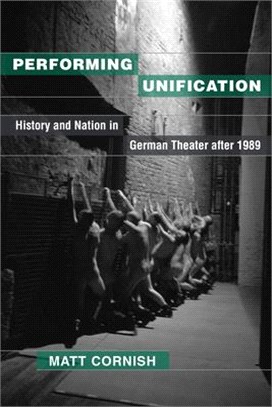
Since the moment after the fall of the Berlin Wall in 1989, the most important German theater artists have created plays and productions about unification. Some have challenged how German history is w
In Curating Community: Museums, Constitutionalism, and the Taming of the Political, Stacy Douglas challenges the centrality of sovereignty in our political and juridical imaginations. Creatively bring
In Curating Community: Museums, Constitutionalism, and the Taming of the Political, Stacy Douglas challenges the centrality of sovereignty in our political and juridical imaginations. Creatively bring
In this study of struggles for ethnoterritorial autonomy, Bethany Lacina explains regional elites’ decision whether or not to fight for autonomy, and the central government’s response to this decision
In True Names: Vergil and the Alexandrian Tradition of Etymological Wordplay, James O’Hara presents a richly annotated, comprehensive collection of examples of etymological wordplay in Vergil’s Aeneid
This short book presents the findings of a survey on the use of public libraries. The survey was conducted by the Social Science Research Council in 1947 under the auspices of the American Library Ass
Using Vergil's Aeneid as a norm, George E. Duckworth provides an authoritative and comprehensive analysis of the metrics of Vergil and other Latin poets who composed in hexametersfrom Ennius to
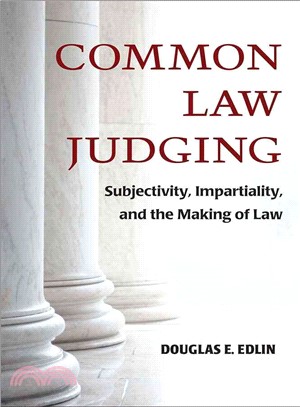
Are judges supposed to be objective? Citizens, scholars, and legal professionals commonly assume that subjectivity and objectivity are opposites, with the corollary that subjectivity is a vice and obj
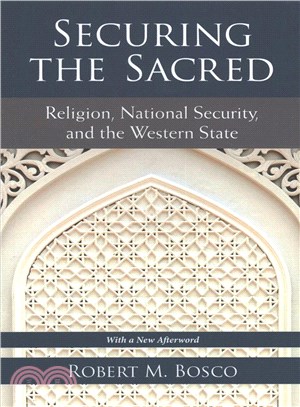
Since the terrorist attacks of September 11, 2001, Western nations have increasingly recognized religion as a consideration in domestic and foreign policy. In this empirical comparison of the securiti
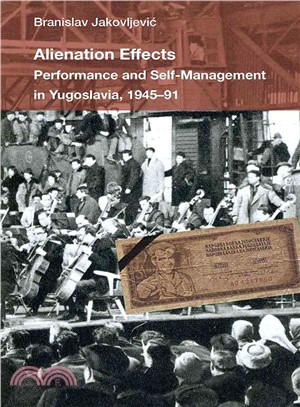
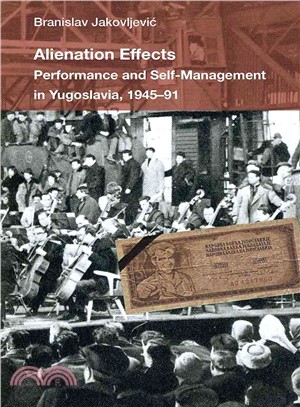
In the 1970s, Yugoslavia emerged as a dynamic environment for conceptual and performance art. At the same time, it pursued its own form of political economy of socialist self-management. Alienation Ef
In the 1970s, Yugoslavia emerged as a dynamic environment for conceptual and performance art. At the same time, it pursued its own form of political economy of socialist self-management. Alienation Ef
Tacitus’ narrative of 69 CE, the year of the four emperors, is famous for its description of a series of coups that sees one man after another crowned. Many scholars seem to read Tacitus as though he
?Exploring Options is designed to help student writers develop their knowledge and use of academic language to meet the demands of college- and university-level writing assignments. It draws on the r
In the second half of the Weimar period (1918–33), photographers produced books consisting almost entirely of sequenced images. The subjects ranged widely: from plants and nature to the modern metropo