This book contains all of Lucian’s Dialogues of the Dead, Dialogues of the Sea-Gods, andDialogues of the Gods, with introduction and explanatory commentary. The Greek text is from the Loeb Classical L
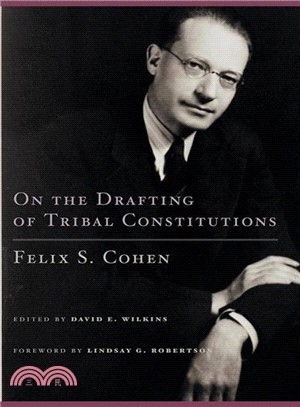
Barely 25 upon his appointment to the Department of the Interior in 1933, Cohen quickly began helping to draft the Indian Reorganization Act of 1934 and chaired a committee charged with assisting trib
This classic text, which contains the complete Greek text of the Apology and of Crito with other selections, offers an introduction to Plato’s language as well as an introduction to Socrates as prese
This useful student edition presents ten of Seneca's best-known letters as well as selections from two of his philosophical essays, De providentia and De vita beata. A leading proponent of Stoicism, S
Sanora Babb’s long-hidden novel Whose Names Are Unknown tells of the High Plains farmers who fled drought and dust storms during the Great Depression. Written with empathy for the farmers’ plight, thi
The remarkable photographs in Peoples of the Plateau capture the lives of Pacific Northwest Indians at the turn of the twentieth century—and at a turning point in their own history.The Columbia River
In 63 b.c., Lucius Sergius Catilina, a Roman aristocrat, formed a conspiracy to overthrow the Roman Republic. Cicero, who was consul that year, exposed the plot and documented his defeat of the conspi
Tell Them We Are Going Home details the courageous journey of the Northern Cheyennes, under the leadership of Little Wolf and Dull Knife, from Indian Territory northward to their homelands in the Powd
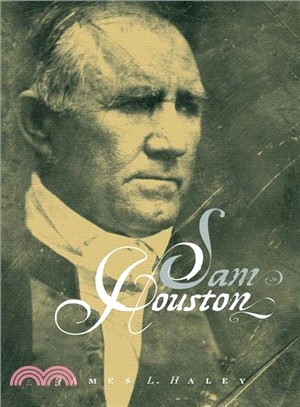
In the decades preceding the Civil War, few figures in the United States were as influential or as controversial as Sam Houston. In Sam Houston, James L. Haley explores Houston’s momentous career and
This compact history is the first to explore two landmark U.S. Supreme Court cases of the early 1830s: Cherokee Nation v. Georgia and Worcester v. Georgia. Legal historian Jill Norgren details the ext
Political stability is a crucial precondition for peace in the Middle East. In The Middle East Peace Process: Vision versus Reality, Joseph Ginat, Edward J. Perkins, and Edwin G. Corr have assembled a
Alexander Ross offers a completely authentic account of the earliest attempts by men of European background to come to grips with the climate, geography, and inhabitants of the Northwest at a time whe
George Armstrong Custer. The name evokes instant recognition in almost every American and in people around the world. No figure in the history of the American West has more powerfully moved the human
The diary of August Scherneckau, who fought in the Civil War, is presented in this volume, a rare account from a Nebraska soldier. Scherneckau emigrated from Germany and settled in the Nebraska Territ
Sagebrush Soldier is an account of military life during the Indian Wars in the late nineteenth-century West. Private William Earl Smith describes daily camp life, battle scenes, and the behavior of fa
Although Scots have never been an exceptionally large immigrant group in North America, their presence to the West proved significant in a variety of arenas. In this unique and engaging new book, Fere
Jacob Nashoba’s journey has taken him from his Choctaw homeland in Mississippi to Vietnam and finally to a small reservation in the mountains of eastern Arizona. A tribal ranger, he lives among people
Most North Americans experience mythology by way of translations of classical texts, and surprisingly few of us are familiar with Coyote, Spider Woman, Water Jar boy, Falling Sky Woman, or the epic of
"Peasant Wars of the Twentieth Century provides a good short course in the major popular revolutions of our century--in Russia, Mexico, China, Algeria, Cuba, and Viet Nam--not from the perspective of
Vergil’s Aeneid has been considered a classic, if not the classic, of Western literature for two thousand years. In recent decades this famous poem has become the subject of fresh and searching contro
This collection of twenty-seven accounts by European women, who visited America between 1775 and 1918, reveals ordinary life on a day-to-day basis in America. Marion Tinling has gathered these primary
This is the story of Stand Watie, the only Indian to attain the rank of general in the Confederate Army. An aristocratic, prosperous slaveholding planter and leader of the Cherokee mixed bloods, Watie
Pioneer Women provides a rare look at frontier life through the eyes of the pioneer women who settled the American West. Linda Peavy and Ursula Smith vividly describe the hardships such women endured
One of the great tribes of the Southwest Plains, the Kiowas were militantly defiant toward white intruders in their territory and killed more during seventy-five years of raiding than any other tribe.
Most Quarter Horse breeders and breed experts believe that in the production of great Quarter Horses one should never underestimate the importance of the dam. They are convinced that, in the long run,
In Playing Cowboys, Robert Murray Davis examines the Western hero-a principal image of American manhood since publication of The Virginian-as portrayed by a variety of post-World War II novelists and
The purpose of this book, says the author, is to show the effect of Indian medicinal practices on white civilization. Actually it achieves far more. It discusses Indian theories of disease and methods
The Figure of Kit Carson strides through the literature of the American West in heroic size. Trader, trapper, scout, brigadier general of New Mexico Volunteers, and many other things besides, he has a
The stories in this unusual collection come from the twelve tribes of Indians that, in historic times, have lived in the present states of Idaho, Montana, and Wyoming. They include myths, legends, per
No assessment of the Plains Indians can be complete without some account of the Pawnees. They ranged from Nebraska to Mexico and, when not fighting among themselves, fought with almost every other Pla
The Arapahoes, who simultaneously occupy the three major divisions of the Great Plains, are typical but the least known of the Plains tribes. Overshadowed by their more hostile allies, the Sioux and C
In 1832, Washington Irving, recently returned from seventeen years’ residence abroad and eager to explore his own country, embarked on an expedition to the country west of Arkansas set aside for the I
Born during the American Revolution, Williams was a child of the early frontier. In his young manhood he became an itinerant preacher and appointed himself a missionary to the Osages, who soon conver
After the Civil War, four geological and geographical surveys, later called the Great Surveys, Undertook the massive task of finding out what lay west of the hundredth meridian in the vast American wi
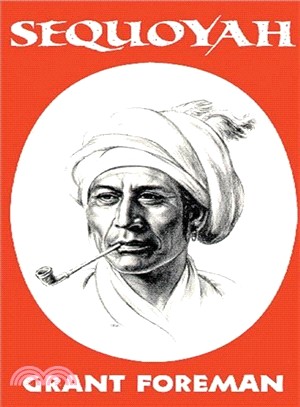
Sequoyah is widely celebrated as an unlettered Cherokee Indian who, entirely from the resources of his own brilliant mind, endowed his whole tribe with learning-the only man in history to conceive and
Juan Bautista de Anza arrived in Santa Fe at a time when New Mexico, like Spain’s other North American colonies, faced heightened threats from Indians and international rivals. As governor of Ne
For nearly two hundred years, a fragment of the journal of John Maley, an obscure explorer on the American frontier, resided at Yale University and was treated with some skepticism by historians. It w
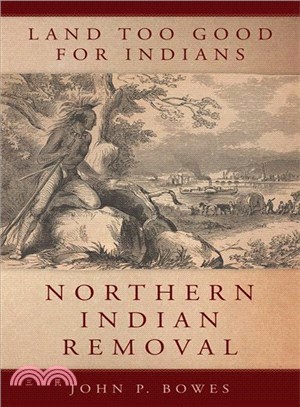
The history of Indian removal has often followed a single narrative arc, one that begins with President Andrew Jackson’s Indian Removal Act of 1830 and follows the Cherokee Trail of Tears. In that con
Despite the countless books and films devoted to him, Billy the Kid remains one of the most elusive figures of the Old West. Now, award-winning western historian Frederick Nolan has scoured the publis
Oklahoma was in the throes of the Great Depression when Preston George acquired a cheap Kodak folding camera and took his first photographs of steam locomotives. As depression gave way to world war, G