As president of the Church of Jesus Christ of Latter-day Saints and Utah’s first territorial governor, Brigham Young (1801–77) shaped a religion, a migration, and the American West. He led
In a world rife with conflict and tension, how does a great power prosecute an irregular war at a great distance within the context of a regional struggle, all within a global competitive environment?
Best known for his account of the Peloponnesian War, Thucydides (c. 454–c. 395 b.c.) was an Athenian general and historian. This valuable commentary addresses the most famous part of Thucydides&
On August 31, 1915, a Texas posse lynched five “horse thieves.” One of them, it turned out, was General Pascual Orozco Jr., military hero of the Mexican Revolution. Was he a desperado or a
During the twentieth century, artists across the United States participated in the modernist movement. But as American modernism evolved during the 1950s and 1960s, the art world likewise changed, nar
“So what does it mean to be a Cherokee?” asks Cherokee author Robert J. Conley at the start of this delightful collection of his writings. Throughout his prolific career, Conley used his a
More than 14,000 New Mexicans served in uniform during World War I, and thousands more contributed to the American home front. Yet today in New Mexico, as elsewhere, the Great War and the lives it aff
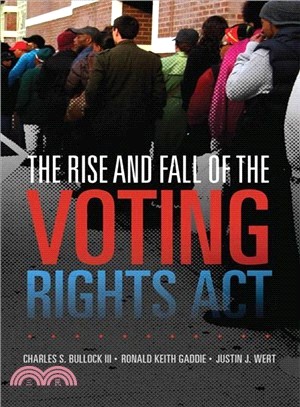
On June 25, 2013, the U.S. Supreme Court handed down its decision in Shelby County v. Holder, invalidating a key provision of voting rights law. The decision—the culmination of an eight-year bat
George Crook was one of the most prominent military figures of the late-nineteenth-century Indian Wars. Yet today his name is largely unrecognized despite the important role he played in such pivotal
Between 1880 and 1940, Navajo and Ute families and westward-trending Anglos met in the “bullpens” of southwestern trading posts to barter for material goods. As the products of the livesto
On August 31, 1915, a Texas posse lynched five “horse thieves.” One of them, it turned out, was General Pascual Orozco Jr., military hero of the Mexican Revolution. Was he a desperado or a
From the year of Arizona’s statehood to its centennial in 2012, narratives of the state and its natural landscape have revealed—and reconfigured—the state’s image. Through official state and federal p
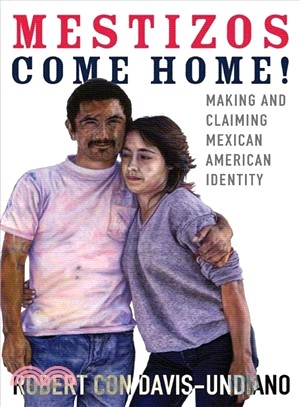
Uruguayan writer Eduardo Galeano has described U.S. and Latin American culture as continually hobbled by amnesia—unable, or unwilling, to remember the influence of mestizos and indigenous populations.
For over fifty years, Bill C. Malone has researched and written about the history of country music. Today he is celebrated as the foremost authority on this distinctly American genre. This new collect
For American Indians, tribal politics are paramount. They determine the standards for tribal enrollment, guide negotiations with outside governments, and help set collective economic and cultural goal
Born to Anglo-American parents on the Appalachian frontier, captured by the Miami Indians at the age of thirteen, and adopted into the tribe, William Wells (1770–1812) moved between two cultures all h
Primeros Memoriales is published here for the first time in its entirety both in the original Nahuatl and in English translation.The volume follows the manuscript order reconstructed for the Primeros
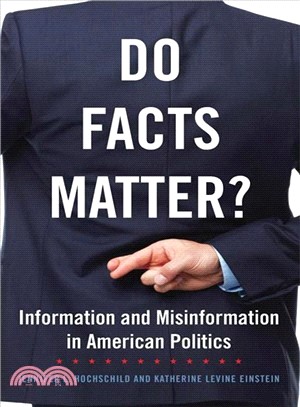
A democracy falters when most of its citizens are uninformed or misinformed, when misinformation affects political decisions and actions, or when political actors foment misinformation—the state of af
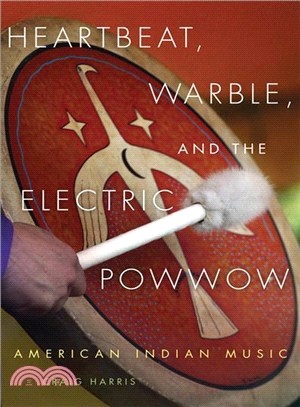
Despite centuries of suppression and oppression, American Indian music survives today as a profound cultural force.Heartbeat, Warble, and the Electric Powwow celebrates, in depth, the vibrant soundsca
On June 25, 2013, the U.S. Supreme Court handed down its decision in Shelby County v. Holder, invalidating a key provision of voting rights law. The decision—the culmination of an eight-year battle ov
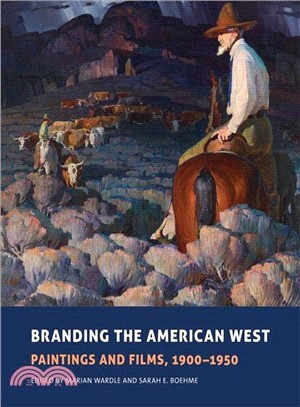
Artists and filmmakers in the early twentieth century reshaped our vision of the American West. In particular, the Taos Society of Artists and the California-based artist Maynard Dixon departed from t
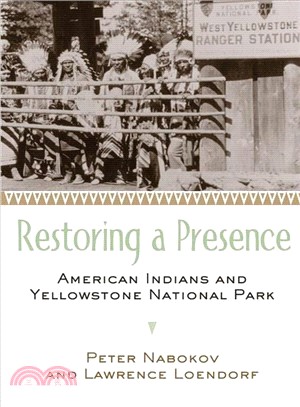
Placing American Indians in the center of the story, Restoring a Presence relates an entirely new history of Yellowstone National Park.Although new laws have been enacted giving American Indians acces
When New Mexico became an alternative cultural frontier for avant-garde Anglo-American writers and artists in the early twentieth century, the region was still largely populated by Spanish-speaking Hi
Western education has often employed the bluntest of instruments in colonizing indigenous peoples, creating generations caught between Western culture and their own. Dedicated to the principle that le
For more than a century, trading posts in the American Southwest tied the U.S. economy and culture to those of American Indian peoples—and in this capacity, Hubbell Trading Post, founded in 1878 in Ga
Rising from the waters of the Pacific off the southern California Coast, Santa Cruz Island captures the imagination. Once home to a large Chumash population, in the nineteenth century it became a self
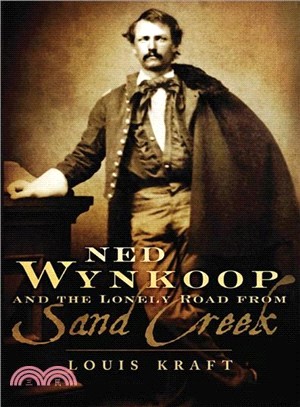
When Edward W. Wynkoop arrived in Colorado Territory during the 1858 gold rush, he was one of many ambitious newcomers seeking wealth in a promising land mostly inhabited by American Indians. After he
George Crook was one of the most prominent military figures of the late-nineteenth-century Indian Wars. Yet today his name is largely unrecognized despite the important role he played in such pivotal
All Americans, liberal or conservative, religious or not, can agree that religious freedom, anchored in conscience rights, is foundational to the U.S. democratic experiment. But what freedom of consci
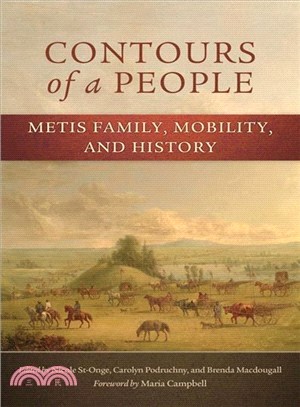
What does it mean to be Metis? How do the Metis understand their world, and how do family, community, and location shape their consciousness? Such questions inform this collection of essays on the nor
Progress on the nation’s second transcontinental railroad slowed in 1873. The Northern Pacific’s proposed middle—the 250 miles between present Billings and Glendive, Montana—had yet to be surveyed, an
This sweeping work of history explains the westward spread of cotton agriculture and slave labor across the South and into Texas during the decades before the Civil War. In arguing that the U.S. acqui
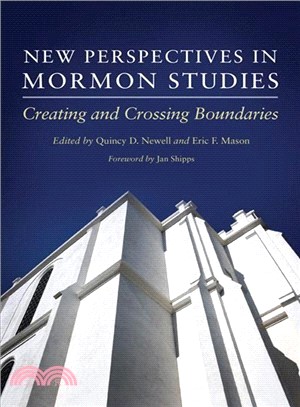
Scholarship in Mormon studies has often focused on a few key events and individuals in Mormon history. The essays collected by Quincy D. Newell and Eric F. Mason in this interdisciplinary volume expan
For years Robert Newton Baskin (1837–1918) may have been the most hated man in Utah. Yet his promotion of federal legislation against polygamy in the late 1800s and his work to bring the Mormon territ
Robert Henri (1865-1929) spent time in Santa Fe in 1916, 1917, 1922 and 1925 during which time he produced some thirty portraits, mainly of Hispanic and Indian subjects. His enthusiasm for New Mexico
Examines the Native American struggle for equal voting rights, the prevelance of discriminatory practices and noncompliance with the Voting Rights Act, and contemporary voting rights litigation in sev
A freewheeling saga about western American industrial mightWho conceived of the Hoover, Bonneville, and Grand Coulee dams? Who laid the financial foundations for the Golden Gate and San Francisco Bay
Cramer (law, politics and society, Drake University, Des Moines, Iowa) details the social criteria that affect the legal decision by the United States government to grant a group tribal status. Her fi
When Europeans battled for control over North America in the eighteenth century, American Indians were caught in the cross fire. Two such peoples, the Alabamas and Coushattas, made the difficult decis