'Economic losses from natural disasters totaled $92 billion in 2015.'Such statements, all too commonplace, assess the severity of disasters by noother measure than the damage inflicted on buildings, i
MENA is one of the richest regions in the world in terms of natural resources: it holds more than 60 percent of the world’s proven oil reserves, mostly located in the Gulf region, and nearly half of g
Natural resources have the transformational potential to support economic and political stability as well as contribute to national prosperity and economic development. However, in countries dependent
National income is underpinned by a country's wealth--measured comprehensively to include all assets, produced capital, human capital, natural capital and net financial assets--and sustained economic
Over 60 million people are currently displaced due to conflict or violence, and about 140 million are exposed to natural disasters. As part of humanitarian responses to those affected populations, gro
Dryland regions in Sub-Saharan Africa are home to one-half of the region’s population and three-quarters of its poor. Poor both in natural resources and in assets and income, the inhabitants of drylan
Dryland regions in Sub-Saharan Africa are home to one-half of the region’s population and three-quarters of its poor. Poor both in natural resources and in assets and income, the inhabitants of drylan
The natural endowment of the Democrat Republic of Congo, in the form of land, minerals, and forests, is unparalleled. The right mix of policies has the potential to unleash incentives that could trans
In recent decades, resource-rich developing countries have been using their natural resources as collateral to access sources of finance for investment, countervailing the barriers they face when acce
Pollution from fossil fuels and degraded natural lands are raising the earth’s temperature. The evidence of the causes of global warming is clear, as are its consequences. The economic impacts of clim
The persistent potential for large scale natural disasters has become a real concern for the Turkish government since the late 1990s, which ultimately led to the establishment of the Turkish Catastrop
Access for All: Building Inclusive Financial Systems outlines the "new" vision of microfinance, laying out in plain language what CGAP and others in the development field have learned over the past 10
'Building Competitive Firms: Incentives and Capabilities' explains how firms become competitive in language suitable for both technical and non-technical readers. A simple analytical framework integra
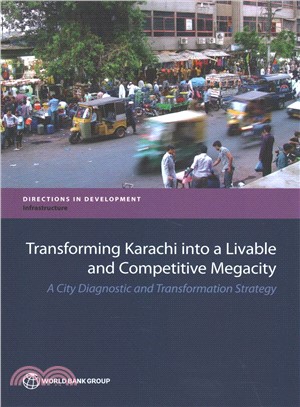
With a population of 16 million, Karachi is the largest megacity in Pakistan. Despite being a large city that is home to many, it has seen a substantial decline in quality of life and economic competi
The purpose of the Working with Smallholders handbook is to enable the development of more sustainable, resilient and productive supply chains for agribusinesses and to illustrate the substantial deve
Two decades after its original publication, The Analysis of Household Surveys is reissued with a new preface by its author, Sir Angus Deaton, recipient of the 2015 Nobel Prize in Economic Sciences. Th
Trade has played a critical role in global poverty reduction. In harnessing the potential of trade, some of the most successful countries have developed strong trade relationships with their neighbors
With growing water scarcity in many parts of the world and projections that indicate the need to increase agricultural production and, concurrently, agricultural water use, it is increasingly advocate
With more than 70 percent of its population living in cities, Latin America and the Caribbean (LAC) is among the most urbanized regions in the world. Yet, although its cities are, on average, more pro
Since 2010, the number and intensity of violent conflicts have increased rapidly. The human and economic costs associated with violent conflict are massive, affecting long-term stability and prospects
In 2009, Sri Lanka emerged from nearly 30 years of armed conflict with more than 450,000 Internally-Displaced Persons (IDPs), a North and East in need of reconstruction and rehabilitation, and a dislo
The 21st century will witness the collision of two powerful forces - burgeoning population growth, together with a changing climate. With population growth, water scarcity will proliferate to new area
The World Bank has partnered with the Commitment to Equity Institute at Tulane University to implement their diagnostic tool—the Commitment to Equity (CEQ) Assessment—designed to assess how taxation a
Central American countries spend approximately one percent of their aggregate gross domestic product subsidizing residential electricity consumption. This amount is comparable with what these countrie
Despite a spectacular expansion of the higher education sector in Sub-Saharan Africa, the supply of tertiary education has generally failed to keep pace with demand and the region continues to lag all
The Skills Toward Employment and Productivity (STEP) Survey is an initiative of the World Bank in cooperation with other development partners and nongovernmental agencies and carried out in more than
Urbanization in East Asia and the Pacific has created enormous opportunity for many. Yet the rapid growth of cities can also create challenges as national and local governments try to keep up with the
This report seeks to explain the over-time trends in wage inequality in Latin America and the Caribbean (LAC) since the mid-1990s. It explains how wage inequality has been associated with household-in
Vietnam is at a crossroads. It can grow as an export platform for GVCs, specializing in low value-added assembly functions with industrialization occurring in enclaves with little connection to the br
Stagnant global trade, subdued investment, and heightened policy uncertainty marked another difficult year for the world economy. A subdued recovery is expected for 2017, with receding obstacles to ac
This book proposes a renewal of 'Open Regionalism' in Latin America and the Caribbean (LAC) aimed at achieving the region's goals of high growth with stability. The LAC region experienced a growth spu
This study provides a basic diagnostic of residential network (piped) water coverage and affordability in Uganda and its relationship with poverty using a series of nationally representative household
This study provides a basic diagnostic of access to safe water and sanitation in Uganda and their relationship with poverty. The analysis relies on a series of nationally representative household surv
This book, produced jointly by the World Bank, the University of California, Berkeley, and the WHO, aims to provide decision-makers at sub-national, national, regional and global levels with additiona
DCP3 will consist of nine separate volumes: eight will focus on a specific disease cluster or population, and the ninth will be an overview with main findings and conclusions about achieving health pr
This paper explores the role of social protection in promoting the well-being and prosperity of people living in dryland regions of sub-Saharan Africa, with a specific focus on the Sahel and the Horn
The health workforce must be able to cope with shifts in the pattern of causes of death and disease that are being seen worldwide—particularly with the rise in noncommunicable diseases (NCDs). This re
Global Economic Prospects is a World Bank Group Flagship Report. On a semiannual basis (January and June), it examines global economic developments and prospects, with a special focus on developing co
This volume—a collaborative work between the World Bank’s Global Governance Practice and a team of researchers working with the Korean Development Institute—is dedicated to the proposition that there
With over 100 right to information (RTI) laws – also called freedom of information or access to information laws – now in place globally, the groundwork has been laid to advance more transparent, acco