Sri Lanka achieved middle-income-country status in January 2010, on the strenght of of the economic growth fueled by the liberalization policy introduced in the late 1970s and pursued albeit unevenly
Seizure and confiscation of proceeds of crime, and funds intended to finance terrorism, are key objectives of the global initiative to combat money laundering and terrorism financing. The timely iden
Indonesia has begun to emerge into middle-income status, yet persistent poverty and stark inequalities continue to affect young children’s development. This book tells the story of Indonesia’s effort
This Little Data Book presents tables for over 213 economies showing the most recent national data on key indicators of information and communications technology (ICT), including access, quality, affo
Income and asset disclosure systems (IAD) are gaining prominence as a tool in the fight against corruption, and have the potential to support efforts in both prevention and enforcement. They are inten
Fifty years ago, health outcomes in the countries of Eastern Europe and Central Asia were not far behind those in Western Europe and well ahead of most other regions of the world. But progress since
This book brings together new household and enterprise data from 41 countries in Sub-Saharan Africa to inform policy makers and practitioners on ways to expand women entrepreneurs’ economic opportunit
This is the first book on land administration and reform in Sub-Saharan Africa, and is highly relevant to all developing countries around the world. It provides simple practical steps to turn the huge
The decision to look at failures for answers is a bold one. Policy makers, planners and implementers have a tendency to look through prisms of success in framing working policies, programs and results
The report aims to meet two broad objectives: (a) enhance knowledge about the current state of existing social safety nets (SSNs) and assess their effectiveness in responding to new and emerging chall
The Global Monitoring Report 2013: Rural-Urban Dynamics andthe Millennium Development Goals examines rural-urbandisparities in the achievement of the Millennium DevelopmentGoals (MDGs) and how urbaniz
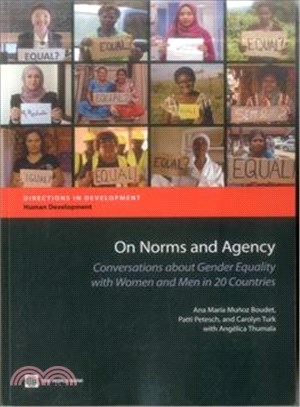
Social norms, gender roles, beliefs about one’s own capacity, and assets, as well as communities and countries, determine the opportunities available to women and men—and their ability to take advanta
Road freight transport plays an indispensable role in international economic cooperation and foreign trade. For short and medium distances in particular, road freight transport constitutes a predomina
In the aftermath of the Arab Spring, when thousands of young women and men fought for the opportunity to realize their aspirations and potential, the question of jobs continues to be crucial in the Mi
Pollution from fossil fuels and degraded natural lands are raising the earth’s temperature. The evidence of the causes of global warming is clear, as are its consequences. The economic impacts of clim
The presence of turbulence in multiple areas of our society--food, fuel, and finances-being but three critical areas presently being impacted means that long-held assumptions are no longer true, that
A new look and new ways to access the world’s premier source of development dataLooking for accurate, up-to-date data on development issues? World Development Indicators (WDI) is the World Bank’s prem
Disaster risk management is essential in the fight against poverty. Disasters can, in an instant, wipe out decades of hard-fought poverty reduction and development gains and push countless households
This publication aims to assist countries in understanding the specific challenges and opportunities posed by climate change in the agricultural sector in order to increase climate resilience and adap
The Congo Basin forests have been mainly “passively” protected by chronic political instability and conflict, poor infrastructure, and poor governance. Congo Basin countries thus still fit the profile
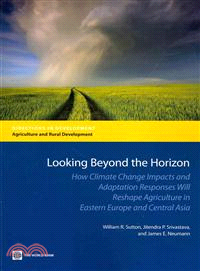
Agriculture is one of the most climate-sensitive of all economic sectors. In many countries, such as the fourexamined in Looking Beyond the Horizon, the risks of climate change are an immediate and fu
This book takes both a global as well as a local perspective in assessing the impacts of climate change on the economy, agricultural sector, and households in three of the MENA countries; Syria, Tunis
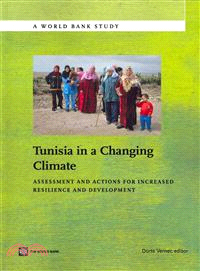
This book provides an assessment of climate risks, opportunities and possible actions in Tunisia. It recognizes that the Tunisian revolution of January 14th 2011 has created significant change in Tuni
Given the chronic power shortages faced by numerous developing countries, and the need everywhere to keep pace with demand, understanding the drivers of public private partnerships (PPPs) in energy is
The Little Data Book on Africa 2012/2013 is a pocket edition of Africa Development Indicators 2012/2013. It contains some 115 key indicators on economics, human development, governance, and partnershi
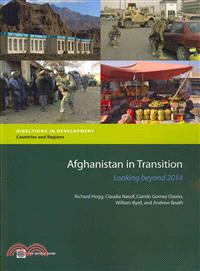
The withdrawal of most international troops by 2014 will have a profound and lasting impact on the country's economic and development fabric. This book explores some of these ramifications. Developmen
The Uganda school system has expanded over the years resulting from mass education reforms at the primary – since 1997, and the lower secondary level – since 2007. This has enabled provision of key in
Connecting the Disconnected presents the findings of the field research designed to evaluate financial practices and strategies among urban and rural Bhutanese households. The study was commissioned i
Impact evaluation has grown more popular as a method for identifying the causal links between interventions and outcomes. These kind of evaluations assess changes that can be attributed to a particula
The paper ‘Challenges and Approaches to Electricity Grids Operations and Planning with Increased Amounts of Variable Renewable Generation: Emerging Lessons from Selected Operational Experiences and De
In the past decade the global financial assistance for AIDS responses increased tremendously and the donor community provided greater resources to community responses. Yet little is known about the g
With decentralization and urbanization, state and local debt and debt of quasi-public agencies have grown in importance. With debt comes the risk of insolvency. Subnational debt crises are reoccurring
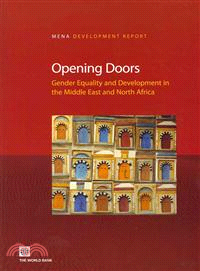
In the last two decades, the Middle East and North Africa (MENA) region has closed many critical gender gaps, especially in ensuring equal access for girls and boys to education and healthcare. Today,
In Eastern Europe and Central Asia there are significant pressures for residential energy tariffs to rise, as government budgets are increasingly stretched and cannot afford to pay large energy subsid
Energy efficiency is an important factor in an economy, since it helps meet energy needs, decrease costs, and lower environmental impacts. A review of the evolution of energy intensity in European and
The East Asia and Pacific region has an international emigrant population of over 21 million people, who remitted more than USD 90 billion to their home countries in 2010. The region also hosts more
Resilience is the ability of a system, community, or society exposed to hazards to resist, absorb, accommodate to, and recover from the effects of a hazard in a timely and efficient manner. Resilience
'Transforming Cities with Transit' explores the complex process of transit and land-use integration in rapidly growing cities in developing countries. As one of the most promising strategies for advan
This evaluation is about the nature and magnitude of the cost savings and other benefits of business license simplification in one of the central districts of Lima, Peru. IEG asked whether the project
Youth employment issues are a major concern for many countries because they have negative effects on the welfare of young people, and may also adversely affect economic performance and social stabilit