The unanticipated spike in international food prices in 2007-08 hit many developing countries hard. International prices for food and other agricultural products increased by more than 100 percent bet
International Debt Statistics (IDS) 2014 is a continuation of the World Bank’s publications Global Development Finance, Volume II (1997 through 2009) and the earlier World Debt Tables (1973 through 19
The Municipal Finance Handbook aims to help local government practitioners, particularly staff of medium and large cities, improve strategic management of municipal finances. The demands for pragmatic
In the wake of the recent global financial crisis and against the backdrop of the ongoing global financial sector reforms, macroprudential policy is being increasingly seen as a “must-do” reform. At t
Most Sub-Saharan African countries try to promote rural electrification through both centralized and decentralized approaches. This guide focuses on the decentralized approach, providing practical gui
In this summary report and a series of country case studies, infoDev is exploring the transformative role that Information and Communication Technologies (ICTs) can have in post-conflict nations durin
Based on a wide array of quantitative and qualitative techniques, Light Manufacturing in Vietnam identifies key constraints on manufacturing enterprises in Vietnam and evaluates differences in firm pe
Climate change and migration are major concerns in the MENA region, yet the empirical evidence on the impact of climate change and extreme weather events on migration remains limited. Information is b
Crime and violence inflict high costs on the private sector—costs that are rising globally, according to the World Bank’s Enterprise Surveys, discussions with chambers and associations, and the Bank’s
Over the last decade, significant global and regional forces including changes in technology, trade patterns, and business practices, with a steady shift in value added production and employment towar
High fertility and declining mortality rates have led to a very young population in most Sub-Saharan African countries. The region’s labor force is expected to increase by 11 million a year over the
The purpose of this study is to build a stronger evidence base on the role of faith-inspired, private secular, and public schools in sub-Saharan Africa using nationally representative household survey
What needs to be done to enable the domestic private sector to expand its role in the provision of safe water and improved sanitation to the poor in developing countries? Is an expanded role constrain
The Results-Based Initiatives (RBI), launched in 2007, were a pioneering attempt to provide comprehensive, coherent, and rigorous evidence on effective interventions to foster the economic empowerment
Problem-driven political economy analysis holds considerable promise to help development practitioners identify what policies and strategies are most likely to succeed in addressing difficult and pers
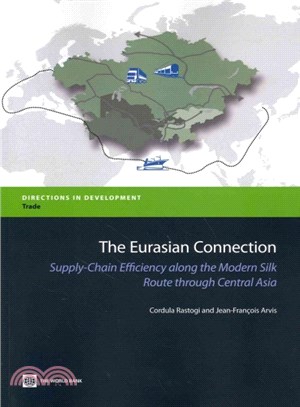
News and money today travel fast, but in Central Asia the bulk of people and goods still travel by road. Hence, the main roads crisscrossing this vast region and related services are arteries supporti
The most important asset people have is their human capital. For most, the value of this asset is realized in the labor market. This book examines the changing world of work in a dynamic region, and
This book presents the key findings from a new poverty assessment for Vietnam, led jointly by the World Bank and the Vietnam Academy of Social Sciences (VASS). It takes a fresh look at the lives of p
This book looks at both the potential and limits of policies to promote entrepreneurship as an important vehicle for social mobility in Latin America and the Caribbean. Who are the region’s entrepren
Vietnam has attained a strong record of economic growth and poverty reduction since the adoption of market-based economic reforms and pro-poor policies starting in the mid-1980s. Much of this achieve
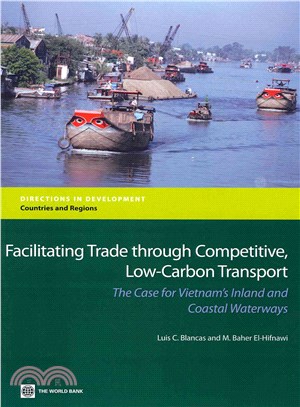
Like many of its Southeast Asian neighbors, Vietnam faces the twin challenges of sustaining economic growth and protecting the environment. On the one hand, the impressive poverty reduction and growth
Since the 1990s, the financial systems in developing and developed countries have gained in soundness, depth, and diversity, prompted in part by a series of financial sector and macroeconomic reforms
For two decades, Africa’s strong economic growth has paved the way for poverty reduction. Nevertheless, high chronic poverty levels persist, and the gap between income groups in terms of human capital
Behaviors that pose risks for an individual’s health and that also represent important threats for public health, such as drug use, smoking, alcohol, unhealthy eating causing obesity, and unsafe sex,
The battle against the bribery of foreign public officials is critical to the overall fight against corruption. Corruption undermines the governance, rule of law, and economic and social development
Ghana is on a strong trajectory toward solidifying its middle income status. Today, more childrenthan at any time in the history of Ghana have access to basic and secondary education. Overthe past dec
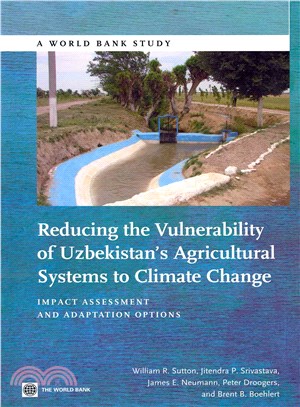
Agriculture is one of the most climate-sensitive of all economic sectors. In many countries, such as in Uzbekistan, the risks of climate change are an immediate and fundamental problem because the maj
Social inclusion is on the agenda of governments, policymakers, and nonstate actors around the world. Underpinning this concern is the realization that despite progress on poverty reduction, some peop
This volume will explore the potentially transformative role of effective laws and legal institutions in providing people with more opportunity that is both inclusive and equitable. Laws, legal framew
Traditionally piracy has produced sentimental notions of adventure, freedom, and independence. However, piracy is a criminal act and often involves high levels of violence that can have a devastating
The World Bank has a long history of investing in China’s technical and vocational education and training (TVET), dating back to the 1963 Higher Education Project, which benefited selected tertiary TV
Financial inclusion has become a major subject of interest among policymakers, researchers, and other financial sector stakeholders. Many countries, for example, have recently adopted explicit financi
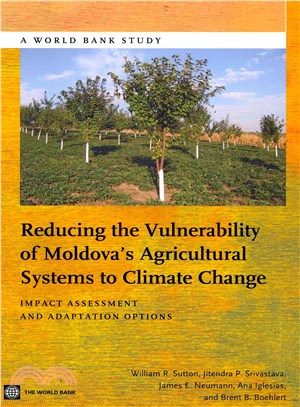
Agriculture is one of the most climate-sensitive of all economic sectors. In many countries, such as in Moldova, the risks of climate change are an immediate and fundamental problem because the majori
Mainland Tanzania exemplifies the developing world’s struggle to achieve middle-income status while confronting widespread poverty and substantial health challenges. Tanzania’s struggle with HIV/AIDS,
Agriculture is one of the most climate-sensitive of all economic sectors. In many countries, such as in FYR Macedonia, the risks of climate change are an immediate and fundamental problem because the
Agriculture is one of the most climate-sensitive of all economic sectors. In many countries, such as in Albania, the risks of climate change are an immediate and fundamental problem because the majori
The 2008 financial crisis has highlighted the challenges associated with global financial integration and has emphasized the importance of macro financial linkages. Specifically it has shown how real
Health and economic development are interconnected. Over the past decades, the health sector has become an increasingly important component of the global economy, evidenced by the growing trend of hea
'Financial Management Information Systems and Open Budget Data: Do governments report on where the money goes?' is a World Bank Study, initiated in 2012 after an extended stocktaking exercise, to expl
Cities currently account for about two-thirds of the world’s annual energy consumption and about 70 percent of greenhouse gas (GHG) emissions. In the coming decades, urbanization and income growth in