Since independence, the West African subregion has been the arena for a number of large-scale conflicts and civil wars, as well as various low-intensity conflicts, with conflicts largely clustered aro
As in previous years, global growth disappointed in 2014, but a lackluster recovery is underway, with increasingly divergent prospects in major economies and developing countries. Looking ahead, growt
The goals of universal health coverage (UHC) are to ensure that all people can access quality health services,to safeguard all people from public health risks, and to protect all people from impoveris
This publication is part of the Bank’s multiyear program to enhance its knowledge of HRH policies. The program’s ultimate objective is to strengthen knowledge and capacity to collect evidence, analyze
In economic growth the largest differences between developed and developing economies are in innovation performances. Innovation is critical for growth, but it is increasingly important for addressing
Despite armed internal conflict and the global financial crisis, Sri Lanka has made remarkable progress in recent years, enjoying healthy economic growth and substantially reducing poverty. Moreover,
In this summary report and a series of country case studies, infoDev is exploring the transformative role that Information and Communication Technologies (ICTs) can have in post-conflict nations durin
Behaviors that pose risks for an individual’s health and that also represent important threats for public health, such as drug use, smoking, alcohol, unhealthy eating causing obesity, and unsafe sex,
This volume will explore the potentially transformative role of effective laws and legal institutions in providing people with more opportunity that is both inclusive and equitable. Laws, legal framew
Eleventh in a series of annual reports comparing business regulation in 185 economies, Doing Business 2014 measures regulations affecting 11 areas of everyday business activity:? Starting a business?
Fifty years ago, health outcomes in the countries of Eastern Europe and Central Asia were not far behind those in Western Europe and well ahead of most other regions of the world. But progress since
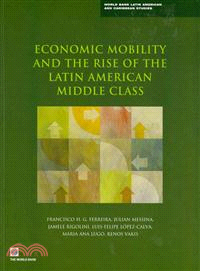
Tras decadas de estancamiento, la poblacion de clase media en America Latina y el Caribe ha aumentado en un 50%—de aproximadamente 100 millones de personas en 2003 a 150 millones (o un 30% de la pobla
Resilience is the ability of a system, community, or society exposed to hazards to resist, absorb, accommodate to, and recover from the effects of a hazard in a timely and efficient manner. Resilience
The vast majority of rental housing around the world is unsubsidized and in private hands. Everywhere there are great needs for safe, decent, and affordable housing at the lowest income levels. A few
The Extractive Industries Sourcebook aims to provide developing countries with a technical understanding and practical options around oil, gas, and mining sector development issues. A central premise
After decades of stagnation, the size of Latin America's middle class recently expanded to the point where, for the first time ever, the number of people in poverty is equal to the size of the middle
Today's world is changing at breakneck speed, shaking the very foundations of many societies. Increased mobility through massive urbanization and migration allows people unprecedented access to differ
Tenth in a series of annual reports comparing business regulation in 185 economies, Doing Business 2013 measures regulations affecting 11 areas of everyday business activity:? Starting a business? Dea
In their efforts to increase the share of renewable in electricity grids to reducing emissions or increasing energy diversity, developed and developing countries are finding that a considerable scale-
As part of the Country Status Report series, this book provides a comprehensive review of the status of education in post-conflict South Sudan. It is a result of collaborative work between MOE, key ed
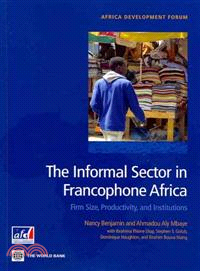
The informal sector in West Africa has some distinctive characteristics. Informality usually connotes small and unorganized producers operating on the fringes of the formal economy. In West African
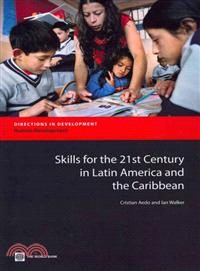
This report contributes to the debate about the quality of education and returns to education investment in Latin America and the Caribbean (LCR). It aims to improve our understanding of the links fro
Despite substantial progress towards peace, economic growth, and better governance since 2003, Liberia remains one of the poorest countries in the world. The objective of this study is twofold. Firs
During the 1980s and 1990s, financial sectors were the Achilles’ heel of economic development in Latin America and the Caribbean (LAC). Since then, these sectors have grown and deepened, becoming more
Wind power is widely regarded as a key component of an environmentally sustainable, low-carbon energy future because it is renewable, requires almost no water, and generates near-zero emissions of gre
In the wake of the financial crisis of 2008, governments worldwide undertook massive fiscal interventions to stave off what otherwise would have likely been a system-wide financial and economic meltdo
The Korea-World Bank High Level Conference on Post-Crisis Growth and Development, held in June 2010, in Busan, Republic of Korea, successfully brought key development issues to the forefront, laid the
Nonprofit Financing and the Combatting of Terrorism Financing is part of the World Bank World Bank Working Paper series. These papers are published to communicate the results of the Bank's ongoing re
The evaluation finds that the content of the World Bank’s Country Policy and Institutional Assessment (CPIA) is largely relevant for growth and poverty reduction in the sense that it maps well with th
The Cost of Being Landlocked proposes a new analytical framework to interpret and model the constraints faced by logistics chains on international trade corridors. The plight of landlocked developing
Lesotho Highlands Water Project is part of the World Bank Working Paper series. These papers are published to communicate the results of the Bank's ongoing research and to stimulate public discussion
The services sector is key to economic growth, competitiveness, and poverty alleviation. Comprising more than two-thirds of the world economy, services are now commonly traded across borders, helped b
Trade and Transport Facilitation Assessment is part of the World Bank Studies series. These papers are published to communicate the results of the Bank's ongoing research and to stimulate public disc
Development patterns, increasing population pressure, and the demand for better livelihoods in many parts of the globe all contribute to a steadily deepening global water crisis. Development redirects
The sustainable development of “ger” areas in Ulaanbaatar, the capital of Mongolia, is one of the critical development issues facing the country. The ger areas host 60% of the population of Ulaanbaat
This evaluation assesses the effectiveness of the World Bank’s 2001 gender strategy and the results thereof. Covering the period fiscal 2002-08, the evaluation finds that the Bank made progress in ge
A growing number of cities around the world have established systems for monitoring the quality of urban life. Many of those systems combine objective information with subjective opinions and cover a
The East Asia and Pacific region as a whole has made substantial progress in improving economic opportunities for women, but significant intraregional differences and important challenges remian, Asp
While some argue that trade liberalization has raised incomes and led to environmental protection in developing countries, others claim that it generates neither poverty reduction nor sustainability.
The development aid community has placed a great deal of emphasis on the need for rural mobility in Sub-Saharan Africa (SSA). Thus far, most development partners and governments in SSA have relied on