Over centuries, the Middle East and North Africa (MENA) region has been the birthplace of some of the world's greatest civilizations. Despite recent setbacks, the region once again can become an engin
Very few studies focus on the growth of labor market opportunities that follow from exports. Entangled is one of the first to systematically examine the localized effects of long-run export growth in
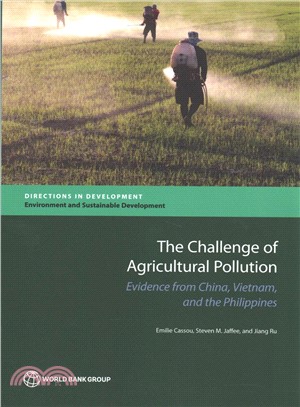
In emerging East Asia, agricultural output has expanded dramatically over recent decades, primarily as a result of successful efforts to stimulate yield growth. This achievement has increased the avai
The Global Investment Competitiveness Report 2017/2018 is a biannual publication that provides new research, empirical evidence, and perspectives on the key dimensions of countries' investment climate
Government strategies for setting energy prices are not uniform across the Latin America and Caribbean (LAC) region or even across fuels. Instead, they spread across a full spectrum, ranging from disc
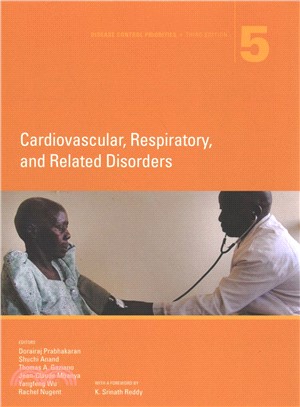
DCP3 will consist of nine separate volumes: eight will focus on a specific disease cluster or population, and the ninth will be an overview with main findings and conclusions about achieving health pr
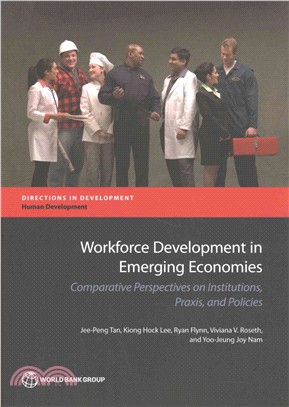
Investing in skills has risen to the top of the policy agenda today in rich and poor countries alike. The World Bank supports its partner countries on this agenda in multiple ways: development financ
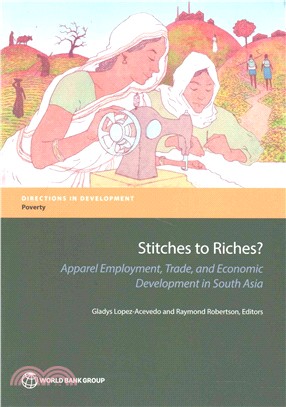
South Asia is in the midst of a demographic transition. For the next three decades, the growth of the region’s working age population will far outpace the growth of dependents. Close to one million in
“Universal access to financial services is within reach – thanks to new technologies, transformative business models and ambitious reforms,” said World Bank Group President Jim Yong Kim “As early as 2
Many developing countries have the capacity to develop broad development policy directions and formulate development programs that are logical and consistent, but these do not obtain the desired or ta
The world economy is not what it used to be twenty years ago. For most of the 20th century, the world economy was characterized by developed countries ("North") acting as “center” to a “periphery” of
The report first summarizes the key findings from the following three studies in three provinces (Guizhou, Jilin, Shandong): (a) a demand survey to assess rural ICT access and attitudes; (b) a library
The book features an analysis of teacher reform in Indonesia, which entailed a doubling of teacher salaries upon certification. It provides a description of the political economy context in which the
Light Manufacturing in Tanzania argues that for Tanzania to remain one of the fastest growing economies in Sub-Saharan Africa, it has to make progress in the structural transformation that can lift wo
The Global Monitoring Report 2013: Rural-Urban Dynamics andthe Millennium Development Goals examines rural-urbandisparities in the achievement of the Millennium DevelopmentGoals (MDGs) and how urbaniz
The Congo Basin forests have been mainly “passively” protected by chronic political instability and conflict, poor infrastructure, and poor governance. Congo Basin countries thus still fit the profile
What has been the impact of yet another food price spike on developing countries’ ability to make progress toward the Millennium Development Goals (MDGs)? How many poor people have been prevented from
The signing of the Comprehensive Peace Agreement in 2006 and Constituent Assembly elections in 2008 have paved the way for political and economic reform in Nepal. Indeed, the 2009 Investment Climate A
Trusting Trade and the Private Sector for Food Security in Southeast Asia challenges policymakers who oversee the rice sector in Southeast Asia and reexamines deep-rooted preceptsabout their responsib
Much of the content in this third volume of The World Bank Legal Review came from contributing speakers at the November 2010 World Bank-coordinated Law, Justice and Development Week. Topics in this co
This Study explores arguments about the impact of climate change on human rights, examining the international legal frameworks governing human rights and climate change and identifying the relevant sy
This book, designed for policymakers, academics and researchers, and SEZ program practitioners, provides the first systematic and comprehensive analysis of SEZ programs in Sub-Saharan Africa. It is th
This report addresses carbon labeling schemes, a high-profile issue and one that has important economic implications for developing countries. Carbon accounting and labeling instruments are designed
How much is a cleaner environment worth? For policy makers, that question used to go largely unanswered. Many economic activities cause environmental degradation, entailing real costs to the economy a
This report, Remittance Corridors to Uganda: United Kingdom, United States, and South Africa, analyzes and compares three bilateral remittance corridors. The comparison highlights similarities and dif
A Great Burst Of Globalization brought the 20th century to a close, creating upheaval in the world economy from roughly 1995 to 2008. And now, with the new century barely commenced, a second upheaval
Governance of Technical Education in India: International Case Studies is part of the World Bank Working Paper series. These papers are published to communicate the results of the Bank's ongoing resea
Rapid advances in information technology (IT) and the resulting global connectivity are fueling dynamic growth in the services sector. Demand for IT and IT-enabled services (ITES) is estimated to repr
The 'East Asia and Pacific Update' is the World Bank’s comprehensive semiannual review of developing economies in the region. This November 2009 issue discusses East Asia's role as the driving force b
The crisis threatens the welfare of about 160 million people in the Europe and Central Asia (ECA) region who are poor or are just above the poverty line. Using pre-crisis household data along with agg
Bolivia's informal economic sector is the largest in Latin America, and women-owned businesses tend to be overrepresented in the informal sector and to be less profitable than firms in the formal sect
Starting in 1994, Cameroon introduced regulatory and market-based reforms to regulate access to its rainforests, balance public and private interests in those forests, and integrate wider economic, cu
Over the past two years, the world has seen turmoil in a relatively small segment of the U.S. credit markets morph into a severe global economic and financial crisis. Although aggressive monetary poli
The global food, fuel, and financial crises have given new prominence to school feeding as a potential safety net and as a social support measure that helps keep children in school. Rethinking School
Money laundering and the financing of terrorism are global problems that not only threaten a country’s security, but also compromise the stability, transparency, and efficiency of its financial system
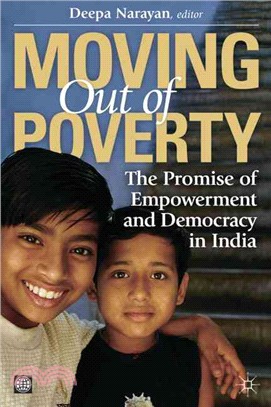
India has experienced accelerating growth in the last decade, yet why do millions of people remain mired in poverty? This book brings together the voices of the poor from villages in the Indi
This World Bank study of poverty in India is different from others, according to project director Narayan, in that the focus is on realities from the bottom up; the dynamics of social, political, and
The current financial crisis poses many challenges to all countries and is having a significant impact on economies and societies throughout the world. The need for funds might lower financial institu
Trade liberalization can create economic opportunities for poor people. But are these opportunities available to men and women equally? Do the gender disparities in access to education, health, credit