Malnutrition—especially, the stunting of children under five—is arguably Ecuador's biggest development challenge. Like other Andean countries (such as Peru and Bolivia), Ecuador has a persistently hig
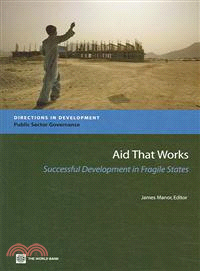
Research in recent years on aid effectiveness shows that significant obstacles in fragile states--insecurity, poor governance and weak implementation capacity--usually prevent aid from achieving the d
Salman (counsel, World Bank) and Bradlow (international legal studies, American U. Washington College of Law) compare the application of regulatory frameworks to water resource management in 16 jurisd
The majority of the world's poor depend directly or indirectly on agriculture. Despite the strong linkages between broad-based agricultural growth and poverty reduction, international support to agric
"Until recently, 'public pension fund management' is an area that received little attention by policymakers, practitioners, and development agencies. Even though there is growing interest in the publi
For decades, governments and donors have attempted to improve social welfare through public support for development finance institutions (DFIs). This monograph presents two measures of social cost. Th
This book is a compendium of Mexico's development process, one that recognizes its comprehensive and multi-faceted nature. It focuses on five overarching themes including fiscal sustainability, growth
The need for evidence-based decision making at all levels of government is perhaps greatest in fragilesettings. Data deficiencies contribute to state fragility and exacerbate constraints on the capaci
The Atlas of Sustainable Development Goals 2017 uses maps, charts and analysis to illustrate, trends, challenges andmeasurement issues related to each of the 17 Sustainable Development Goals. The Atla
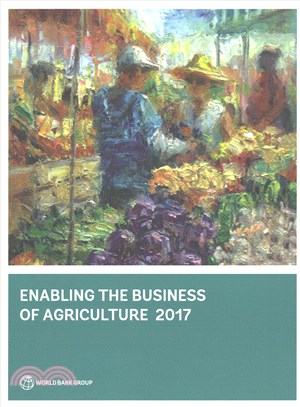
Enabling the Business of Agriculture (EBA) 2017, the third report in the EBA series, offers insights into how laws and regulations affect private sector development for agribusinesses, including produ
Stagnant global trade, subdued investment, and heightened policy uncertainty marked another difficult year for the world economy. A subdued recovery is expected for 2017, with receding obstacles to ac
This report presents the findings of an operations research study conducted to assess the implementation of the Government of Bangladesh’s National Nutrition Services Program (NNS) and to identify the
While other emerging regions have been thriving, the Middle East and North Africa (MENA) region’saggregate export performance over the past two decades has been consistently weak. Using detailedfirm-l
Latin America’s population is aging, and many among the growing elderly population are not protected by traditional pension schemes. In response, policy makers have been reevaluating their income prot
This document provides some practical guidance on how utilities can define their own smart grid vision, identify priorities, and structure investment plans. While most of these strategic aspects apply
One out of every three dollars invested abroad in 2012 was originated in multinationals from developing countries. This study sheds light on the characteristics, motivations, strategies, and needs of
Social inclusion is on the agenda of governments, policymakers, and nonstate actors around the world. Underpinning this concern is the realization that despite progress on poverty reduction, some peop
Job creation and productivity growth are at the forefront of the global development agenda. This is particularly relevant for Azerbaijan, whose government faces a central challenge to create condition
Financial services are important for women who are starting and growing a business, but in Pakistan microfinance providers (MFPs) are not reaching Pakistan’s businesswomen. Only 59 percent of microf
The popular grievances that have fueled the Arab Spring since 2010 demonstrate that past development paradigms have failed to achieve the inclusive and sustainable growth expected by Arab populations.
What conditions determine the success of Medium Term Expenditure Frameworks (MDTFs)? How should the implementation of MTEFs be sequenced and coordinated with other budget reforms? What role should org
Poorly implemented energy subsidies are economically costly to taxpayers and damage the environment. This report aims at providing the emerging lessons form a representative sample of case studies in
This book presents research findings on India’s major central and state government-sponsored health insurance schemes (GSHISs). The analysis centers on the GSHISs launched since 2007. These schemes ta
This World Bank study on resource-based economic development examines key features of economic and political governance in developing nations that rely heavily on non-renewable resource extraction for
Many countries that subscribe to the Millennium Development Goals (MDGs) have committed to ensuring access to basic health services for their citizens. Health insurance has been considered and promote
While economic theory considers technological progress to be a key factor for sustained long-term economic growth and job creation, technology absorption is particularly an important driver for 'catch
The process of rural-urban transformation presents both opportunities and challenges for development. If managed effectively, it can result in growth that benefits everyone; if managed poorly, it can
This volume contains ten papers on initiatives for harnessing the resources of the African diaspora for fostering African development, taken from an April 2009 International Conference on Diaspora and
Global Development Finance 2011: External Debt of Developing Countries is a continuation of the World Bank’s publications Global Development Finance, Volume II (1997 through 2009) and the earlier Worl
In order to minimize the need for taxpayers to respond to multiple revenue agencies, some countries have integrated their revenue administrations, either by merging tax and customs administration, or
In recent years, revelations of grand corruption and the plunder of state assets have led to greater scrutiny of financial relationships with politically exposed persons (PEPs)—senior government offic
This volume contains abstracts of World Bank research projects initiated, under way, or completed in fiscal years 2008 and 2009. The abstracts describe questions addressed, analytical methods used, fi
Editors Binswanger-Mkhize (economic research on innovation, Tshwane U., South Africa), Bourguignon (research fellow, PRODIG, U. of Paris) and van den Brink (lead economist, The World Bank) have collec
Foreign direct investment and private capital flows are highly concentrated geographically, with almost half of them reaching five top destinations. These flows tend to evade many high-risk countries.
Non-Conviction Based (NCB) asset forfeiture is a powerful tool for recovering the proceeds and instrumentalities of corruption, particularly in cases where the proceeds are transferred abroad. A proce
'The Sunken Billions: The Economic Justification for Fisheries Reform' shows the difference between the potential and actual net economic benefits from marine fisheries is about $50 billion per year,
Published in association with Harper Collins, the completely revised and updated second edition of the Atlas of Global Development vividly illustrates the key development challenges facing our world t
The Doing Business series provides research, data, and analysis on regulationin 181 economies across 10 areas of the business life cycle. Doing Business2009 identifies top reformers in business regula
The countries of Southeast Europe have undergone a significant transition over the past decade. Helped by macroeconomic stabilization and efforts in advancing structural reforms, real GDP growth has p
This annual report, prepared by the staff of the World Bank Group, investigates the regulations that affect business activity both positively and negatively. It presents quantitative indicators on bus