The World Bank's new Eco2 Cities Initiative is strongly grounded in the realities and challenges faced by cities in developing countries. Over the past 30 years, Curitiba's sustained experiences have
Countries in Sub-Saharan Africa have made substantial progress in universalizing primary school completion. Many young Africans are completing primary schooling, and many more will do so in the coming
Argentina approaches its bicentennial as an independent republic and has a window of opportunity in social protection policy. Following the most serious economic crisis in its history during 2001-02,
'School Construction Strategies for Universal Primary Education in Africa' examines the scope of the infrastructure challenge in Sub-Saharan Africa and the constraints to scaling up at an affordable c
Large and growing subsidies to residential consumers in Mexico have become a major policy concern. This report explains the growth of subsidies, the current distribution of subsidies across income cla
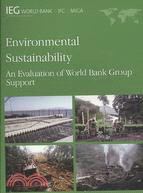
This evaluation assesses the Bank Group's support for environmental sustainability—in both the public and private sectors—over the past 15 years. It identifies several crucial constraints that need to
The World Bank has commissioned this report on global regulatory institutions, and how "Doing Business" (DB) indicators are used to measure the role these institutions have in stimulating business gro
Policies promoting pro-poor agricultural growth are the key to helping countries achieve the Millennium Development Goals—especially the goal of halving poverty and hunger by 2015. The public sector,
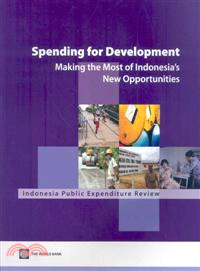
After almost a decade of successful macroeconomic management and several bold policy decisions, Indonesia is finally in a position of fiscal strength. Since 2006, Indonesia has freed up 'fiscal space'
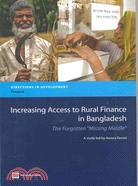
Since the mid-1990s, Bangladesh's banking sector has grown considerably. Despite the boom and the government's efforts to increase access in rural areas, rural financial markets have shrunk in relativ
'Higher Education Financing in the New EU Member States' summarizes the experiences to date of the new EU countries (the Czech Republic, Estonia, Hungary, Latvia, Lithuania, Poland, Slovakia, and Slov
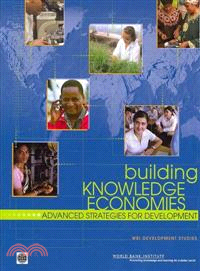
From the World Bank Institute's Knowledge for Development (K4D) program (launched in 1999), this volume presents analytical work and research on the knowledge economy in client countries. Using case s
Great progress has been made in recent years in securing better access and financial protection against the cost of illness through collective financing of health care. Managing scarce resources effec
This study provides an overview of remittance flows from the United Kingdom to Nigeria and presents a series of specific recommendations to facilitate the transfer of remittance flows through financia
For various reasons—whether philosophical, political, humanitarian, or by institutional mandate—people are concerned for the well being of the most vulnerable groups in society: women, the poor, and t
'The Money Exchange Dealers of Kabul' is an exploratory piece of research on how the informal financial sector operates in conflict-afflicted countries. This paper presents the findings, analyses and
Advocates of pluralist, competitive politics have regarded decentralization as a device for deepening democracy or for prying closed systems open and to give interest groups space in which to organize
Using the Ricardian approach (a cross sectional analysis of farm performance across different climate zones), this report examines the impact of climate change on the agriculture sector and the sector
Work is constantly reshaped by technological progress. New ways of production are adopted, markets expand, and societies evolve. But some changes provoke more attention than others, in part due to the
By 2050, the world is expected to generate 3.76 billion tonnes of waste annually, increasing drastically from today’s 2.10 billion tonnes. What a Waste presents national and urban waste management dat
This book represents a systematic review of the documented impacts of programs aimed at fostering socio-emotional skills in developed and developing countries. It uses a life-cycle approach to organi
This toolkit is designed for policy makers and stakeholders who are considering the establishment of a publicly funded asset management company (AMC). An AMC is a statutory body or corporation, fully
The Latin America and Caribbean (LAC) region has the undesirable distinction of being the world’s most violent region, with 24.7 homicides per 100,000 inhabitants. The magnitude of the problem is stag
For Costa Rica, the Dominican Republic-Central America-free trade agreement (CAFTA-DR) has been more than a trade agreement. Costa Rica has used trade liberalization and promotion of international tra
Bangladesh is committed to achieving universal health coverage (UHC) by 2032; to this end, the government of Bangladesh is exploring policy options to increase fiscal space for health and expand cover
This report provides an overview of arguments explaining the risk of corruption. Corrupt acts are subject to decision making authority and assets available for grabbing. These assets can be stolen, cr
This World Bank review, Governance of Indian State Power Utilities: An Ongoing Journey, is a first attempt to systematically examine the quality of corporate and regulatory governance in the Indian po
The World Bank Group is currently engaged in reflection and debate on how to improve the delivery of development support. Part of this debate concerns strengthening the knowledge agenda. The findings
This World Bank review of India’s power sector assesses state-wise progress in implementing the government’s reform agenda two decades after the liberalization of India’s economy and a decade after th
The book provides information on the trends in multiple dimensions of inequality, analyzes the drivers of inequality, and identifies policies for shared prosperity in South Asia. The first part of th
For two decades, Africa’s strong economic growth has paved the way for poverty reduction. Nevertheless, high chronic poverty levels persist, and the gap between income groups in terms of human capital
The Little Data Book on Africa 2012/2013 is a pocket edition of Africa Development Indicators 2012/2013. It contains some 115 key indicators on economics, human development, governance, and partnershi
Azerbaijan experienced a “golden age” in the last decade, during which the average growth rate reached record high levels and poverty decreased significantly. On average, the economy grew by 15.3 perc
In the past fifteen years, Brazil has made great strides in increasing its population’s access to early child education, with both preschool and creche enrollment increasing by over fifty percent. Edu
Sub-Saharan Africa has a serious infrastructure deficit—estimated at about $48 billion a year—which is impeding the continent’s competitiveness and hence its economic growth. How to solve this problem
A growing concern among those interested in economic development is the realization that hundreds of billions of dollars are illicitly flowing out of developing countries to tax havens and other finan
This book reviews the experience with one specific though widely introduced approach to funding general education, namely per capita financing (PCF), in six countries in the Europe and Central Asia (E
Drawing on the existing knowledge of African development from previous publications, Yes Africa Can: Success Stories from a Dynamic Continent takes an in-depth look at 26 economic and social developme
This report addresses the core components of enterprise activity, namely, the factors of production and the public infrastructure to support them. In the period just before the financial crisis, a nu
Developing countries lose an estimated US$20-40 billion each year through bribery, misappropriation of funds, and other corrupt practices. Much of the proceeds of this corruption find 'safe haven' in