Social guarantees are defined as sets of policy mechanisms that determine citizens’ entitlements related to basic services and ensure their fulfillment on the part of the state. The social guarantee c
Software comes from India, hardware comes from China. Why is that? Why did China and India take such different paths to global dominance in new high-tech industries? Will their paths continue to diver
Innovation is the key determinant of growth and competitiveness. Increasing a country’s overall innovation capabilities and creating a sound and efficient national innovation regime help to increase t
In the past fifteen years, most countries of Central and Eastern Europe and the Commonwealth of Independent States have shifted from predominantly collective to more individualized agriculture. These
Every policy relies on explicit or implicit assumptions about how people make choices. Those assumptions typically rest on an idealized model of how people think, rather than an understanding of how e
Every policy relies on explicit or implicit assumptions about how people make choices. Those assumptions typically rest on an idealized model of how people think, rather than an understanding of how e
Crime and violence inflict high costs on the private sector—costs that are rising globally, according to the World Bank’s Enterprise Surveys, discussions with chambers and associations, and the Bank’s
Entrepreneurship -- manifested in the entry of new firms or products into new markets, or substantial improvements in technological capacity or process innovation by incumbent firms -- is widely consi
Income and asset disclosure systems (IAD) are gaining prominence as a tool in the fight against corruption, and have the potential to support efforts in both prevention and enforcement. They are inten
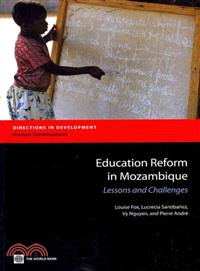
Coming out of civil war, Mozambique had an enormous education deficit. In 1997, five years after the peace treaty, 80 percent of the labor force reported to have no education at all, and school enroll
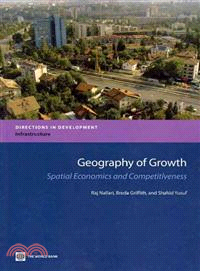
Since the 1990s, new economic geography has received a lot of attention as mainstream economists such as Krugman and others began to focus on where economic activity occurs and why. Coincidentally,
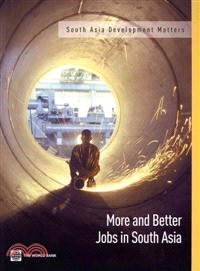
South Asia has created nearly 800,000 jobs per month during the last decade. Robust economic growth in large parts of the region has created better jobs -- those that pay higher wages for wage worker
Financing Africa takes stock of Africa’s financial systems in light of recent changes in the global financial system –including the greater risk aversion of international investors, a shift in economi
Porta et al., who work in education and economics at the World Bank and elsewhere, show policy makers, planners, and researchers how to analyze and monitor inequality in education using the World Bank
A new economic opportunity for sub-Saharan Africa is looming large: biofuel production. Rapidly rising energy prices are expected to remain high for an extended period of time because of the increasin
‧ What has been the evolution of poverty and equity during the recent globalizing decades?‧ How have poor countries fared on the Millennium Development Goals?‧ What role does wealth inequality play in
Sustaining Educational and Economic Momentum in Africa is part of the World Bank Working Paper series. These papers are published to communicate the results of the Bank's ongoing research and to stim
'Managing Risk and Creating Value with Microfinance' brings together the latest information on microfinance institutional sustainability from leading international experts and microfinance practitione
“The crisis has deeply impacted virtually every economy in the world, and although growth has returned, much progress in the fight against poverty has been lost. More difficult international condition
Bolivia’s informal economic sector is the largest in Latin America and has been attributed to many factors including the burden of regulations, the weakness of public institutions, and the lack of per
The multilateral trade system rests on the principle of nondiscrimination. Unilateral trade preferences granted by developed countries can help beneficiary countries but can create tensions between "p
The World Bank, the World Trade Organization, and the Organization for Economic Co-operation and Development collaborated on the research project, which culminated in a June 2005 symposium in Geneva,
The media’s contribution to development occurs simultaneously along five closely intermingled influences: plurality and transparency, behavioral, infrastructure and platform, economic, and trade. The
In most countries, parliament has the constitutional mandate to both oversee and hold government to account. In light of the increased focus on good governance, academics and legislative strengthening
Drawn from material presented at the September 2006 workshop and essential to the organization's World Development Report for 2008, this material reflects key research and policy from Europe, the US a
This report from the World Bank considers how Brazil can improve its competitiveness in the global economy through creation of human capital and the fostering of innovation. It summarizes conclusions
The heterogeneity of social structures and cultural identities in many developing countries, together with traditional hierarchies, rivalries, and deep-seated biases, has perpetuated inequities. Inclu
Workers' remittances have become a major source of financing for developing countries and are especially important in Latin America and the Caribbean, which is at the top of the ranking of remittance
The world's demand for food is expected to double within the next 50 years, while the natural resources that sustain agriculture will become increasingly scarce, degraded, and vulnerable to the effect
Far reaching macro-economic and structural reforms combined with increases in government spending have been the primary drivers of Tanzania's growth acceleration. As growth in government spending slow
Haiti is a resilient society whose rural communities in particular have developed coping mechanisms in response to a long history of underdevelopment and political instability. The country's religious
Once one of the world's largest staple food producers, Angola is now known as a major oil exporter—the second largest producer in sub-Saharan Africa. Angola is also the world's fourth largest producer
Conflict and political instability have weakened Guinea-Bissau's productive infrastructure considerably during the past three decades. This situation contributes to an increase in the degree of vulner
Contributors from universities and institutions from around the world (including the World Bank) participated in a conference sponsored by the World Bank and its partners and held in Budapest, Hungary
This report provides policy makers and those working in the health sector with information on the nature and extent of health problems in Sub-Saharan Africa and the health care strategies that show th
Over the past ten years, methodological development to measure disease burden, new data sets for large populations (eg. Tanzania, South Africa) and research to critically evaluate existing data sets (
The World Development Report 2006: Equity and Opportunity presents a social development strategy organized around the themes of social inclusion, cohesion, and accountability. It examines equality of
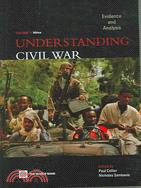
Collier (economics, Oxford U., UK), along with his colleague Anke Hoeffler, has previously proposed an economic model for understanding the outbreak of civil wars. Very briefly, the Collier-Hoeffler M