The World Investment and Political Risk report examines the overall trends in political risk perceptions, foreign investment intentions, and longer-term demand for political risk insurance (PRI), espe
The past two decades have witnessed a convergence between human rights and development, particularly at the level of international political statements and policy commitments. This phenomenon is capt
The year 2015 marks 70 years since Vietnam’s Declaration of Independence, 40 years since reunification, and just short of 30 years from the launch of Doi Moi reforms, which catapulted the nation from
At the turn of the millennium, the world experienced a dramatic increase in funding for global health programs. Competing demands for these resources meant that policymakers needed access to valid, ev
That raising income levels alleviates poverty, and that economic growth can be more or less effective in doing so, is well known and has received renewed attention in the search for pro-poor growth. W
Violent conflict can spell catastrophe for developing countries and their neighbors, stunting and even reversing the course of economic growth. Recent World Bank research on the causes of conflict and
The magnitude of population displacement and its consequences have placed the issues of reconstructing the livelihoods of those displaced on the world's development agenda. Addressing these issues fro
Deliberation is the process by which a group of people, each with equal voice, can – via a process of discussion and debate – reach an agreement. Deliberation and Development attempts to do two things
Despite recent advances in important aspects of the lives of girls and women, pervasive challenges remain. These challenges reflect widespread deprivations and constraints and include epidemic levels
Empirical research has found that entrepreneurial activity correlates positively with innovation and job creation, and governments around the world have shown a growing interest in interventions that
The East Asia and Pacific region has an international emigrant population of over 21 million people, who remitted more than USD 90 billion to their home countries in 2010. The region also hosts more
More children are going to school, staying in school for longer, and learning than ever before in East Asia and Pacific (EAP). During the past 50 years, a group of countries in EAP have successfully t
Expansion and development of urban areas require acquisition of land, which, in turn, often requires physical relocation of people who own or occupy this land. Land acquisition and resettlement may a
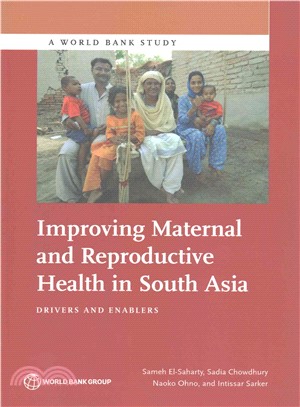
South Asia Region (SAR) has decreased maternal mortality ratio (MMR) by 65 percent between 1990 and 2013, which was the greatest progress among all world regions. Such achievement implores the questio
Over the last decade, the Latin America and the Caribbean (LAC) region has experienced a steady decline in poverty rates. This trend has been accompanied by strong income growth of the bottom 40 perce
This study assesses the potential for job creation through infrastructure investment in the Middle East and North Africa. The region has experience in making the most of infrastructure investments, bu
In many low and middle income countries, dismal failures in the quality of public service delivery such as absenteeism among teachers and doctors and leakages of public funds have driven the agenda fo
Urbanization is occurring at a rapid pace in Bangladesh, accompanied by the proliferation of slum settlements, whose residents have special health needs given the adverse social, economic, and public
With more than 70 percent of its population living in cities, Latin America and the Caribbean (LAC) is among the most urbanized regions in the world. Yet, although its cities are, on average, more pro
The report will take an innovative approach to measuring multidimensional connectivity by relying on both economic relationships and network analysis. In addition to capturing how information, people,
Recent years have seen unprecedented public scrutiny over the tax practices of Multinational Enterprise (MNE) groups. Tax policy and administration concerning international transactions, aggressive ta
Latin America and Caribbean countries suffer from large efficiency gaps in technology adoption, innovation, structural change, resource allocation, institutions, and poverty reduction, which hamper th
In the past 15 years, employment, labor market participation, and wages have grown significantly in Brazil. Improved labor market outcomes have been the main drivers of reductions in poverty and inequ
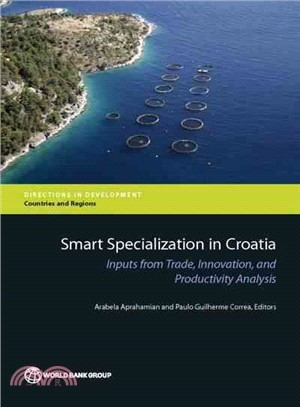
The report examines recent trends in Croatia's in trade, productivity, innovation performance and policy governance framework, to help identify priorities for the development of the country's Smart Sp
Climate change and migration are major concerns in the MENA region, yet the empirical evidence on the impact of climate change and extreme weather events on migration remains limited. Information is b
The importance of weather, climate, and water information is rising because of the need to serve more elaborate societal needs, minimize growing economic losses, and help countries adapt to climate ch
More than one billion people around the world still live in acute poverty and the earth's population is likely to double in the next forty years. Therefore, far more economic development will be requi
Crime and violence have emerged in recent years as major obstacles to development objectives in Latin American and Caribbean (LAC) countries. The paper explicates an agenda for future work that may as
This publication uses data from the World Bank’s Skills Towards Employability and Productivity (STEP) Household Skills Survey to explore patterns of educational mismatch in 12 developing countries. Th
There is a dynamic and growing energy in Indonesia focusing on parenting education, particularly for low-SES families. However, little is known about parenting styles and related outcomes, much less t
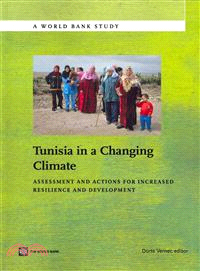
This book provides an assessment of climate risks, opportunities and possible actions in Tunisia. It recognizes that the Tunisian revolution of January 14th 2011 has created significant change in Tuni
In the last two decades, the Middle East and North Africa (MENA) region has closed many critical gender gaps, especially in ensuring equal access for girls and boys to education and healthcare. Today,
The economies in the Middle East and North Africa (MENA) region are diverse in many ways, making it difficult to develop a common social protection strategy. Countries differ in size and per capita in
This study provides a basic diagnostic of access to safe water and sanitation in Uganda and their relationship with poverty. The analysis relies on a series of nationally representative household surv
The Migration and Remittances Factbook 2015 attempts to present numbers and facts behind the stories of international migration and remittances, drawing on authoritative, publicly available data. It p
Based on forecasts of global population growth, food security will remain an important economic development issue over the next several decades. In addition, real food prices have risen in recent year
Over the last three decades, the concepts of Islamic finance and Islamic economics have captured the attention of researchers. The growing market for transactions compatible with Islamic law (Shari-ah