This volume brings together a group of prominent contributors to consider the topics of government and warfare in Tuscany and Venice in the Renaissance. The essays cover a remarkably broad geographica
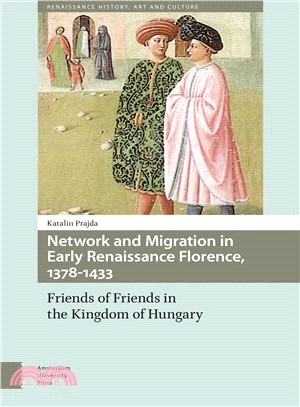
This book explores the co-development of political, social, economic, and artistic networks of Florentines working in the Kingdom of Hungary during the reign of Sigismund of Luxembourg. The social net
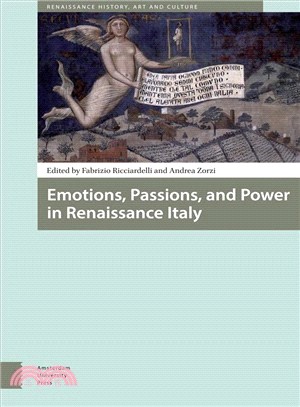
The physical and mental capacity of having emotions is universal. However, the ways in which emotions are perceived, expressed, and shared are historically determined by the codified rules imposed by
The Avignon papacy (1309–1377) represented the zenith of papal power in Europe. The Roman curia’s move to southern France enlarged its bureaucracy, centralized its authority, and initiated closer cont
The era of the Scientific Revolution has long been epitomized by Galileo. Yet many women were at its vanguard, deeply invested in empirical culture. They experimented with medicine and practical alche
Leonardo Bruni (1370–1444) is widely recognized as the most important humanist historian of the early Renaissance. But why this recognition came about—and what it has meant for the field of historiogr
In 1482, the Florentine humanist and statesman Francesco Berlinghieri produced the Geographia, a book of over one hundred folio leaves describing the world in Italian verse, inspired by the ancient Gr
Italian preachers during the Reformation era found themselves in the trenches of a more desperate war than anything they had ever imagined. This war—the splintering of western Christendom into conflic
In the middle decades of the sixteenth century, the republican city-state of Florence--birthplace of the Renaissance--failed. In its place the Medici family created a principality, becoming first duke
In 1420, after more than one hundred years of the Avignon Exile and the Western Schism, the papal court returned to Rome, which had become depopulated, dangerous, and impoverished in the papacy's abse
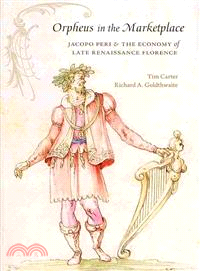
The Florentine musician Jacopo Peri (1561-1633) is known as the composer of the first operas--they include the earliest to survive complete, Euridice (1600), in which Peri sang the role of Orpheus. Th
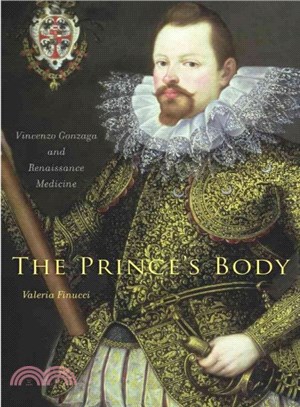
Defining the proper female body, seeking elective surgery for beauty, enjoying lavish spa treatments, and combatting impotence might seem like today’s celebrity infatuations. However, these preoccupat
Dispelling the myth that Florentine politics offered only negative lessons, Mark Jurdjevic shows that significant aspects of Machiavelli's political thought were inspired by his native city. Machiavel
Cosimo dei Medici stabilized ducal finances, secured his borders, doubled his territory, attracted scholars and artists to his court, academy, and universities, and dissipated fractious Florentine pol
A Mattress Maker's Daughter richly illuminates the narrative of two people whose mutual affection shaped their own lives and in some ways their times. According to the Renaissance legend told and reto
Roisin Cossar brings a new perspective to the history of the Christian church in fourteenth century Italy by examining how clerics managed efforts to reform their domestic lives in the decades after t
The Renaissance marked a turning point in Europe’s relationship to Arabic thought. On the one hand, Dag Nikolaus Hasse argues, it was the period in which important Arabic traditions reached the peak o
Renaissance Italians pioneered radical changes in ways of helping the poor, including orphanages, workhouses, pawnshops, and women’s shelters. Nicholas Terpstra shows that gender was the key factor dr
This study is the first to examine the important political role played by astrology in Italian court culture. Reconstructing the powerful dynamics existing between astrologers and their prospective or
After its rediscovery in 1417, Lucretius’s Epicurean didactic poem De Rerum Natura threatened to supply radicals and atheists with the one weapon unbelief had lacked in the Middle Ages: good answers.