Americans spend hours every day sitting in traffic. And the roads they idle on are often rough and potholed, their exits, tunnels, guardrails, and bridges in terrible disrepair. According to transport
Few economists can claim the influence—or fame—of F. A. Hayek. Winner of the Nobel Prize, Hayek was one of the most consequential thinkers of the twentieth century, his views on the free m
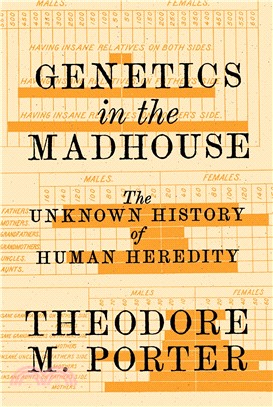
The untold story of how hereditary data in mental hospitals gave rise to the science of human heredityIn the early 1800s, a century before there was any concept of the gene, physicians in insane asylu
Not since the printing press has a media object been as celebrated for its role in the advancement of knowledge as the scientific journal. From open communication to peer review, the scientific journa
No writer portrayed America''s Roaring Twenties as vividly as F. Scott Fitzgerald, and his stories seem as fresh today as they did nearly a century ago. F. Scott Fitzgerald: Classic Works features two
Volume 32 of the NBER Macroeconomics Annual features six theoretical and empirical studies of important issues in contemporary macroeconomics, and a keynote address by former IMF chief economist Olivi
How did the statues of ancient Greece wind up dictating art history in the West? How did the material culture of the Greeks and Romans come to be seen as "classical" and as "art"? What does "classical
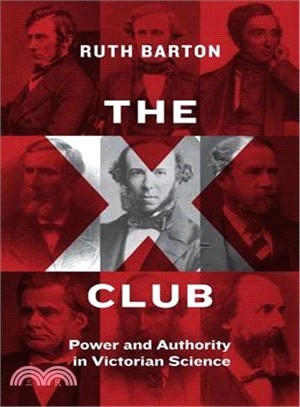
In 1864, amid headline-grabbing heresy trials, members of the British Association for the Advancement of Science were asked to sign a declaration affirming that science and scripture were in agreement
The gars are peaceful, happy animals living in Garland. Their shaman, Zachariah, helps them to interpret the spirits that foretell their future. But a strange vision bodes ill. This long-awaited secon
In 1930s and 1940s Vienna, child psychiatrist Hans Asperger sought to define autism as a diagnostic category, aiming to treat those children, usually boys, he deemed capable of participating fully in
When in 1492 Christopher Columbus set out for Asia but instead happened on the Bahamas, Cuba, and Hispaniola, his error inaugurated a specifically colonial modernity. This is, Security and Terror
Revolutionary ideas on how to use markets to bring about fairness and prosperity for allMany blame today's economic inequality, stagnation, and political instability on the free market. The solution i
Most of us face the same questions every day: What do I want? How can I get it? How can I live more happily and work more efficiently?Whether you’re a chronic second-guesser or just eager for new ways
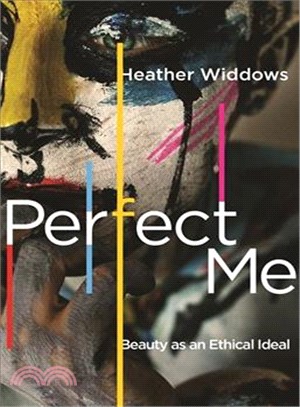
How looking beautiful has become a moral imperative in today’s worldThe demand to be beautiful is increasingly important in today's visual and virtual culture. Rightly or wrongly, being perfect has be
Before the advent of synthetic fibers and cargo containers, jute sacks were the preferred packaging material of global trade, transporting the world's grain, cotton, sugar, tobacco, coffee, wool, guan
It’s right there in the Book of Job: “Man is born unto trouble as the sparks fly upward.” Suffering is an inescapable part of the human condition—which leads to a question that
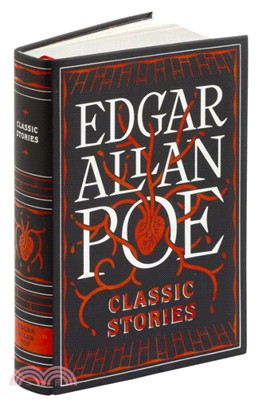
Edgar Allan Poe was a master of the tale of psychological horror. This anthology gathers over 20 of Poes groundbreaking tales of the macabre, among them The Tell-tale Heart, The Masque of the Red Deat
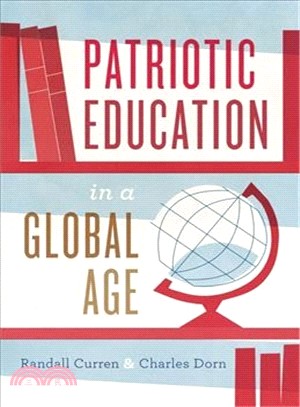
Should schools attempt to cultivate patriotism? If so, why? And what conception of patriotism should drive those efforts? Is patriotism essential to preserving national unity, sustaining vigorous comm
Georges-Louis Leclerc, le comte de Buffon's The Epochs of Nature, originally published as Les Époques de la Nature in 1778, is one of the first great popular science books, a work
Torture has lately become front page news, featured in popular movies and TV shows, and a topic of intense public debate. It grips our imagination, in part because torturing someone seems to be an unt
The six research studies in Volume 32 of Tax Policy and the Economy analyze the U.S. tax and transfer system, in particular its effects on revenues, expenditures, and economic behavior. First, James A
Why is it so hard for us to connect on a deep level with others, particularly those who are suffering? We constantly find ourselves interrupted and inundated with tasks and stresses. We are disconnect
The subprime crash of 2008 revealed a fragile, unjust, and unsustainable economy built on retail consumption, low-wage jobs, and fictitious capital. Finance and global commodity chains transformed Sou
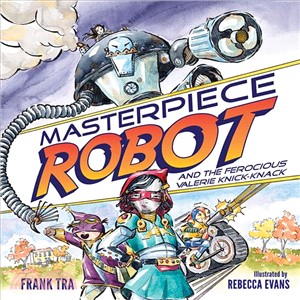
When Laura—a.k.a. Masterpiece Robot—heads into the backyard with her little sister Molly—a.k.a. Sidekick—her active imagination places them instead on patrol around the perimeter of a dystopian city,
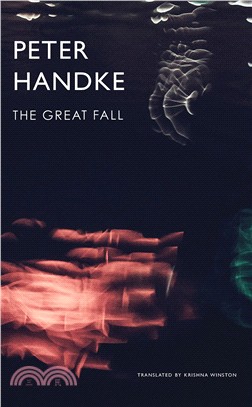
“On the day of the Great Fall he left nothing, nothing at all behind.”The latest work by Peter Handke, one of our greatest living writers, chronicles a day in life of an aging actor as he makes his wa
On Descartes’ Passive Thought is the culmination of a life-long reflection on the philosophy of Descartes by one of the most important living French philosophers. In it, Jean-Luc Marion examines
A groundbreaking work on how the topic of scale provides an entirely new understanding of Inca material cultureAlthough questions of form and style are fundamental to art history, the issue of scale h
Allison Davis (1902–83), a preeminent black scholar and social science pioneer, is perhaps best known for his groundbreaking investigations into inequality, Jim Crow America, and the cultural bi
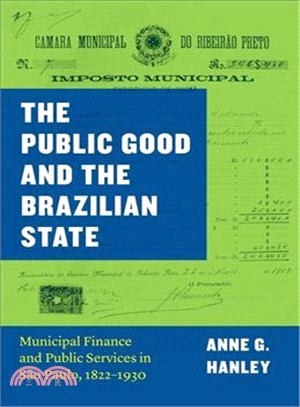
Who and what a government taxes, and how the government spends the money collected, are questions of primary concern to governments large and small, national and local. When public revenues pay for hi
Colonial documents and works of literature from early modern Spain are rife with references to public women, whores, and prostitutes. In Profit and Passion, Nicole von Germeten offers a new history of
It is a curious and relatively little-known fact that for two decades—from the end of World War II until the late 1960s—existentialism’s most fertile ground outside of Europe was in
“All of humanity’s problems stem from man’s inability to sit quietly in a room alone,” Blaise Pascal wrote in 1654. But then there’s Walt Whitman, in 1856:
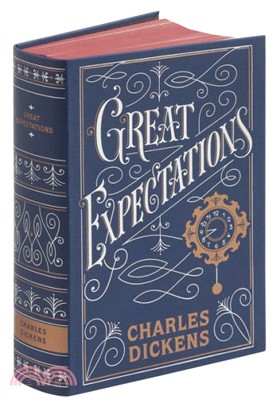
Regarded as one of Charles Dickens''s masterpieces, this is the story of the orphan Pip and his growth to adulthood. Supported by a mysterious anonymous benefactor, Pip travels to London to be educate
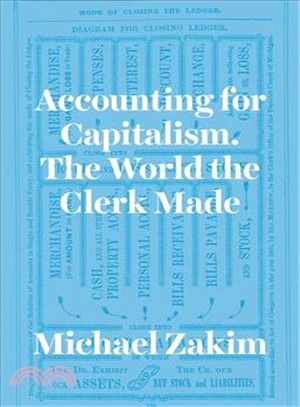
The clerk attended desk and counter at the intersection of two great themes of modern historical experience: the development of capitalism and of a society governed from below. Who better illustrates
The bitter feud between President Dwight D. Eisenhower and Chief Justice Earl Warren framed the tumultuous future of the modern civil rights movement. Eisenhower was a gradualist who wanted to coax wh
How the latest cutting-edge science offers a fuller picture of life in Rome and antiquityThis groundbreaking book provides the first comprehensive look at how the latest advances in the sciences are t
So shattering were the aftereffects of Kishinev, the rampagethat broke out in late-Tsarist Russia in April 1903,that one historian remarked that it was “nothing lessthan a prototype for the Holocaust
The Supreme Court Economic Review is a faculty-edited, peer-reviewed, interdisciplinary series that applies world-class economic and legal scholarship to the work of the Supreme Court of the United St
From the 1830s to the Civil War, Americans could be found putting each other into trances for fun and profit in parlors, on stage, and in medical consulting rooms. They were performing mesmerism. Surp
“The American people sees itself advance across the wilderness, draining swamps, straightening rivers, peopling the solitude, and subduing nature,” wrote Alexis de Tocqueville in 1835. Tha