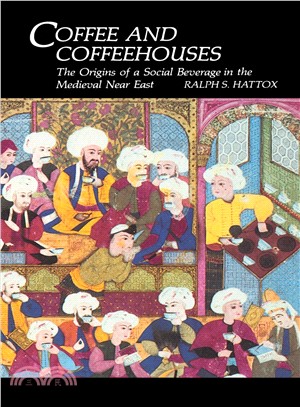
Drawing on the accounts of early European travelers, original Arabic sources on jurisprudence and etiquette, and treatises on coffee from the period, the author recounts the colorful early history of
The medieval was long viewed as an unenlightened counterpoint to the 'Classical' and the 'Renaissance', being perceived as static compared to their pivotal dynamism. Here, the wider debate about cultu
Explores the relationship between Sunnis and Shi'is as expressed in the shrines of the 'Alids. Though the headlines of today's newspapers suggest that the rift between Sunnis and Shi'is is eternal, th
This volume collects medieval Latin texts from the 8th to the 14th centuries that shape a pseudo-historical image of the Prophet Muhammad. The texts, from critical editions, manuscripts and early prin
Legendary accounts of the Virgin Mary's intercession were widely circulated throughout the middle ages, borrowing heavily, as in hagiography generally, from folktale and other motifs; she is represen
The Shaping of Art History examines art history's formation in the German academy in the late nineteenth century. Focusing on the work of Wilhelm Vöge and Adolph Goldschmidt, two influential scholars of medieval art, Kathryn Brush analyses their methods and particularly those scholarly projects that were critical to the development of their approaches. Her work combines intellectual and institutional history with the study of artistic monuments and biography. It considers how the study of the pioneering scholarship in the field of medieval art is critical to an understanding of the formulation of art historical method as a whole.
To test the notion that a wave of medievalism is overtaking American culture, Cramer (communication, City U. of New York) examines the role-playing Society to discover how members adapt and employ ide
Between the fourteenth and seventeenth centuries in Spain, a large number of parodic works were produced that featured depictions of humourous, satirical, and comical saints. The Laughter of the Saint
The Legend of the Middle Ages reconstructs the true character of a complicated and philosophically rich period that remains deeply relevant to the contemporary world.This volume explores key intersec
?Affections of the Mind argues that a politicized negotiation of issues of authority in the institution of marriage can be found in late medieval England, where an emergent middle class of society use
Lively tales of asceticism, wickedness, and virtue from one of IndiaA's great religious traditions Beautifully translated from the Sanskrit, the stories in this volume reflect the vital tradition of
Polemon of Laodicea (near modern Denizli, south-west Turkey) was a wealthy Greek aristocrat and a key member of the intellectual movement known as the Second Sophistic. Among his works was the Physiog
"This book is quite simply the most important, intellectually ambitious, and far-reaching endeavor in recent years."—Stephen G. Nichols, Johns Hopkins University
This book about poor men and women in thirteenth- and early fourteenth-century Paris reveals the other side of the "age of cathedrals" in the very place where gothic architecture and scholastic theolo
The desert, the city, and psalmody in the late fourth century; the geography of Martinmas; glosses on music and grammar and the advent of music writing in the west; the diagrams interpolated into the
Pamela Long considers the ways in which different medieval cultures, from the Byzantine empire to northern Europe, adopted and transformed technologies according to their own needs. Long introduces re
At last a major topic in early medieval English history has found its author, who deals with it comprehensively and systematically. ECONOMIC HISTORY REVIEW A landmark teatment...immensely enriches the
This is the first scholarly study of the political role of the Order of the Garter during the late middle ages. Hugh Collins's examination of the Garter's pragmatic considerations and knightly ideas r
""A very fine book, the fruit of an unusually seamless and effective collaboration by two prominent readers of English writing of the late-fourteenth and early-fifteenth centuries. . . . Aers and Stal
The Shaping of Art History examines art history's formation in the German academy in the late nineteenth century. Focusing on the work of Wilhelm Vöge and Adolph Goldschmidt, two influential scholars of medieval art, Kathryn Brush analyses their methods and particularly those scholarly projects that were critical to the development of their approaches. Her work combines intellectual and institutional history with the study of artistic monuments and biography. It considers how the study of the pioneering scholarship in the field of medieval art is critical to an understanding of the formulation of art historical method as a whole.
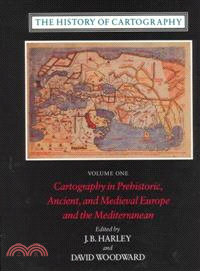
By developing the broadest and most inclusive definition of the term "map" ever adopted in the history of cartography, this inaugural volume of the History of Cartography series has helped redefine th
The cup of coffee had its origins in urban Islamic coffeehouses of the 15th and 16th centuries. Drawing on the accounts of early European travelers and original Arabic sources, Hattox recounts the col