Hundreds of genomes have been completely sequenced in the past decade, significantly advancing our understanding of genome structure and function. Genomes comprises a collection of review articles rep
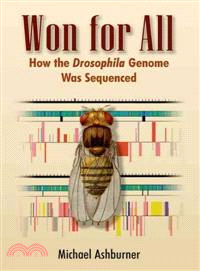
This is the story of the sequencing of the fly genome as told by one of the participants, Michael Ashburner. Written in a diarylike form, half the story is told in numerous footnotes. Ashburner has wr
Rather than simply revise the material presented in the last edition, Lange (The Rockefeller U.), Lundblad (The Salk Institute for Biological Sciences) and Blackburn (U. of California at San Francisco
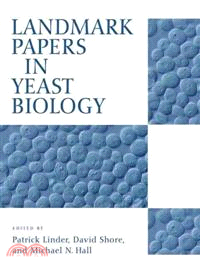
Yeast has been a preeminent experimental organism of genetic research for more than 50 years. Progress in the field has provided the conceptual framework that has driven experiments in many areas of b
This monograph, written by experts in the field, is devoted to the molecular analysis of addiction pathways in the brain. It provides an intensive overview of the fundamentals, stateoftheart advances,
This book is a compilation of articles on significant events in the history of biochemistry, which were published in the journal "Trends in Biochemical Sciences." Editor Witkowski has selected article
Cold Spring Harbor Laboratory Press presents the ultimate research notebook, the perfect tool for the student as well as the professional researcher. With 50 carbonless, duplicate pages, and table of
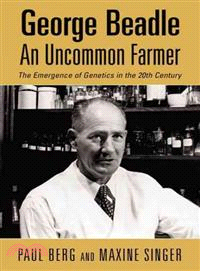
George Beadle was a towering scientific figure whose work from the 1930s to 1960 marked the transition from classical genetics to the molecular era. Among other distinctions, he made the pivotal, Nobe
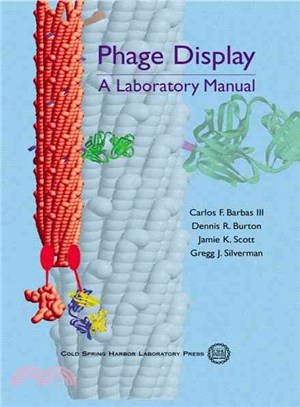
Phage-display technology has begun to make critical contributions to the study of molecular recognition. DNA sequences are cloned into phage, which then present on their surface the proteins encoded b
Although he received a Nobel Prize, an honorary knighthood, and the Presidential Medal of Freedom, Watson has said his greatest achievement has been his writing. Working with the collection of Watson'
The Illustrated Chinese-English Guide for Biomedical Scientists is intended to build confidence in the use of English scientific language. The book lists terms that are in common use in science labor
During gastrulation, tissue layers are formed and the overall body plan is established. This book is the definitive guide to this vitally important period in embryonic development, providing authorit
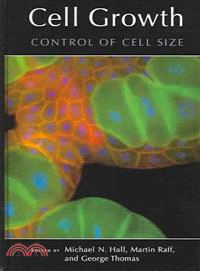
According to Hall (Biozentrum U. of Basel, Switzerland), "cell growth has not received as much attention as it deserves" given its importance in basic biology and clinical practice. To redress this si
It is now clear that our risk of developing almost any disease is influenced by the genes with which we are born. One of the most important dividends of the Human Genome Project will be a much greater
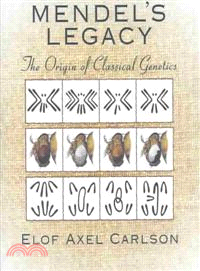
This latest book by Elof Carlson (The Unfit) is a first history of classical genetics, the era in which the chromosome theory of heredity was proposed and developed. Highly illustrated and based heavi
The gene has become a cultural icon and an increasingly rich source of imagery and ideas for visual artists. Drawing on a wide range of contemporary painting and sculpture, The Molecular Gaze: Art in
This is the second edition of a highly successful textbook (over 50,000 copies sold) in which a highly illustrated, narrative text is combined with easytouse thoroughly reliable laboratory protocols.
Science is no quiet life. Imagination, creativity, ambition, and conflict are as vital and abundant in science as in artistic endeavors. In this collection of essays, the Nobel Prize-winning protein
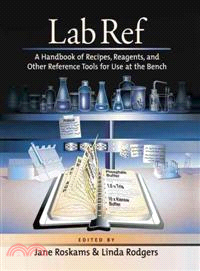
Like its predecessor Lab Ref, Volume 1, this book is a handy benchtop source of recipes and information needed for common laboratory protocols. Lab Ref, Volume 2 contains recipes for procedures as div
Have a Nice DNA - Volume 3 of Enjoy Your Cells - a new series of children's books from the acclaimed creative partnership of scientist/author Fran Balkwill and illustrator Mic Rolph. Once again, they
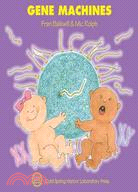
Gene Machines - Volume 4 of Enjoy Your Cells - a new series of children's books from the acclaimed creative partnership of scientist/author Fran Balkwill and illustrator Mic Rolph. Once again, they u
Twenty-four true, wide-ranging tales of crime, history, human behavior, illness, and ethics, told from the personal perspective of the author, an eminent physician-lawyer who uses the stories to illu
FROM THE PUBLISHER (Alfred A. Knopf): Immediately following the revolutionary discovery of the structure of DNA by James D. Watson and Francis Crick in 1953, the world of molecular biology was caught
Germ Zappers - Volume 2 of Enjoy Your Cells. Planet Earth can be a dangerous place for all living creatures, including you. You can usually escape from erupting volcanoes and floods. You can protect
Enjoy Your Cells - Volume 1. Enjoy Your Cells is a new series of children's books from the acclaimed creative partnership of scientist/author Fran Balkwill and illustrator Mic Rolph. Once again, they
Jim Watson is one of the world’s most famous scientists. A principal architect and visionary of modern biology, a Nobel Prize winner at 34, and best selling author at 40 (The Double Helix), he has bee
The Unfit, by Elof Carlson, explores the sources of a movement - negative eugenics - that was used to justify the Holocaust, which claimed millions of innocent lives in World War II. The title reflec
In the small "Fly Room" at Columbia University, T.H. Morgan and his students, A.H. Sturtevant, C.B. Bridges, and H.J. Muller, carried out the work that laid the foundations of modern, chromosomal gen
The Laboratory that bears the Cold Spring Harbor name is famous for its research, its role in science education, and the science that won three recent Nobel prizes. This book, an intellectual history
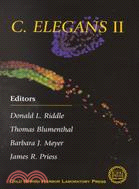
Studies of the cells and genes of the nematode C. elegans have become a cornerstone of current biology. A classic 1988 Cold Spring Harbor monograph, The Nematode Caenorhabditis elegans, described the
In this brief, readable, and revealing book, one of the pioneers of the now rapidly evolving field of DNA repair traces the history of the discovery of the more important mechanisms by which cells res
For over 25 years the study of retroviruses has underpinned much of what is known about information transfer in cells and the genetic and biochemical mechanisms that underlie cell growth and cancer in
In this classic, originally published 25 years ago and now reprinted with a new Afterword by the author on how he came to write the book, Judson tells the story of the birth and early development of
Investigators who have identified and cloned a gene of interest often want to isolate and characterize the protein product, yet the methods required are no-toriously tricky for the inexperienced. For
In a new preface to this special edition of his critically acclaimed memoir, Francois Jacob recalls the events that brought him to Cold Spring Harbor Laboratory in the early 1960's and taught him muc
Barbara McClintock was born in 1902, within a few years of the rediscovery of Mendel's laws. Her life, discoveries, and insights span the history of genetics in this century. In the 1920s, she became
In 1965 Sydney Brenner chose the free-living nematode Caenorhabditis elegans as a promising model system for a concerted genetic, ultrastructural, and behavioral attack on the development and function