Augustinus (354430 CE), son of a pagan, Patricius of Tagaste in North Africa, and his Christian wife Monica, while studying in Africa to become a rhetorician, plunged into a turmoil of philosop
Augustinus (354430 CE), son of a pagan, Patricius of Tagaste in North Africa, and his Christian wife Monica, while studying in Africa to become a rhetorician, plunged into a turmoil of philosop
One of the best known examples of the hagiographic novel, this is the tale of an Indian prince who becomes aware of the world's miseries and is converted to Christianity by the monk Barlaam. Barlaam
Plato, the great philosopher of Athens, was born in 427 BCE. In early manhood an admirer of Socrates, he later founded the famous school of philosophy in the grove Academus. Much else recorded of his
Dio Cassius (Cassius Dio), ca. 150 235 CE, was born at Nicaea in Bithynia in Asia Minor. On the death of his father (Roman governor of Cilicia) he went in 180 to Rome, entered the Senate, and u
Marcus Aurelius (121180 CE), Roman emperor and Stoic philosopher, born at Rome, received training under his guardian and uncle emperor Antoninus Pius (reigned 138161), who adopted him. He
Menander, the dominant figure in New Comedy, wrote over 100 plays. By the Middle Ages they had all been lost. Happily papyrus finds in Egypt during the past century have recovered one complete play,
Claudius Claudianus, Latin poet of great affairs, flourished during the joint reigns (3945 CE onwards) of the brothers Honorius (Emperor in the West) and Arcadius (in the East). Apparently a na
Claudius Claudianus, Latin poet of great affairs, flourished during the joint reigns (3945 CE onwards) of the brothers Honorius (Emperor in the West) and Arcadius (in the East). Apparently a na
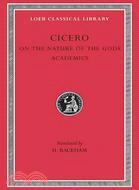
Cicero (Marcus Tullius, 10643 BCE), Roman lawyer, orator, politician and philosopher, of whom we know more than of any other Roman, lived through the stirring era which saw the rise, dictatorsh
Hippocrates, said to have been born in Cos in or before 460 BCE, learned medicine and philosophy; travelled widely as a medical doctor and teacher; was consulted by King Perdiccas of Macedon and Arta
Ovid (Publius Ovidius Naso, 43 BCE17 CE), born at Sulmo, studied rhetoric and law at Rome. Later he did considerable public service there, and otherwise devoted himself to poetry and to society
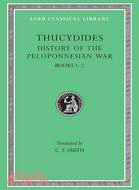
Thucydides of Athens, one of the greatest of historians, was born about 471 BCE. He saw the rise of Athens to greatness under the inspired leadership of Pericles. In 430, the second year of the Pelop
Frontinus, Sextus Iulius, ca. 35103 CE, was a capable Roman civil officer and military commander. Praetor of the city in 70 and consul in 73 or 74, 98 and 100, he was, about the year 76, sent t
Plato, the great philosopher of Athens, was born in 427 BCE. In early manhood an admirer of Socrates, he later founded the famous school of philosophy in the grove Academus. Much else recorded of his
Though he occupies a firm place in the canon of the ten Attic orators, Isaeus seems not to have been an Athenian, but a metic, being a native of Chalcis in Euboea. From passages in his work he is inf
The importance of Isocrates for the study of Greek civilisation of the fourth century BCE is indisputable. From 403 to 393 he wrote speeches for Athenian law courts, and then became a teacher of comp
Strabo (ca. 64 BCE to ca. 25 CE), an Asiatic Greek of Amasia in Pontus, studied at Nysa and after 44 BCE at Rome. He became a keen traveller who saw a large part of Italy, various near eastern region
Aulus Gellius (ca. 123170 CE) is known almost wholly from his Noctes Atticae, 'Attic Nights', so called because it was begun during the nights of an Attic winter. The work collects in twenty bo
Silius (T. Catius Silius Italicus), 25 CE101, was consul in 68 and governor of the province of Asia in 69; he sought no further office but lived thereafter on his estates as a literary man and
This volume presents papyri relating to public business of various kinds in Egypt from the middle of the 3rd century BCE to 710 CE, thus including affairs in that country first when it was ruled by t
Aristotle, great Greek philosopher, researcher, reasoner, and writer, born at Stagirus in 384 BCE, was the son of Nicomachus, a physician, and Phaestis. He studied under Plato at Athens and taught th
This is the first in a two-volume edition of Greek orators.Antiphon of Athens, born in 480 BCE, spent his prime in the great period of Athens but, disliking democracy, was himself an ardent oligarch
Cicero (Marcus Tullius, 10643 BCE), Roman lawyer, orator, politician and philosopher, of whom we know more than of any other Roman, lived through the stirring era which saw the rise, dictatorsh
Pliny the Elder, tireless researcher and writer, is author of the encyclopedic Natural History, in 37 books, an unrivaled compendium of Roman knowledge. The contents of the books are as follows. Book
Dionysius of Halicarnassus was born before 53 BCE and went to Italy before 29 BCE. He taught rhetoric in Rome while studying the Latin language, collecting material for a history of Rome, and writing
The importance of Isocrates for the study of Greek civilisation of the fourth century BCE is indisputable. From 403 to 393 he wrote speeches for Athenian law courts, and then became a teacher of comp
Dionysius of Halicarnassus was born before 53 BCE and went to Italy before 29 BCE. He taught rhetoric in Rome while studying the Latin language, collecting material for a history of Rome, and writing
The philosopher Philo was born about 20 BCE to a prominent Jewish family in Alexandria, the chief home of the Jewish Diaspora as well as the chief center of Hellenistic culture; he was trained in Gre
Livy (Titus Livius), the great Roman historian, was born at or near Patavium (Padua) in 64 or 59 BCE; he may have lived mostly in Rome but died at Patavium, in 12 or 17 CE.Livy's only extant work is
Prudentius (Aurelius Prudentius Clemens) was born in 348 CE probably at Caesaraugusta (Saragossa) and lived mostly in northeastern Spain, but visited Rome between 400 and 405. His parents, presumably
In this volume are three works concerning the campaigns engaged in by the great Roman statesman Julius Caesar (10044 BCE), but not written by him. The Alexandrian War, which deals with troubles
Livy (Titus Livius), the great Roman historian, was born at or near Patavium (Padua) in 64 or 59 BCE; he may have lived mostly in Rome but died at Patavium, in 12 or 17 CE.Livy's only extant work is
Columella (Lucius Iunius Moderatus) of Gades (Cadiz) lived in the reigns of the first emperors to about 70 CE. He moved early in life to Italy where he owned farms and lived near Rome. It is probable
The Saturnalia, Macrobius' encyclopedic celebration of Roman culture written in the early fifth century CE, has been prized since the Renaissance as a treasure trove of otherwise unattested lore. Cas
Cicero (Marcus Tullius, 10643 BCE), Roman lawyer, orator, politician and philosopher, of whom we know more than of any other Roman, lived through the stirring era which saw the rise, dictatorsh
Cicero (Marcus Tullius, 10643 BCE), Roman lawyer, orator, politician and philosopher, of whom we know more than of any other Roman, lived through the stirring era which saw the rise, dictatorsh
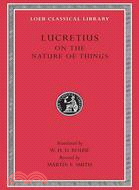
Lucretius (Titus Lucretius Carus) lived ca. 99ca. 55 BCE, but the details of his career are unknown. He is the author of the great didactic poem in hexameters, De Rerum Natura (On the Nature of
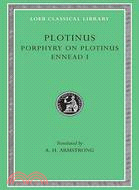
Plotinus (204/5-270 CE) was the first and greatest of Neoplatonic philosophers. His writings were edited by his disciple Porphyry, who published them many years after his master's death in six sets o
Thucydides of Athens, one of the greatest of historians, was born about 471 BCE. He saw the rise of Athens to greatness under the inspired leadership of Pericles. In 430, the second year of the Pelop