An expert on the philosophy of John Macmurray evaluates current ethical concerns raised by economic inequality, the influence of money on politics, political extremism, the election of Donald Trump, a
In this overview of what is now known about brain functioning biophysicist Bernard Korzeniewski constructs a theory about how consciousness gradually emerged in the course of evolution from the few n
In The Primal Instinct, Dr. Martin Jaffe argues that the need for security—both physical security and intellectual security, which is assessed as the feeling of self-esteem—is the principle that motiv
Postmodernism is a term used to describe a contemporary school of philosophy that takes a highly critical stance toward the conceptual underpinnings of the modern worldview. Such leading postmodernist
To be a cosmopolitan—i.e., a citizen of the world first and only secondarily a member of a particular nation—is an ideal that has a long history. It dates back to the ancient Greek philosopher Diogene
Psychology has traditionally analyzed the self in terms of familial influence, close relationships, inherited personality traits, education, social status, and economic level. But as psychologist Jose
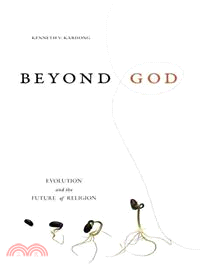
Looking at religion from an evolutionary perspective, Kardong (biology, Washington State U.) updates and rewrites his previous book Origin of God (2004) to argue that religion was an evolutionary nece
In Patterns of Discovery (1958), Norwood Russell Hanson (1924-1967; founder, department of the history and philosophy of science, U. of Indiana) argues that observation is theory- and language-laden;
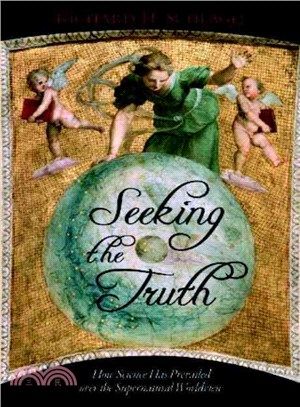
In this sweeping intellectual history, philosopher Richard H. Schlagel compares the conceptual worldviews of science and religion, their distinct historical origins, their radically different experie
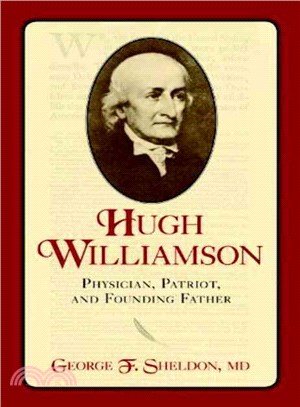
Hugh Williamson (1735-1819) was a physician, a member of the educated intelligentsia in colonial America, and a signer of the US Constitution. Although he is one of the lesser-known Founding Fathers,
In this insightful study, Nietzsche specialist Jonathan R. Cohen argues that Human, All-Too-Human (1878) represents the crucial watershed for Nietzsche’s philosophical development, the moment at which
Naturalism is widely regarded as the dominant philosophical worldview in the West. The prestige of science and the power of technology have driven naturalism to prominence, even as deep questions moun
It is an undeniable fact that economic circumstances can directly impact political affairs, that wealth is easily translated into political influence, and that political movements and constitutional a
This cross-disciplinary collection of essays focuses on gender from multiple perspectives, touching on a variety of aspects that range from specific tendencies, such as fashion, to general trends conn
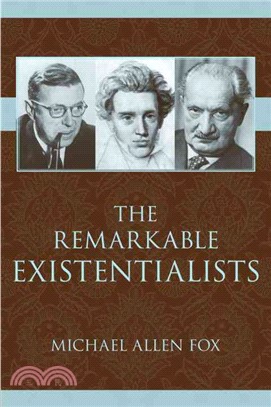
One of the most original and refreshing approaches to philosophy is existentialism. Although the heyday of this movement spanned the late-nineteenth to mid-twentieth centuries, the themes that existen
The ontological argument for the existence of God has been a constant in the philosophy of religion since its first formulation by Anselm of Canterbury in the 11th century. In the 17th century, it was
As we survey the negative effects of modernism—environmental destruction, the net consumption of irreplaceable natural resources, the ever-widening gulf between first and third worlds—we are forced to
A specialist on nomadic peoples, Salzman (anthropology, McGill U.) describes Arab culture as a brilliant construction of human creativity that responds in a practical manner to many human problems. Li
Her parents bought her a husband. It was not money well spent. She was not pretty, a condition rarely forgiven. But she was brilliant, a prolific and celebrated author, and perfectly placed as a premi
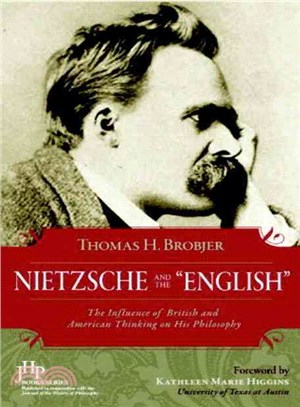
Friedrich Nietzsche—one of the most read and discussed philosophers of all time—is frequently regarded as a quintessentially German philosopher, yet one who had strong anti-German tendencies and late
A central issue in contemporary philosophy is the problem of the self. Is it some kind of real entity or a very convincing illusion? Drawing on the work of two leading philosophers, Daniel Dennett and
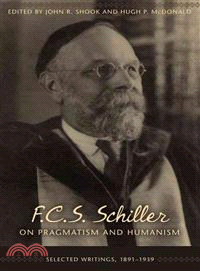
The renaissance of pragmatism in recent decades has stimulated renewed study of the classical pragmatists. Until this volume, F. C. S. Schiller (1864–1937) was the only major pragmatist from the class
Philosopher Daniel C. Fouke sheds the light of rhetorical analysis on a subversive thinker whose challenges to institutional authority have awakened recent scholarly interest.John Toland (1670-1722) w
Can conscious machines be created, and if so, what does that imply for being human? Extending a paper written in high school, Sternberg (neuroscience and philosophy major, Brandeis U.) offers an acces
Marcus (history, Mississippi State U.) and Bix (history, Iowa State U.) employ case studies and vignettes to chronologically illustrate the evolution of US federal science and technology policies from
A specialist in early modern culture and intellectual history, Wolloch has chosen anthropocentrism as the pivot around which to study the considerable interest in animals by early modern European phil
How can we respond in the aftermath of wrongdoing? How can social trust be restored in the wake of intense political conflict? In this challenging work, philosopher Trudy Govier explores central dilem
Wittgenstein sought clarity for its own sake, and so avoided advocacy or system building, says Garver (philosophy, State U. of New York-Buffalo), but he himself strives to contribute greater clarity t
Karl Jaspers was one of the greatest European philosophers and humanists of the twentieth century. He demonstrated a broad range of philosophical thinking that makes his work relevant for the twenty-f
In this revised, expanded edition of his critically acclaimed book, Eric Dorn Brose weaves a fabric from three histories that, until now, have been thought of as mutually exclusive. The history of tec
Drawing on the full spectrum of Marx's writings, Brien (philosophy, Washington College) reconstructs the philosophical dimensions of Marx's thought, centrally focusing on the problem of freedom, which
Asante (African American studies, Temple U.) is the creator of the first doctoral program in African American studies and the author of some 60 books. He examines, from an Afrocentric perspective, sev
Women have been practicing the healing arts for centuries. And at the same time, they have wanted to play a vital role in wartime—not only on the home front but also on the battlefield with all its ri
Integrated behavioral health care is a health-care service delivery system in which behavioral health care is coordinated with primary medical care. Unlike older approaches to patient care in which me
Navia (philosophy, New York Institute of Technology) sifts through the contemporary evidence about the life of the strange Greek philosopher, who died in 323 BC, and through reports of his writing, no
Some years ago, Cook decided that in his attempts to defend Ludwig Wittgenstein's (1889-1951) philosophy, he had been cheating both himself and his students, and so resigned his position as head of th
Hegel's influence over intellectual history, philosophy, social science and even literature is enormous, but his works are notoriously difficult to read and apply. Fox (philosophy, Queen's U., Canada)
T. D. Lysenko (1898-1976) was a Russian agronomist and head of a school that rejected classical genetics. He was championed by the new Soviet government, which officially condemned genetics until 1964