China’s extraordinarily rapid economic growth since 1978, driven by market-oriented reforms, has set world records and continued unabated, despite predictions of an inevitable slowdown. In The State S
Labor productivity growth in the United States and other advanced countries has slowed dramatically since the mid-2000s, a major factor in their economic stagnation and political turmoil. Economists h
Economic growth, inflation, and interest rates have declined in Asia, just as they have in the United States and Europe. Sustaining Economic Growth in Asia explores the relevance to several Asian econ
Conflicts over currency valuations are a recurrent feature of the modern global economy. To strengthen their international competitiveness, many countries resort to buying foreign currencies to make t
The world is poised on the threshold of economic changes that will reduce the income gap between the rich and poor on a global scale while reshaping patterns of consumption. Rapid economic growth in e
In the decades before the global financial crisis struck in 2007, economic policymakers kept to the primary goal of containing inflation and public deficits. Today, after years of sluggish economic re
The global financial crisis produced an important agreement among regulators in 2010–11 to raise capital requirements for banks to protect them from insolvency in the event of another emergency. In th
In the wake of the global economic and financial crisis, bank supervisors in the United States and the European Union carried out a set of "stress tests" over the 2009-15 period. The objective was to
The issue of countries artificially manipulating the value of their currencies is at the center of most debates about trade in the United States today. Critics of liberalizing trade have charged, for
The Trans-Pacific Partnership (TPP) between 12 Pacific Rim countries has generated the most intensive political debate about the role of trade in the United States in a generation. The TPP is one of t
The global financial and economic crisis that began in 2008 has blasted livelihoods, inspired protests, and toppled governments. It has also highlighted the profound moral concerns long surrounding gl
Asian financial systems, which serve the most economically dynamic region of the world, survived the global economic crisis of the last several years. In From Stress to Growth: Strengthening Asia's Fi
Like the robber barons of the 19th century Gilded Age, a new and proliferating crop of billionaires is driving rapid development and industrialization in poor countries. The accelerated industrial gro
Anders Aslund, known for repeatedly challenging conventional wisdom on transition economies, is a leading specialist on post-communist economic transformation with more than 30 years of experience in
The fall of communism transformed the political and economic landscape in more than two dozen countries across Europe and Asia. In this volume published on the 25th anniversary of the fall, political
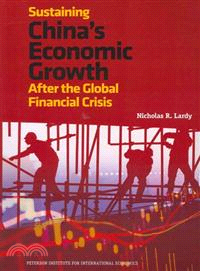
China's transition to a market economy has propelled its remarkable economic growth since the late 1970s. In this book, Nicholas R. Lardy, one of the world's foremost experts on the Chinese economy, t
Will the Obama administration's decision to normalize relations with Cuba usher in a new era of economic cooperation, trade, and investment between the two countries? This prescient book, published on
First came the financial and debt crisis in Greece, then government financing difficulties and rescue programs in Ireland in 2010 and Portugal in 2011. Before long, Italy and Spain were engulfed by fi
The terrain of the world trading system is shifting as countries in Asia, Europe, and North America negotiate new trade agreements. However, none of these talks include both China and the United State
In mid-2009 Simeon Djankov, who had dealt with a variety of economic and financial crises as chief economist for finance and private sector development at the World Bank, was suddenly thrust into the
Houser and Mohan here analyze the economic implications of the recent technological boom in oil and natural gas drilling in the US, intended to guide policymakers in wise decision-making. After an ove
It is not in the US interest to adopt tax and regulatory policies that would discourage global engagement by US multinational corporations (MNCs). Research presented in this book shows that the expans
Economists examine local content requirements that many countries established to recover from the Great Recession of 2008-09 as an alternative to explicit tariffs to protect the local economy against
Countries blessed with abundant natural resources often seek financial and political power from their supposedly lucky status. But the potentially negative impact of natural resources on development o
Why has the economy of Latin America responded more positively than Asia, Europe, or the United States after being hit by the recent global financial crisis? Three years after the worst of the crisis,
During their financial crisis of 1997-98, Asian countries learned significant lessons, often at the behest of international creditors such as the United States. And they were able to productively util
Americans have long been ambivalent toward foreign direct investment in the United States. Foreign multinational corporations may be a source of capital, technology, and jobs. But what are the implica
Despite a few key sticking points not yet resolved through 15 negotiating rounds, the Trans-Pacific Partnership (TPP) is likely to come into force in the next year. With 13 initial members, and the po
Bergsten (Peterson Institute for International Economics) and Henning (international economic relations, American U., and Peterson Institute) collect 11 essays in honor of international economist John
"While global trade negotiations remain stalled, two tracks of trade negotiations in the Asia-Pacific--the proposed Trans-Pacific Partnership (TPP) agreement and a parallel Asian track--could generate
Maskus (economics, U. of Colorado, Boulder, and research fellow, Peterson Institute for International Economics) provides extensive and detailed coverage of global issues now affecting intellectual pr
Bhalla (chairman of Oxus Investments, a market advisory firm based in New Delhi, India) seeks to demonstrate the neglected role of currency undervaluation in economic (export-led) growth and to consid
"A rising tide lifts all boats," John F. Kennedy declared in 1963, yet many Americans, including a number of economists, believe that free trade agreements and the growth of developing economies have
The editors (variously associated with the Washington-based Peterson Institute for International Economics and the Brussels-based economic think-tank, Bruegel) present the proceedings of a pair of pol
Coming out of a conference held in September 2011 on the European debt crisis, this work examines policy options for resolving the euro area debt crisis. After a luncheon address by George Soros (Soro
Oliver, Subramanian, and Williamson (all senior fellows at the Peterson Institute for International Economics) discuss the pros and cons of capital account liberalization for emerging financial market
Lardy (Peterson Institute for International Economics) explains China's economic policy during the global financial crisis of 2008-09 and analyzes the challenges China's leadership faces in sustaining
Upon congressional approval of the Moldova Jackson-Vanik Repeal Act of 2012, the United States would establish permanent normal trade relations (PNTR) with Russia. With a title which leaves no doubt a
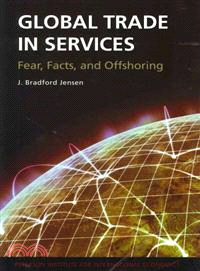
In this thoroughly researched volume, Jensen (economics and international business, Georgetown U.) argues that we should be pushing for further liberalization of existing overseas laws through the Wor
The authors (a senior fellow and a research analyst with the Peter G. Peterson Institute of International Economic) examine the theory and empirical evidence concerning exchange rate policy in the adv