For more than a decade, the U.S. Supreme Court has turned a skeptical eye toward Congress. Distrustful of Congress’s capacity to respect constitutional boundaries, the Court has recently overturned fe
Most recent discussion of the United States Constitution and war—both the war on terrorism and the war in Iraq—has been dominated by two diametrically opposed views: the alarmism of those who see many
Perhaps more than any other Supreme Court ruling, Brown v. Board of Education, the 1954 decision declaring the segregation of public schools unconstitutional, highlighted both the possibilities and t
The meaning and significance of the Supreme Court's 2002-2003 term are explored in a collection of essays that focuses on individual justices, court practices, and some of the most important rulings d
Although the federal appointment of U.S. judges and executive branch officers has consistently engendered controversy, previous studies of the process have been limited to particular dramatic conflict
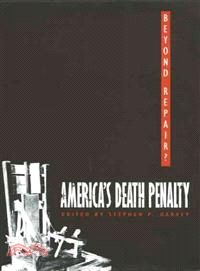
A collection of essays on capital punishment reflects on the most recent legal developments and procedures, considering such topics as the public's opinion about the death penalty, its practice in lig
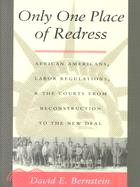
In Only One Place of Redress David E. Bernstein offers a bold reinterpretation of American legal history: he argues that American labor and occupational laws, enacted by state and federal governments
Modern ideas about the protection of free speech in the United States did not originate in twentieth-century Supreme Court cases, as many have thought. Free Speech, "The People's Darling Privilege" re
A fundamental critique of American law and legal thought, Against the Law consists of a series of essays written from three different perspectives that coalesce into a deep criticism of contemporary l
This timely and accessible volume takes a fresh approach to a question of increasing public concern: whether or not the federal government should regulate media violence. In Violence as Obscenity, Kev
The Fourteenth Amendment guarantees all citizens equal protection under the law as well as immunity from laws that deprive them of life, liberty, or property without due process of law. In Progressive
Government seizure of the nation’s strikebound steel mills on 8 April 1952 stands as one of President Harry S Truman’s most controversial actions, representing an unprecedented use of pre