Argues that understanding Deleuze's relationship to Leibniz is essential for a full understanding of Deleuze's philosophyThroughout Deleuze's work, we find two opposing characterisations of Leibniz. O
Among the philosophical traditions that seem most at odds with Gilles Deleuze's project, two stand out: Kantianism and normative ethics. Both of these traditions represent forms of moralism that Deleu
Despite their title, Gilles Deleuze's Cinema books are not 'about' the cinema: they are works of philosophy first and foremost, even if this has yet to be fully recognised.Deleuze turns to the cinema
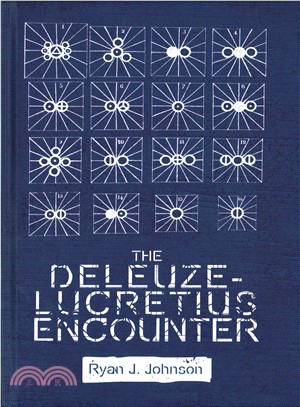
Explores how Deleuze's thought was shaped by Lucretian atomism - a formative but often-ignored influence from ancient philosophy More than any other 20th-century philosopher, Deleuze considers himself
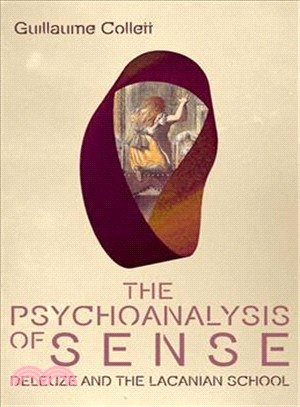
The Psychoanalysis of Sense shows that Deleuze was not merely aware of the debates animating the Lacanian School during the 1960s: he sought to contribute to them. He offers a new, integrated reading
Deleuze's readings of Hume, Spinoza, Bergson and Nietzsche respond to philosophical critiques of classical and modern empiricism. However, Deleuze's arguments against those critiques - by Kant, Hegel,
More than any other 20th-century philosopher, Deleuze considers himself an apprentice to the history of philosophy. But scholarship has ignored one of the more formative influences on Deleuze: Lucreti
Guillaume Collett questions to what extent we can locate Deleuze within the Lacanian School during the late-1960s, prior to Guattari. In so doing, he offers a new, integrated reading of Deleuze's The
Deleuze's readings of Hume, Spinoza, Bergson and Nietzsche respond to philosophical critiques of classical and modern empiricism. However, Deleuze's arguments against those critiques--by Kant, Hegel,
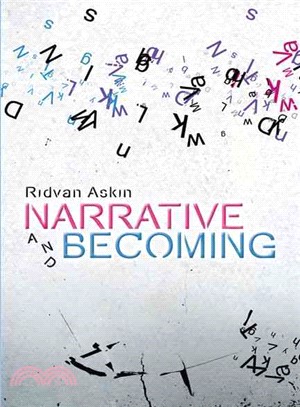
What is narrative? Ridvan Askin brings together aesthetics, contemporary North American fiction, Gilles Deleuze, narrative theory and the recent speculative turn to answer this question. Through this
Sean McQueen theorises shifts in and across critical approaches to capitalism, science, technology, psychoanalysis, literature and cinema and media studies. He also brings renewed Marxian readings to
Marco Altamirano examines Deleuze's philosophy of time, from its Bergsonian inheritance to its Nietzschean re-evaluation to Deleuze's co-authored work with Guattari. He then deploys the conceptual res
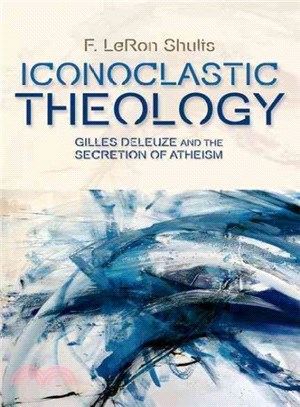
F. LeRon Shults explores Deleuze's fascination with theological themes and shows how his entire corpus can be understood as a creative atheist machine that liberates thinking, acting and feeling. Shul
Analyses Deleuze's notion of transcendental and genetic Ideas as conditions of creative thought. This title comprises a radical critique of the illusions of representation and a genetic model of thoug
How do the practices of philosophy and film converge in ethical and political theory? Untimely Affects is an ethical and aesthetic interweaving of Deleuzian philosophy and close film analysis to disc
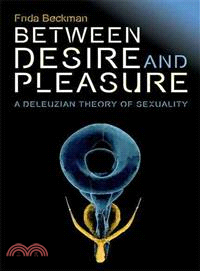
Explores the political, cultural and conceptual significance of sexual pleasure through Deleuze's philosophy. How is sexual pleasure inscribed into conceptions of the body, gender, health and the huma
A new edition of Zourabichvili's seminal works, published together for the first time. This edition makes available in a single volume Zourabichvili's most important writings on the philosophy of Gill
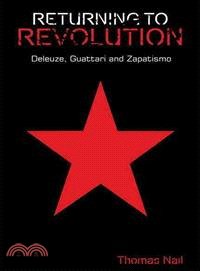
An account of the concept of revolution in the work of Deleuze and Guattari. We are witnessing the return of political revolution. But this is not a return to the classical forms of revolution: the ca
A new edition of Zourabichvili's seminal works, published together for the first time. This edition makes available in a single volume Zourabichvili's most important writings on the philosophy of Gill
How are we to understand the process of transformation, the creation of the new, and its relation to what has come before? In History and Becoming, Craig Lundy puts forward a series of fresh and provo
Why do philosophers read literature? How do they read it? And to what extent does their philosophy derive from their reading of literature? Anyone who has read contemporary European philosophers has h