商品簡介
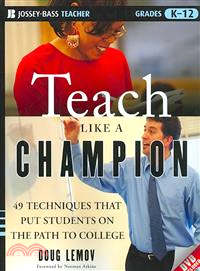
Teach Like a Champion offers effective teaching techniques to help teachers, especially those in their first few years, become champions in the classroom. These powerful techniques are concrete, specific, and are easy to put into action the very next day. Training activities at the end of each chapter help the reader further their understanding through reflection and application of the ideas to their own practice.
Among the techniques:
Technique #1: No Opt Out. How to move students from the blank stare or stubborn shrug to giving the right answer every time.
Technique #35: Do It Again. When students fail to successfully complete a basic task—from entering the classroom quietly to passing papers around—doing it again, doing it right, and doing it perfectly, results in the best consequences.
Technique #38: No Warnings. If you're angry with your students, it usually means you should be angry with yourself. This technique shows how to effectively address misbehaviors in your classroom.
The book includes a DVD of 25 video clips of teachers demonstrating the techniques in the classroom.
Note: CD-ROM/DVD and other supplementary materials are not included as part of eBook file.
作者簡介
Doug Lemov is a managing director of Uncommon Schools and oversees its True North network. He is the former president of School Performance and former vice president for accountability at the State University of New York Charter Schools Institute. He also trains school leaders and teachers and has taught English and history at the university, high school, and middle school levels. Visit Doug Lemov at www.douglemov.com.
目次
DVD Contents.
Foreword.
Acknowledgments.
The Author.
Introduction: The Art of Teaching and Its Tools.
PART ONE: TEACH LIKE A CHAMPION: THE ESSENTIAL TECHNIQUES.
1 Setting High Academic Expectations.
Technique 1: No Opt Out.
Technique 2: Right Is Right.
Technique 3: Stretch It.
Technique 4: Format Matters.
Technique 5: Without Apology.
Reflection and Practice.
2 Planning that Ensures Academic Achievement.
Technique 6: Begin with the End.
Technique 7: 4 Ms.
Technique 8: Post It.
Technique 9: Shortest Path.
Technique 10: Double Plan.
Technique 11: Draw the Map.
Reflection and Practice.
3 Structuring and Delivering Your Lessons.
Technique 12: The Hook.
Technique 13: Name the Steps.
Technique 14: Board = Paper.
Technique 15: Circulate.
Technique 16: Break It Down.
Technique 17: Ratio.
Technique 18: Check for Understanding.
Technique 19: At Bats.
Technique 20: Exit Ticket.
Technique 21: Take a Stand.
Reflection and Practice.
4 Engaging Students in Your Lessons.
Technique 22: Cold Call.
Technique 23: Call and Response.
Technique 24: Pepper.
Technique 25: Wait Time.
Technique 26: Everybody Writes.
Technique 27: Vegas.
Reflection and Practice.
5 Creating a Strong Classroom Culture.
Technique 28: Entry Routine.
Technique 29: Do Now.
Technique 30: Tight Transitions.
Technique 31: Binder Control.
Technique 32: SLANT.
Technique 33: On Your Mark.
Technique 34: Seat Signals.
Technique 35: Props.
Reflection and Practice.
6 Setting and Maintaining High Behavioral Expectations.
Technique 36: 100 Percent.
Technique 37: What to Do.
Technique 38: Strong Voice.
Technique 39: Do It Again.
Technique 40: Sweat the Details.
Technique 41: Threshold.
Technique 42: No Warnings.
Reflection and Practice.
7 Building Character and Trust.
Technique 43: Positive Framing.
Technique 44: Precise Praise.
Technique 45: Warm/Strict.
Technique 46: The J-Factor.
Technique 47: Emotional Constancy.
Technique 48: Explain Everything.
Technique 49: Normalize Error.
Reflection and Practice.
8 Improving Your Pacing: Additional Techniques for Creating a Positive Rhythm in the Classroom.
Change the Pace.
Brighten Lines.
All Hands.
Every Minute Matters.
Look Forward.
Work the Clock.
Reflection and Practice.
9 Challenging Students to Think Critically: Additional Techniques for Questioning and Responding to Students.
One at a Time.
Simple to Complex.
Verbatim (No Bait and Switch).
Clear and Concise.
Stock Questions.
Hit Rate.
Reflection and Practice.
PART TWO: HELPING STUDENTS GET THE MOST OUT OF READING: CRITICAL SKILLS AND TECHNIQUES.
10 How All Teachers Can (and Must) Be Reading Teachers.
11 The Fundamentals: Teaching Decoding, Vocabulary Development, and Fluency.
12 Comprehension: Teaching Students to Understand What They Read.
Conclusion: The End Is the Beginning.
Appendix: Behind-the-Scenes Interviews.
Index.
How to Use the DVD.