商品簡介
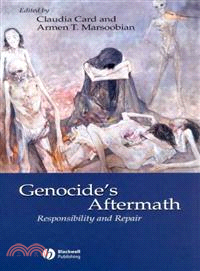
This landmark collection addresses the hard moral dilemmas that have arisen in the wake of genocide and crimes against humanity during the 20th century.
Re-examines the national policy of slavery and forcible removal of Native Americans through the contemporary definitions of genocide
Evaluates issues of guilt through to the consideration of reconciliation and reparations
Original essays representing the latest research in moral issues
作者簡介
Claudia Card is the Emma Goldman Professor of Philosophy at the University of Wisconsin. She is the author of The Atrocity Paradigm: A Theory of Evil (2002), The Unnatural Lottery: Character and Moral Luck (1996), and Lesbian Choices (1995) and the editor of many books, most recently The Cambridge Companion to Simone de Beauvoir. She is currently a senior fellow at the Institute for Research in the Humanities (Madison, Wisconsin), where she is writing another book on evil and an introduction to feminist philosophy.
Armen T. Marsoobian is professor and chair of philosophy at Southern Connecticut State University. He is editor in chief of the Blackwell journal Metaphilosophy and has co-edited four books: Justus Buchler’s Metaphysics of Natural Complexes (1990), Nature’s Perspectives: Prospects for Ordinal Metaphysics (1991), The Philosophical Challenge of September 11 (2004), and The Blackwell Guide to American Philosophy (2004). He has published articles in aesthetics and American philosophy, and his current work deals with philosophical issues arising from genocide.
目次
Notes on Contributors.
1. Introduction: Genocide’s Aftermath: Claudia Card and Armen T. Marsoobian.
2. Genocide and Social Death: Claudia Card.
3. Clarifying the Concept of Genocide: Mohammed Abed.
4. Genocide and the Moral Agency of Ethnic Groups: Karen Kovach.
5. Moral Taint: Marina A. L. Oshana.
6. Collective Action and the Peculiar Evil of Genocide: Bill Wringe.
7. On the Possibilities of Group Injury: Stephen Winter.
8. The Counterfactual Conception of Compensation: Rodney C. Roberts.
9. Compensation and Reparation as Forms of Compensatory Justice: Haig Khatchadourian.
10. A Normative Theory of Reparations in Transitional Democracies: Ernesto Verdeja.
11. Prosecuting Military Leaders for War Crimes: Larry May.
12. Rethinking the Legitimacy of Truth Commissions: ‘‘I Am the Enemy You Killed, My Friend’’: Nir Eisikovits.
13. Acknowledging and Rectifying the Genocide of American Indians: ‘‘Why Is It That They Carry Their Lives on Their Fingernails?’’: William C. Bradford.
14. Epilogue: Reconciliation in the Aftermath of Genocide: Armen T. Marsoobian.
Index.