商品簡介
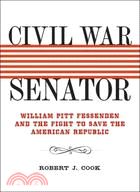
William Pitt Fessenden (1806-1869) helped devise Union grand strategy during the Civil War. A native of Maine and son of a fiery New England abolitionist, he served in the United States Senate as a member of the Whig Party during the Kansas-Nebraska crisis and played a formative role in the development of the Republican Party. In this biography, Robert J. Cook charts Fessenden's rise to power and i probes the potent mix of political ambition and republican ideology which impelled him to seek a place in the U.S. Senate at a time of rising tension between North and South.
A determined and self-disciplined man who fought, not always successfully, to keep his passions in check, Fessenden helped to spearhead Republican Party opposition to proslavery expansion during the strife-torn 1850's and led others to resist the cotton states' efforts to secede peaceably after the election of Abraham Lincoln in 1860. During the Civil War, he chaired the Senate Finance Committee and served as President Lincoln's second head of the Treasury Department. In both positions, he fashioned and implemented wartime financial policy for the United States.
In addition, Fessenden's multifaceted relationship with Lincoln helped to foster effective working relations between the president and congressional Republicans. Cook outlines Fessenden's many contributions to critical aspects of northern grand strategy and to the gradual shift to an effective total war policy against the Confederacy. Most notably, Cook shows, Fessenden helped craft congressional policy regarding the confiscation and emancipation of slaves. Cook also details Fessenden's tenure as chairman of the Joint Committee on Reconstruction after the war, during which he authored that committee's report. Although he sanctioned his party's break with Andrew Johnson less than a year after the war's end, Cook explains how Fessenden worked decisively to thwart attempts by Radical Republicans to revolutionize post-emancipation society in the defeated Confederacy.
作者簡介
Robert J. Cook is a professor of American history at the University of Sussex in Britain. His book, Troubled Commemoration: The American Civil War Centennial, 1961-1965, was a finalist for the Lincoln Prize.