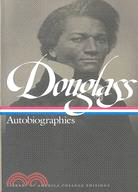
Frederick Douglass, an outspoken abolitionist, was born into slavery in 1818 and, after his escape in 1838, repeatedly risked his own freedom as an antislavery lecturer, writer, and publisher.
Henry Louis Gates, Jr. was Professor of English, Comparative Literature, and Africana Studies at Cornell University, and also tenured at Yale, Duke, and Harvard, where he was appointed W.E.B. DuBois professor of humanities in 1991. Professor Gates is the author of
Figures in Black: Words, Signs, and the Racial Self, Wonders of the African World, The Signifying Monkey: A Theory of African-American Literary Criticism, Thirteen Ways of Looking at a Black Man, Loose Cannons: Notes on the Culture Wars, and
Colored People: A Memoir. With Cornel West, he co-wrote
The African American Century: How Black Americans Have Shaped Our Country and
The Future of the Race. He is also the editor of the critically-acclaimed edition of Our Nig, an annotated reprint of Harriet E. Wilson’s 1859 novel,
The Slave’s Narrative (with the late Charles T. Davis),
Africana: The Encyclopedia of the African and African-American Experience, Six Women’s Slave Narratives, and
In the House of Oshugbo: Critical Essays on Wole Soyinka. He is a recipient of the MacArthur Prize.