商品簡介
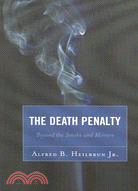
For clinical psychologist Heilbrun (emeritus, Emory U.), there are only two significant questions that mitigate in favor or against the death penalty: whether it does, in fact, serve as a deterrent to homicidal behavior and whether it can be adjudicated fairly and in a "in manner consistent with contemporary values." Examining the recent period in the United States when the death penalty was under moratorium and then temporarily abolished, he concludes that rising homicide rates during this period and falling homicide rates after the resumption of the death penalty suggest that it does deter homicide. Looking at issues of sentencing bias associated with race, gender, and mental competence, he argues that racial disparities can be explained by the "dangerousness" of sentenced blacks, employs a similar method to explain away gender disparities, and finds that while mental competence bias can perhaps be identified, it is not enough to argue against the death penalty, because "imperfection is a trademark of human systems." Annotation c2007 Book News, Inc., Portland, OR (booknews.com)
作者簡介
Alfred B. Heilbrun, Jr. is Distinguished Professor of Psychology Emeritus and Distinguished Emeritus Fellow at Emory University. Professor Heilbrun holds a Ph.D. in Clinical Psychology from the University of Iowa. He is also author of Criminal Dangerousness and the Risk of Violence and Stress and the Risk of Psychological Disorder in College Women, both from the University Press of America.