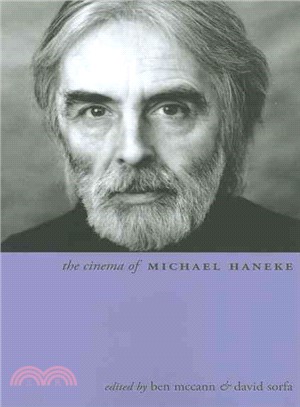
商品簡介
Following a string of successful, and highly provocative films that have won significant critical acclaim and no little commercial success, Haneke has become one of the most debated auteurs of recent years. Sorfa and McCann have assembled an impressive array of scholars in this volume, which both provides a timely and accessible introduction to Haneke's work for those as yet unfamiliar with him, and makes a significant contribution to high-quality scholarship on the director. A valuable addition to the Directors' Cuts series, it is sure to become a well-thumbed tome on library bookshelves around the world. Owen Evans Edge Hill University
Michael Haneke is one of the most important directors working in Europe today. Films such as Funny Games (1997), Code Unknown (2000) and Hidden (2005) interrogate the ethical dilemmas of our era with forensic clarity and merciless insight. Yet even amidst the barren nihilism of The Seventh Continent (1989) and Time of the Wolf (2003), a dark strain of optimism emerges which allows us to consider the possibility of a future in which terrible and inescapable guilt might not necessarily be all encompassing. The Cinema of Michael Hankeke offers a comprehensive examination of the director's central themes and preoccupations - bourgeois alienation, modes and critiques of spectatorship, the role of the media - and analyses hitherto marginalized aspects of Haneke's work, such as his early television work, his 2007 shot-for-shot remake of Funny Games and his 2009 Cannes Film Festival Palme d'Or winner The White Ribbon
作者簡介
Ben McCann is senior lecturer in French Studies in the University of Adelaide
David Sorfa is senior lecturer in Film Studies at Liverpool John Moores University and managing editor of the journal, Film-Philosophy