商品簡介
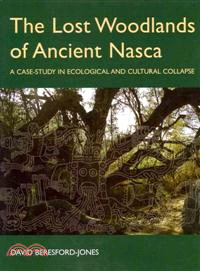
This book presents an archaeological case of prehistoric human environmental impact: a study of ecological and cultural change from the arid south coast of Peru, beginning around 750 BC and culminating in a collapse during the Middle Horizon, around AD 900. Its focus is the lower Ica Valley - today depopulated and bereft of cultivation and yet with archaeological remains attesting to substantial prehistoric occupations - thereby presenting a prima facie case for changed environmental conditions.
Previous archaeological interpretations of cultural changes in the region rely heavily on climatic factors such as El Nino floods and long droughts. While the archaeological, geomorphological and archaeobotanical records presented here do indeed include new evidence of huge ancient flood events, they also demonstrate the significance of more gradual, human-induced destruction of Prosopis pallida (huarango) riparian dry-forest. The huarango is a remarkable leguminous hardwood that lives for over a millennium and provides forage, fuel, and food. Moreover, it is crucial to the integration of a fragile desert ecosystem, enhancing microclimate and soil fertility and moisture. Its removal exposed this landscape to the effects of El Nino climatic perturbations long before Europeans arrived in Peru.
This case-study therefore contradicts the popular perception that native Americans inflicted barely perceptible disturbance upon a New World Eden. Yet, no less interestingly, it also records correlations between changes in society and degrees of human environmental impact. These allow inferences about the specific contexts in which significant human environmental impacts in the New World did, and did not, arise.
作者簡介
David Beresford-Jones is a Research Associate at the McDonald Institute for Archaeological Research, Cambridge. His work seeks to bring together archaeology, archaeobotany and geomorphology to better understand prehistoric human ecology. He has directed the lower Ica Valley Archaeological Research Project in Peru since 2003. He also has interests in the origins of agriculture and the synthesis of archaeology and historical linguistics, especially in the Andes. He has contributed articles to journals such as Current Anthropology, Latin American Antiquity and Catena.