商品簡介
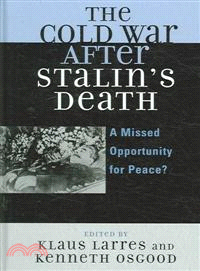
Following the death of Joseph Stalin, a period of rapid fluidity marked the Soviet approach to foreign policy that, however brief, ushered in deep and lasting changes in its interactions with the West and within its own sphere of influence and has left Cold War historians debating the question of whether Washington missed an opportunity for bringing the Cold War to an end much earlier than the world actually experienced. Offering different perspectives on these issues and providing varying answers to the question of missed opportunities, the 14 papers presented by Larres (history and international affairs, U. of Ulster, Northern Ireland) and Osgood (history, Florida Atlantic U., US) examine the post-Stalin era of Soviet foreign policy, touching upon such issues US views of the new Soviet leadership, the US positions on German reunification and nuclear disarmament as purposely designed to forestall the easing of tensions, the rhetorical framing of "peace" in Soviet and American political speeches, the influence of Great Britain and France on Western policy towards the Soviet Union, the perceptions of the Cold War among Soviet allies, Soviet shifts in policy approaches toward East Germany, the signing of the Austrian State Treaty as an example of the "new course" of Stalin's successors, and the evolution of the US-Japanese-Soviet relationship. Annotation c2007 Book News, Inc., Portland, OR (booknews.com)
作者簡介
Klaus Larres is professor of history and international affairs at the University of Ulster. He is also a Distinguished Scholar with the Library of Congress in Washington, D.C.
Kenneth Osgood is assistant professor in the Department of History at Florida Atlantic University.