商品簡介
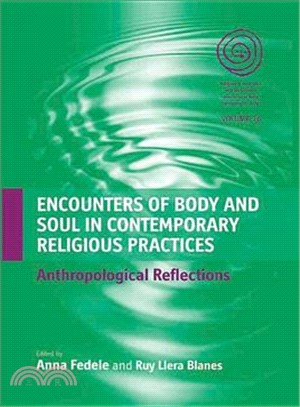
Social scientists and philosophers confronted with religious phenomena have always been challenged to find a proper way to describe the spiritual experiences of the social group they were studying. The influence of the Cartesian dualism of body and mind (or soul) led to a distinction between non-material, spiritual experiences (i.e., related to the soul) and physical, mechanical experiences (i.e., related to the body). However, recent developments in medical science on the one hand and challenges to universalist conceptions of belief and spirituality on the other have resulted in "body" and "soul" losing the reassuring solid contours they had in the past. Yet, in “Western culture,” the body–soul duality is alive, not least in academic and media discourses. This volume pursues the ongoing debates and discusses the importance of the body and how it is perceived in contemporary religious faith: what happens when "body" and "soul" are un-separated entities? Is it possible, even for anthropologists and ethnographers, to escape from "natural dualism"? The contributors here present research in novel empirical contexts, the benefits and limits of the old dichotomy are discussed, and new theoretical strategies proposed.
"There is a welcome international feel about the venture—indeed the contributors could hardly represent a broader range of European nationalities. Furthermore, I am impressed with both the relevance and diversity of the papers listed." - Peter Collins, Durham University
"This is an interesting and timely volume, addressing an important contemporary challenge for the anthropology of religion... The chapters... are ethnographically solid, and are tied nicely into the overall critique of the separation of body and soul." - Jon Mitchell, University of Sussex
作者簡介
Anna Fedele explores in her work the intersections of gender and religion, the importance of corporeality in religious contexts and ritual creativity. She has done extensive fieldwork on alternative pilgrimages to French shrines and is the author of El camino de Maria Magdalena (Barcelona, RBA 2008). She is a research fellow at the Ecole des Hautes Etudes en Sciences Sociales of Paris and at the Centro em Rede de Investigacao em Antropologia at the Lisbon University Institute, and has been a visiting scholar at Stanford University.
Ruy Llera Blanes is a postdoctoral researcher at the Institute of Social Sciences of the University of Lisbon and Visiting Fellow at the London School of Economics and Political Sciences in the Department of Anthropology. He has specialized in the anthropology of religion, having worked on Pentecostal movements in southern Europe. Currently, he is working with African prophetic movements, discussing issues of leadership, charisma, memory, transmission, knowledge and rationalism.