




90折
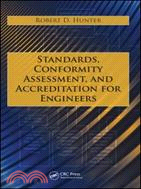
Standards, Conformity Assessment, and Accredition for Engineers
商品資訊
ISBN13:9781439800942
出版社:CRC Press UK
作者:Hunter
出版日:2009/02/27
裝訂/頁數:平裝/232頁
規格:22.9cm*15.9cm*1.9cm (高/寬/厚)
定價
:NT$ 5849 元優惠價
:
90 折 5264 元
若需訂購本書,請電洽客服 02-25006600[分機130、131]。
商品簡介
作者簡介
目次
商品簡介
The First Major Book to Incorporate New International Guides and Standards
Standards, Conformity Assessment, and Accreditation for Engineers discusses conformity assessment and accreditation as defined in a new set of standards by the International Organization for Standardization/International Electrotechnical Commission (ISO/IEC). Written by a licensed professional engineer with more than 25 years of experience, the book brings together material specific to international, regional, national, state, and company levels.
The author begins with the terms and definitions of ISO/IEC Guide 2 and ISO/IEC 17000, along with commentary from a US perspective. He reviews the development of standards, the differences between accreditation and certification, and the main international standards organizations. He also presents regional standards, such as those of the European Union; national standards and conformity assessment in the United States, Canada, Japan, and Germany; and the provincial standards and conformity assessment mechanisms of states and provinces. The book provides an engineering perspective on legal issues, such as ASME v. Hydrolevel Corp.; examines the role of government in standards, conformity assessment, and accreditation; and explores standardization at the company level.
Providing the tools to easily understand and comply with new standards, this accessible resource not only addresses the technical areas of standardization, but also the legal, economic, management, and education aspects. It covers required vocabulary and gathers references from the substantial yet scattered literature on standards.
Standards, Conformity Assessment, and Accreditation for Engineers discusses conformity assessment and accreditation as defined in a new set of standards by the International Organization for Standardization/International Electrotechnical Commission (ISO/IEC). Written by a licensed professional engineer with more than 25 years of experience, the book brings together material specific to international, regional, national, state, and company levels.
The author begins with the terms and definitions of ISO/IEC Guide 2 and ISO/IEC 17000, along with commentary from a US perspective. He reviews the development of standards, the differences between accreditation and certification, and the main international standards organizations. He also presents regional standards, such as those of the European Union; national standards and conformity assessment in the United States, Canada, Japan, and Germany; and the provincial standards and conformity assessment mechanisms of states and provinces. The book provides an engineering perspective on legal issues, such as ASME v. Hydrolevel Corp.; examines the role of government in standards, conformity assessment, and accreditation; and explores standardization at the company level.
Providing the tools to easily understand and comply with new standards, this accessible resource not only addresses the technical areas of standardization, but also the legal, economic, management, and education aspects. It covers required vocabulary and gathers references from the substantial yet scattered literature on standards.
作者簡介
Robert D. (Bob) Hunter, P.E., resides in Austin, Texas and has been involved in standards, conformity assessment and accreditation as a company employee and as a consultant to several technical and computer companies for over 25 years. Bob has served
on standards committees at both international and national levels and served on the Industrial Advisory Committee (IAC) of underwriters Laboratories (UL) that developed one of the first National standards (UL 1950) that was based on major International Standard (IEC 60950). Bob has written and lectured on standards related subjects in his major fields of interest including product safety, electromagnetic compatibility and regulatory compliance. Bob Hunter is a Licensed Professional Engineer in Texas.
Bob is a member of the Institute of Electrical and Electronics Engineers (IEEE) and the Association for Computing Machinery (ACM). Bob’s consulting firm is a member if the American National Standards institute (ANSI) and the American Society for Testing and Materials, International (ASTMI).
on standards committees at both international and national levels and served on the Industrial Advisory Committee (IAC) of underwriters Laboratories (UL) that developed one of the first National standards (UL 1950) that was based on major International Standard (IEC 60950). Bob has written and lectured on standards related subjects in his major fields of interest including product safety, electromagnetic compatibility and regulatory compliance. Bob Hunter is a Licensed Professional Engineer in Texas.
Bob is a member of the Institute of Electrical and Electronics Engineers (IEEE) and the Association for Computing Machinery (ACM). Bob’s consulting firm is a member if the American National Standards institute (ANSI) and the American Society for Testing and Materials, International (ASTMI).
目次
ISO/IEC Guide 2 Standardization and Related Activities—General Vocabulary
Introduction
ISO/IEC 17000 Conformity Assessment—Vocabulary and General Principles
Introduction
Bibliography
References
Standards
The Economic Benefits of Standardization
Anatomy of a Standard
Variations on a Theme
Modularity in Standards
Descriptive Provisions versus Performance Provisions in Standards
Good Standards versus Bad Standards
Other Types of and Names for Standards Not Identified in ISO/IEC Guide 2
Codes and Other Pre-Regulation Standards
Applications of Standards
Abuses of Standards
The Life Cycle of a Standard
References
Standards Development
Introduction
Classical Methods
Consortia and Similar Methods of Standard Setting
Internet Engineering Task Force (IETF) Methods
Conclusions
Accreditation of Conformity Assessment Bodies (CABs)—ISO/IEC 17011
Introduction
Example of an Accreditation System in the United States
Outline of the Requirements of ISO/IEC 17011
Connections between Standards for Vocabulary, Conformity Assessment, Accreditation, and Other Applicable Standards and Documents
Summary
International Standards, Conformity Assessment, and Accreditation
What Is an International Standard?
Why International Standards?
International Standards Need to be Globally Relevant
Conformity Assessment in International Trade
The Principal International Standards Organizations: ISO, IEC, and ITU
Overview of Standards, Conformity Assessment, and Accreditation Bodies
Common Elements of the ISO and the IEC
ISONET and the International Classification for Standards (ICS)
The Standards Development Stage Codes
An Example of the Project Stage Codes
The ISO
The IEC
The ITU
Regional Standards and Conformity Assessment
Introduction
European Union
Regional Standards and Conformity Assessment in Other Areas
Concluding Remarks
National Standards, Conformity Assessment, and Accreditation Bodies
Introduction: Do Unique National Standards Have a Future?
Standards, Conformity Assessment, and Accreditation in the United States
Some Representative US Bodies for Non-ICT Standards and Conformity Assessment
Some Representative US Bodies for ICT Standards and Conformity Assessment
Standards, Conformity Assessment, and Accreditation in Canada
Standards and Conformity Assessment in Japan
Standards and Conformity Assessment in Germany
Provincial (State) and Local Standards and Conformity Assessment
Introduction
The National Electrical Code (NEC)
Model Building Codes Adopted by States
State Highway Standards
The MTBE Fiasco: State Standards Leading Federal Standards
State’s Departments of Agriculture
States Have Options on ICT Standards
Legal Issues in Standards and Conformity Assessment
Introduction
Products Liability of Manufacturers and Others
McDonnell and Miller, Inc. Caper
Indian Head, Inc. v. Allied Tube and Conduit Corporation and the
National Fire Protection Association (NFPA)
National Cooperative Research Act (NCRA) of 1984 (P.L. 98-462)
Standards Development Organization Advancement Act (SDOAA) of 2004 (P.L. 108-237)
Civil Liability of Standards Developers
Standards and Intellectual Property Rights (IPRs)
Patents Clauses from the ANSI Essential Requirements
Federal Roles in Standards, Conformity Assessment, and Accreditation
Background
Overview of Federal Government Activities in Conformity Assessment
Administrative Procedures Act (5 U.S.C., 1976, as Amended)
OMB Circular A-119 (First Take)
The Department of Defense (DOD)
National Institute of Standards and Technology (NIST)
National Voluntary Laboratory Accreditation Program (NVLAP) and the National Voluntary Conformity Assessment System Evaluation (NVCASE) Program
Fastener Quality Act (P.L. 101-592, as Amended under P.L. 104-113, P.L. 105-234 and P.L. 106-34)
National Technology Transfer and Advancement Act (NTTAA) of 1995 (P.L. 104-113) and the OMB Circular No. A-119 (Revised February 10, 1998) (Take 2)
Conformity Assessment under the NTTAA
Federal Communications Commission (FCC)
Management Aspects of Standards, Conformity Assessment, and Accreditation
Two Cultures
Economics (Benefits and Costs) of Standardization
Microeconomics of Standardization
Variety Reduction (Simplification) Remains an Important Principle
Relationship of Standards and Conformity Assessment to Innovative and Competitive Strategies
Strategic Standardization Management (SSM)™
Quality and Environmental Management Standards: ISO 9000 and ISO 14000
Company Use of "External" Standards
Why a Company Should Participate in Standards Development
Managing Complexity in Conformity Assessment
Macroeconomics of Standards
Access to Standards and Standards Developers
Appendix 1: Alphabetical Index for Chapter 1 (Guide 2)Appendix 2: Alphabetical Index for Chapter 2 (ISO/IEC 17000)Appendix 3: Abbreviations and Acronyms for Standards, Conformity Assessment, and AccreditationAppendix 4: URLs for Standards, Conformity Assessment, and AccreditationAppendix 5: List of NIST Guides on Selected European Union DirectivesAppendix 6: Lists of International Standards OrganizationsAppendix 7: List of Regional Standards OrganizationsAppendix 8: List of National Standards Bodies
References appear at the end of each chapter.
Introduction
ISO/IEC 17000 Conformity Assessment—Vocabulary and General Principles
Introduction
Bibliography
References
Standards
The Economic Benefits of Standardization
Anatomy of a Standard
Variations on a Theme
Modularity in Standards
Descriptive Provisions versus Performance Provisions in Standards
Good Standards versus Bad Standards
Other Types of and Names for Standards Not Identified in ISO/IEC Guide 2
Codes and Other Pre-Regulation Standards
Applications of Standards
Abuses of Standards
The Life Cycle of a Standard
References
Standards Development
Introduction
Classical Methods
Consortia and Similar Methods of Standard Setting
Internet Engineering Task Force (IETF) Methods
Conclusions
Accreditation of Conformity Assessment Bodies (CABs)—ISO/IEC 17011
Introduction
Example of an Accreditation System in the United States
Outline of the Requirements of ISO/IEC 17011
Connections between Standards for Vocabulary, Conformity Assessment, Accreditation, and Other Applicable Standards and Documents
Summary
International Standards, Conformity Assessment, and Accreditation
What Is an International Standard?
Why International Standards?
International Standards Need to be Globally Relevant
Conformity Assessment in International Trade
The Principal International Standards Organizations: ISO, IEC, and ITU
Overview of Standards, Conformity Assessment, and Accreditation Bodies
Common Elements of the ISO and the IEC
ISONET and the International Classification for Standards (ICS)
The Standards Development Stage Codes
An Example of the Project Stage Codes
The ISO
The IEC
The ITU
Regional Standards and Conformity Assessment
Introduction
European Union
Regional Standards and Conformity Assessment in Other Areas
Concluding Remarks
National Standards, Conformity Assessment, and Accreditation Bodies
Introduction: Do Unique National Standards Have a Future?
Standards, Conformity Assessment, and Accreditation in the United States
Some Representative US Bodies for Non-ICT Standards and Conformity Assessment
Some Representative US Bodies for ICT Standards and Conformity Assessment
Standards, Conformity Assessment, and Accreditation in Canada
Standards and Conformity Assessment in Japan
Standards and Conformity Assessment in Germany
Provincial (State) and Local Standards and Conformity Assessment
Introduction
The National Electrical Code (NEC)
Model Building Codes Adopted by States
State Highway Standards
The MTBE Fiasco: State Standards Leading Federal Standards
State’s Departments of Agriculture
States Have Options on ICT Standards
Legal Issues in Standards and Conformity Assessment
Introduction
Products Liability of Manufacturers and Others
McDonnell and Miller, Inc. Caper
Indian Head, Inc. v. Allied Tube and Conduit Corporation and the
National Fire Protection Association (NFPA)
National Cooperative Research Act (NCRA) of 1984 (P.L. 98-462)
Standards Development Organization Advancement Act (SDOAA) of 2004 (P.L. 108-237)
Civil Liability of Standards Developers
Standards and Intellectual Property Rights (IPRs)
Patents Clauses from the ANSI Essential Requirements
Federal Roles in Standards, Conformity Assessment, and Accreditation
Background
Overview of Federal Government Activities in Conformity Assessment
Administrative Procedures Act (5 U.S.C., 1976, as Amended)
OMB Circular A-119 (First Take)
The Department of Defense (DOD)
National Institute of Standards and Technology (NIST)
National Voluntary Laboratory Accreditation Program (NVLAP) and the National Voluntary Conformity Assessment System Evaluation (NVCASE) Program
Fastener Quality Act (P.L. 101-592, as Amended under P.L. 104-113, P.L. 105-234 and P.L. 106-34)
National Technology Transfer and Advancement Act (NTTAA) of 1995 (P.L. 104-113) and the OMB Circular No. A-119 (Revised February 10, 1998) (Take 2)
Conformity Assessment under the NTTAA
Federal Communications Commission (FCC)
Management Aspects of Standards, Conformity Assessment, and Accreditation
Two Cultures
Economics (Benefits and Costs) of Standardization
Microeconomics of Standardization
Variety Reduction (Simplification) Remains an Important Principle
Relationship of Standards and Conformity Assessment to Innovative and Competitive Strategies
Strategic Standardization Management (SSM)™
Quality and Environmental Management Standards: ISO 9000 and ISO 14000
Company Use of "External" Standards
Why a Company Should Participate in Standards Development
Managing Complexity in Conformity Assessment
Macroeconomics of Standards
Access to Standards and Standards Developers
Appendix 1: Alphabetical Index for Chapter 1 (Guide 2)Appendix 2: Alphabetical Index for Chapter 2 (ISO/IEC 17000)Appendix 3: Abbreviations and Acronyms for Standards, Conformity Assessment, and AccreditationAppendix 4: URLs for Standards, Conformity Assessment, and AccreditationAppendix 5: List of NIST Guides on Selected European Union DirectivesAppendix 6: Lists of International Standards OrganizationsAppendix 7: List of Regional Standards OrganizationsAppendix 8: List of National Standards Bodies
References appear at the end of each chapter.










購物須知
外文書商品之書封,為出版社提供之樣本。實際出貨商品,以出版社所提供之現有版本為主。部份書籍,因出版社供應狀況特殊,匯率將依實際狀況做調整。
無庫存之商品,在您完成訂單程序之後,將以空運的方式為你下單調貨。為了縮短等待的時間,建議您將外文書與其他商品分開下單,以獲得最快的取貨速度,平均調貨時間為1~2個月。
為了保護您的權益,「三民網路書店」提供會員七日商品鑑賞期(收到商品為起始日)。
若要辦理退貨,請在商品鑑賞期內寄回,且商品必須是全新狀態與完整包裝(商品、附件、發票、隨貨贈品等)否則恕不接受退貨。