商品簡介
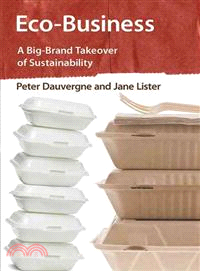
McDonald's promises to use only beef, coffee, fish, chicken, and cooking oil obtained from sustainable sources. Coca-Cola promises to achieve water neutrality. Unilever has set a deadline of 2020 to reach 100 percent sustainable agricultural sourcing. Walmart has pledged to become carbon neutral. Today, big-brand companies seem to be making commitments that go beyond the usual "greenwashing" efforts undertaken largely for public relations purposes. In "Eco-Business," Peter Dauvergne and Jane Lister examine this new corporate embrace of sustainability, its actual accomplishments, and the consequences for the environment. For many leading-brand companies, these corporate sustainability efforts go deep, reorienting central operations and extending through global supply chains. Yet, as Dauvergne and Lister point out, these companies are doing this not for the good of the planet but for their own profits and market share in a volatile, globalized economy. They are using sustainability as a business tool. Advocacy groups and governments are partnering with these companies, eager to reap the governance potential of eco-business efforts. But Dauvergne and Lister show that the acclaimed eco-efficiencies achieved by big-brand companies limit the potential for finding deeper solutions to pressing environmental problems and reinforce runaway consumption. Eco-business promotes the sustainability of big business, not the sustainability of life on Earth.
作者簡介
Peter Dauvergne is Professor of Political Science and Director of the Liu Institute for Global Issues at the University of British Columbia. He is the author of the award-winning The Shadows of Consumption: Consequences for the Global Environment (MIT Press) and other books. Jane Lister, a Senior Research Fellow at the Liu Institute for Global Issues, is a sustainability practitioner.