商品簡介
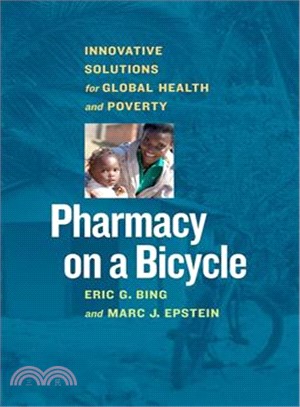
Despite $21 billion spent on health-related projects, every year millions of people in poor countries die from diseases that are easy and inexpensive to prevent or cure. We know exactly what these people need, we just don't know how to get it to them effectively. People are dying not because we can't solve a medical problem but because we can't solve a logistics problem.
The solution is a new kind of bottom-up health care that is delivered at the source. We need micro-clinics, micro-pharmacies, and micro-entrepreneurs located in the remote, hard-to-reach communities they serve. By building a new model that "scales down" to train and incentivize health care workers in their own villages and towns, we can create an army of health professionals who can prevent tragedy at a fraction of the cost of top-down bureaucratic programs. The key is to unleash the same forces of innovation and entrepreneurship that work in first-world business cultures, and to train, aid, and incubate health workers on site.
The book is filled with practical solutions for governments, NGOs, and local and global businesses. It also contains examples of dozens of exemplary programs on the ground that are implementing these innovative solutions and saving lives.
作者簡介
Eric G. Bing MD, PhD, MBA joined the George W. Bush Institute in December of 2010 as the Director for Global Health after nearly two decades at Charles Drew University of Medicine & Science in Los Angeles where he was an Endowed Professor of Global Health. He holds his MD from Harvard University, his PhD from UCLA, and an MBA from Duke. He has formed HIV treatment programs in four African countries. Dr. Bing has been awarded the Alfred Haynes International Health Leadership Award and a Paul G. Rogers International Health Research Ambassador from Research!America.
Marc J. Epstein is Distinguished Research Professor of Management at Jones Graduate School of Business at Rice University in Houston, Texas. Prior to joining Rice, Dr. Epstein was a professor at Stanford Business School, Harvard Business School, and INSEAD. He has written or co-written nearly twenty books and 100 academic papers. He leads a yearly trip to Rwanda to train students in poverty work and has conducted groundbreaking research into problems with current microfinance models.