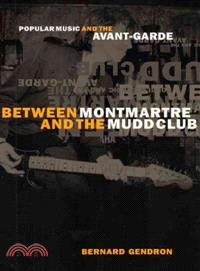
Between Montmartre and the Mudd Club
商品資訊
ISBN13:9780226287379
出版社:Univ of Chicago Pr
作者:Bernard Gendron
出版日:2002/02/01
裝訂:平裝
規格:22.9cm*15.2cm*1.9cm (高/寬/厚)
定價
:NT$ 2100 元優惠價
:
90 折 1890 元
無庫存,下單後進貨(到貨天數約30-45天)
下單可得紅利積點 :56 點
商品簡介
作者簡介
商品簡介
During the late nineteenth and early twentieth century, popular music was considered nothing but vulgar entertainment. Today, jazz and rock music are seen as forms of art, and their practitioners are regularly accorded a status on par with the cultural and political elite. To take just one recent example, Bono, lead singer and lyricist of the rock band U2, got equal and sometimes higher billing than Pope John Paul II on their shared efforts in the Jubilee 2000 debt-relief project.
When and how did popular music earn so much cultural capital? To find out, Bernard Gendron investigates five key historical moments when popular music and avant-garde art transgressed the rigid boundaries separating high and low culture to form friendly alliances. He begins at the end of the nineteenth century in Paris's Montmartre district, where cabarets showcased popular music alongside poetry readings in spaces decorated with modernist art works. Two decades later, Parisian poets and musicians "slumming" in jazz clubs assimilated jazz's aesthetics in their performances and compositions. In the bebop revolution in mid-1940s America, jazz returned the compliment by absorbing modernist devices and postures, in effect transforming itself into an avant-garde art form. Mid-1960s rock music, under the leadership of the Beatles, went from being reviled as vulgar music to being acclaimed as a cutting-edge art form. Finally, Gendron takes us to the Mudd Club in the late 1970s, where New York punk and new wave rockers were setting the aesthetic agenda for a new generation of artists.
Between Montmartre and the Mudd Club should be on the shelves of anyone interested in the intersections between high and low culture, art and music, or history and aesthetics.

When and how did popular music earn so much cultural capital? To find out, Bernard Gendron investigates five key historical moments when popular music and avant-garde art transgressed the rigid boundaries separating high and low culture to form friendly alliances. He begins at the end of the nineteenth century in Paris's Montmartre district, where cabarets showcased popular music alongside poetry readings in spaces decorated with modernist art works. Two decades later, Parisian poets and musicians "slumming" in jazz clubs assimilated jazz's aesthetics in their performances and compositions. In the bebop revolution in mid-1940s America, jazz returned the compliment by absorbing modernist devices and postures, in effect transforming itself into an avant-garde art form. Mid-1960s rock music, under the leadership of the Beatles, went from being reviled as vulgar music to being acclaimed as a cutting-edge art form. Finally, Gendron takes us to the Mudd Club in the late 1970s, where New York punk and new wave rockers were setting the aesthetic agenda for a new generation of artists.
Between Montmartre and the Mudd Club should be on the shelves of anyone interested in the intersections between high and low culture, art and music, or history and aesthetics.
作者簡介
Bernard Gendron is a professor of philosophy at the University of Wisconsin-Milwaukee. He is the author of Technology and the Human Condition.
主題書展
更多
主題書展
更多書展購物須知
外文書商品之書封,為出版社提供之樣本。實際出貨商品,以出版社所提供之現有版本為主。部份書籍,因出版社供應狀況特殊,匯率將依實際狀況做調整。
無庫存之商品,在您完成訂單程序之後,將以空運的方式為你下單調貨。為了縮短等待的時間,建議您將外文書與其他商品分開下單,以獲得最快的取貨速度,平均調貨時間為1~2個月。
為了保護您的權益,「三民網路書店」提供會員七日商品鑑賞期(收到商品為起始日)。
若要辦理退貨,請在商品鑑賞期內寄回,且商品必須是全新狀態與完整包裝(商品、附件、發票、隨貨贈品等)否則恕不接受退貨。