商品簡介
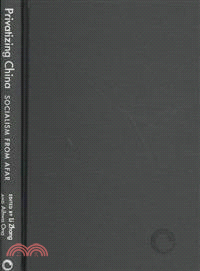
China may have adopted a strategy of privatization (beyond just the market) that has allowed some citizens to be "entrepreneurs of self," observe editors Zhang (anthropology, U. of California at Davis) and Ong (anthropology, U. of California at Berkeley) in the introduction to this collection, but it did so only by allowing private choices within the political limits set by the socialists state. Thus, "regimes of living are shaped by the intersection of powers of the self with socialism from afar." They present 13 papers exploring different aspects of this new reality from a variety of disciplinary and theoretical perspectives, although the majority of contributors are anthropologists. Topics addressed include the construction of an upscale villa lifestyle and the destruction of public space, homeowner organization against landlords for the acquisition and protection of property rights, state collusion with private land developers and its contribution to dispossession of the poor, struggles of tax reform, the adoption of transnational labor codes by multinational corporations in China as a form of corporate paternalism and worker disempowerment, corporate appropriation of the cultural images of the Miao minority by Hmong-Americans (the Hmong being a large sub-group of the Miao), the health regimes of the new rich, cigarette smoking and images of self-care and self-reform in Yunnan, conflicting public versus private values in the reaction of Shanghainese to the SARS crisis, the ethical constraints of nationalism on the self-choices of managers, ethical self-training of professionals as a means of mediating between capitalist and political interests, and the ability of religious charlatans to take advantage of private anxieties through "digital Buddhas" on the Internet. Annotation c2008 Book News, Inc., Portland, OR (booknews.com)