商品簡介
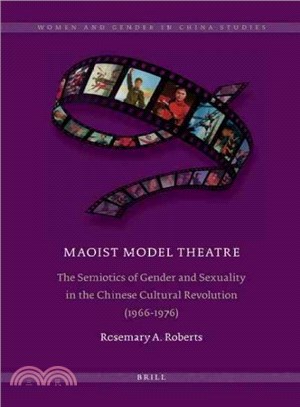
The yangbanxi or "model works," explains Roberts (Chinese, U. of Queensland, Australia) in her introduction, "were a small group of visually exciting, artistically innovative and ideologically extreme modernized Beijing operas, ballets and symphonies, that dominated mainland Chinese public culture in the radical Maoist years of the Cultural Revolution (1966-1976)" and "were uniquely representative of the dominant cultural discourse of their time." She conducts a semiotic analysis of the construction of gender identity in nine of the yangbanxi. She compares the representation of male and female heroic characters through various theatrical systems including role assignment, use of props, linguistic and para-linguistic systems, plot development, and vocal style; explores the way that costumes gendered and sexualized characters in ways that are not generally recognized; discusses the issues of gender difference/androgyny and gender hierarchy/equality raised by the model heroines of the yangbanxi; assesses the extent to which changes were made to the conventions of ballet in the model ballets in order to promote gender-egalitarianism and to avoid the expression of eroticism; and considers "evidence of the feminisation, emasculation and queering of the counter-revolution" in the presentation of the villains of the yangbanxi. Annotation c2010 Book News, Inc., Portland, OR (booknews.com)
作者簡介
Rosemary A. Roberts, Ph.D (1992) in Modern Chinese Literature, Australian National University, is a lecturer in Chinese at the University of Queensland, Australia. She has published widely in the fields of women's literature and gender studies.