商品簡介
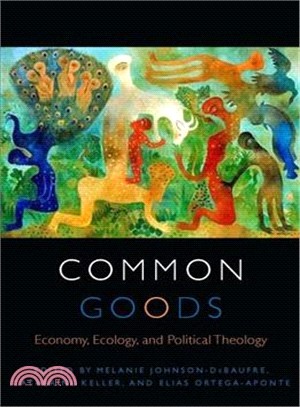
In the face of globalized ecological and economic crises, how do religion, the postsecular, and political theology reconfigure political theory and practice? As the planet warms and the chasm widens between the 1 percent and the global 99, what thinking may yet energize new alliances between religious and irreligious constituencies?
This book brings together political theorists, philosophers, theologians, and scholars of religion to open discursive and material spaces in which to shape a vibrant planetary commons. Attentive to the universalizing tendencies of "the common," the contributors seek to reappropriate the term in response to the corporate logic that asserts itself as a universal solvent. In the resulting conversation, the common returns as an interlinked manifold, under the ethos of its multitudes and the ecology of its multiplicity.
Beginning from what William Connolly calls the palpable "fragility of things," Common Goods assembles a transdisciplinary political theology of the Earth. With a nuance missing from both atheist and orthodox religious approaches, the contributors engage in a multivocal conversation about sovereignty, capital, ecology, and civil society. The result is an unprecedented thematic assemblage of cosmopolitics and religious diversity; of utopian space and the time of insurrection; of Christian socialism, radical democracy, and disability theory; of quantum entanglement and planetarity; of theology fleshly and political.
作者簡介
Melanie Johnson-DeBaufre is Associate Professor of New Testament and Early Christianity at Drew Theological Seminary.
Catherine Keller is George T. Cobb Professor of Christian Theology at Drew Theological Seminary.
Elias Ortega-Aponte is Assistant Professor of Afro-Latina/o Religions and Cultural Studies at Drew Theological Seminary.