商品簡介
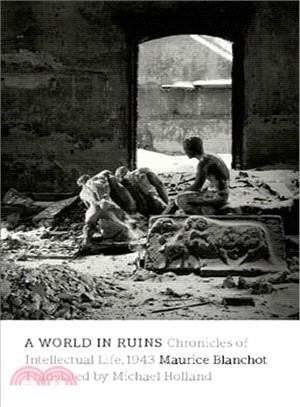
In certain key respects, 1943 marked a turning point in the war. Increasingly, victory seemed assured. However, the backdrop to this gradually improving situation was one of widespread and unremitting destruction.
In the essays from that year, Blanchot writes from a position of almost total detachment from day-to-day events, now that all of his projects and involvements have come to naught. As he explores and promotes works of literature and ideas, he privileges those with the capacity to sustain a human perspective that does not merely contemplate ruin and disaster but sees them as the occasion for a radical revision of what "human" is capable of signifying.
Consigning all that the name "France" has hitherto meant to him to a past that is now in ruins, Blanchot begins to sketch out a counter-history that is international in nature, and whose human field is literature.
作者簡介
Maurice Blanchot (1907-2003)--writer, critic, and journalist--was one of the most important voices in twentieth-century literature and thought.
Michael Holland is a Fellow of St Hugh's College, Oxford, where he teaches nineteenth- and twentieth-century French literature. He is the author ofThe Blanchot Reader and of numerous studies of Blanchot's work in both English and French.