商品簡介
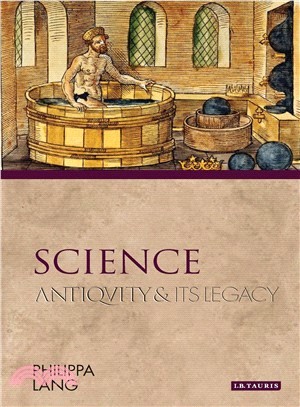
Modern science and its technology are the children of the seventeenth-century. But the bold investigative experimentation and scientific systems of thought that this era spawned were in turn thoroughly influenced by Greek and Roman authors and ideas. Xenophanes' ideas about fossils informed the science of geology. Copernicus and his novel notion that the earth revolved around the sun, and not vice versa, were arguably influenced by the Samian philosopher and mathematician, Aristarchus. And the anatomists of Alexandria still—even today—have valuable insights to bring to current ethical discussions of vivisection and animal welfare. Shedding fresh light on topics such as Euclid's geometry, Aristotelian physics and the proto-Darwinism of pre-Socratic thinkers like Empedocles, Philippa Lang addresses the fascinating differences and similarities between ancient and modern conceptions of ‘science'. She discusses the origins of the cosmos; natural laws in mathematics and physics; conceptions and philosophies of biology and disease; ideas about mechanistic science and technology as they have been used to control the societies of human beings; and the important nexus between science, morality and ethics. Greek and Roman parallels illuminate and clarify the meaning of science itself.
作者簡介
Jorg Rupke is Professor of Comparative Religion at the University of Erfurt. His previous books include Religion of the Romans, A Companion to Roman Religion and Fasti Sacerdotum: A Prosopography of Pagan, Jewish, and Christian Religious Officials in the City of Rome, 300 BC to AD 499.