商品簡介
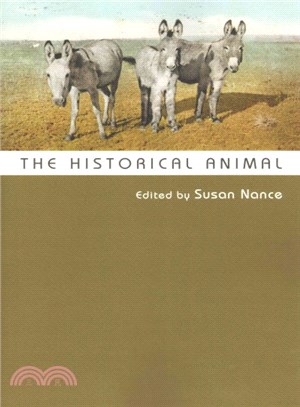
The 16 essays in this volume examine animals in the Pacific Ocean, Africa, Europe, and the Americas, viewing them as the subjects of history in non-anthropocentric ways. Historians from the US, Canada, South Africa, and Europe look at animals who responded to or were products of specific contexts, discussing killer whales in the Pacific Northwest, the rise and fall of feral burros in the American West, and the extinct quagga in South Africa, as well as animal sources in archives, including the Mexican National Archive, veterinary artifacts at the C.A.V. Barker Museum at the Ontario Veterinary College, and animal testimonies, focusing on the sign language of Michael Puig, a gorilla at the Gorilla Foundation in California. They also consider the role of animals in historical processes and events, including horses and travel in later medieval England, horse-human relationships in Chicago and rural Illinois, gorilla extinction from 1900 to 1930, and migrant muskoxen and national identity in Scandinavia; human-animal encounters in the Galapagos Islands, the “human-leopard murders” in colonial West Africa, and animals in the southern Appalachian Mountains; and domesticated animals in early 19th-century New York, the human-animal bond in Canadian soldiers' accounts of their horses in World War I, and Tony the Wonder Horse in film. Annotation c2015 Ringgold, Inc., Portland, OR (protoview.com)
作者簡介
Susan Nance is an associate professor in the Department of History and an affiliated faculty
member at the Campbell Centre for the Study of Animal Welfare at the University of Guelph,
Ontario, Canada. She is the author of Entertaining Elephants: Animal Agency and the Business
of the American Circus.