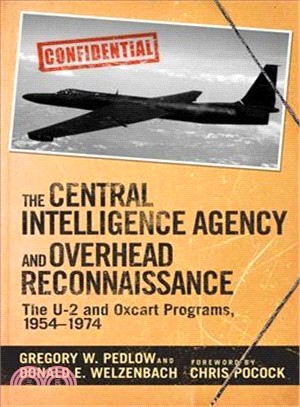
The Central Intelligence Agency and Overhead Reconnaissance report is an important historical document. It contains a significant amount of declassified material with respect to the U-2:
names of pilots
codenames and cryptonyms
locations, funding and cover arrangements
electronic countermeasures equipment
cooperation with foreign governments
and operations, particularly in Asia.
Long classified as top secret, this detailed report describes not only the program's technological and bureaucratic aspects, but also its political and international context. The book begins by carefully documenting the origins of the U-2, the top-secret testing of the plane, its specially designed high-altitude cameras and complex life-support systems, and even the suggested use of potassium cyanide capsules by the pilots if captured. Once operational, its flight over the USSR in July 1956 immediately made the U-2 the most important source of intelligence on the Soviet Union, but its use against the Soviet target for which it was designed produced a persistent tension between its program managers and President Eisenhower, with the former much more eager to expand its use and the latter going along only reluctantly.
For the first time, enjoy this historical text without the distracting redactions and low quality photocopy appearance, as it has been completely reformatted and edited, giving this historic document the respect it deserves.