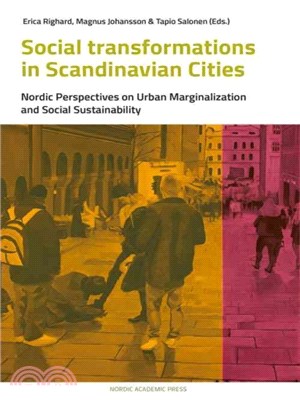
The Social Tranformations of Scandinavian Cities highlights the changing face of social sustainability and social disintegration in Scandinavian cities against the backdrop of ongoing global societal transformations. It contributes to the literature on urban development in advanced societies by bringing in theoretical and empirical analyses of how migration, inequality, residential segregation, and changes in national and local policy intersects and unfolds in urban landscapes in Denmark, Norway and Sweden. In particular this volume contributes with insights to how these processes play out in a Scandinavian welfare state-context. A central contribution of the book is that it challenges prevalent understandings of Scandinavian countries as havens of equality and peace. Instead, the authors discuss how Scandinavian cities share many of the problems and challenges that are well-known from other countries, and how these are managed in the Scandinavian approach. While the Scandinavian countries generally are associated with extensive policies for free public services and low levels of poverty, reality has changed dramatically over the last three decades. Thus it was only in the 1990s when a proper turn took place to attend to the needs of conscious, decisive policies. Unemployment, criminality and low levels of school performance in ethnically and socio-economically segregated residential areas began to be tackled through urban policy Scandinavian countries. InThe Social Tranformations of Scandinavian Cities we learn how, in which ways and how progress is being made today.